
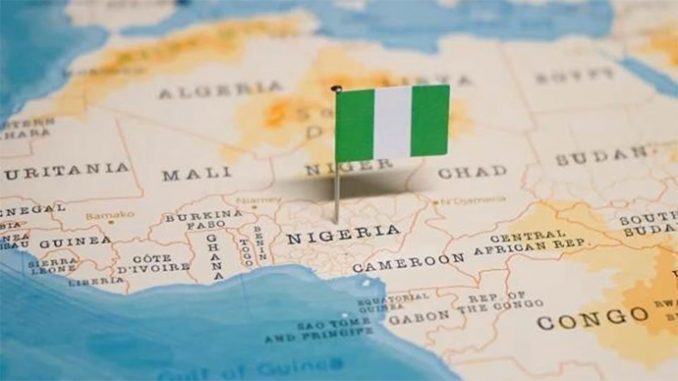
Nigerians will head to the polls on January 16, 2027, in a twin election to elect their president and members of parliament. Nineteen candidates will be vying for the country’s top job, including the incumbent, Bola Ahmed Tinubu, who is seeking a second four-year term.
Campaigns have been marred by violence. Incidents in Ado-Ekiti, Calabar, and Asaba have left one person dead and several others injured, according to human rights group Citizens’ Advocacy for Social & Economic Rights (CASER).
“It is a pre-election violence which actually threatens the existence of our democracy, and to think that because we are having elections in a number of weeks, we now have to go through another heightened state of insecurity is unacceptable to us,” warned Frank Tietie, who is Executive Director of CASER.
“We think that the whole world must hear, and we needed to issue that warning because we indeed want to take action against this process of electoral violence,” he told Channels Television.
Fr. Humphrey Boyo, pastor of St. Patrick’s Parish, Taraku, in the Catholic Diocese of Makurdi, Benue State, told CWR that “the rate of thuggery and other existing insecurity challenges pose great threats to a peaceful election” in Nigeria.
Emeka Umeagbalasi, Executive Director of the Catholic-inspired NGO, International Society for Civic Liberties and the Rule of Law, described Nigeria’s political class as “haters of democracy and the rule of law,” and accused them of “militarizing their fear.”
“Political office holders are supposed to be terrified by the people’s power of the ballot. Unfortunately, in Nigeria, it is the voters that are being terrified, being chased about, being threatened, being suppressed, being brutalized, being humiliated, being lied against.”
“They are pathologically opposed to a free and fair election,” Umeagbalasi said, and accused those in power of deploying massive violence with the aim of instilling “apathy and fear on the electorate, so that the electorate will not vote candidates of their choice.”
In the face of what is now seen as a worsening spate of political violence, Church leaders in Nigeria believe prayers can make a whole lot of difference.
On October 19, 2026, Catholic bishops announced a national prayer and fasting program ahead of the polls. Its theme is “Let Justice and Peace Flow.”
“As Nigeria approaches the 2027 elections, we are called to intensify our prayers so that the elections may be free, fair, credible, and peaceful,” the clerics said in the statement signed by the President of the Bishops’ Conference, Archbishop Matthew Man-Oso Ndagoso of Kaduna, and Bishop Peter Olukayode Odetoyinbo of Abeokuta, the Conference’s Secretary.
The bishops urged the faithful to pray for free, fair, and transparent elections, untainted by fraud and ethno-religious divisions. Activities will culminate on Friday, January 15—the eve of the election—with a nationwide Parish Day of prayer and fasting.
In a statement sent to CWR, Archbishop Ndagoso explained what informed the initiative. He pointed first to the history of elections in the country since the return to democracy in 1999, which he said has been “fraught with violence and loss of human lives and properties,” adding that “the current situation is not different from past experiences.” He also cited the lack of trust and confidence in the electoral umpire and, finally, what he described as the alarming daily spate of violence across the country since political campaigns started a few weeks ago.
Archbishop Ndagoso, in a recent interview, revealed that over 40 million people have been mobilized to pray for a smooth election.
“The forthcoming elections are critical for our country. Given our experience with elections in Nigeria, we believe that God can intervene. As a Church, we feel that calling on God through prayer is one of the most important contributions we can make,” the archbishop said in a November 9 interview granted to ACI-Africa.
He said various stakeholders in the electoral process are required to join in the national prayers, including the Independent National Electoral Commission (INEC), the security agencies, the government and private individuals.
He expressed confidence that the collective prayers of Nigeria’s Catholic population could make a difference in the country’s electoral process.
“So, you can imagine nearly 40 million Catholics raising their voices to God, asking Him to enable us to have peaceful and credible elections. I am sure it will make a difference,” Archbishop Ndagoso said.
But prayer alone won’t suffice, says Umeagbalasi.
“So even if you pray from here to Damascus and you don’t add any actionable action, your prayer will not take you anywhere,” he told CWR.
Action, according to Fr. Boyo, would involve the sensitization, awareness and education of the faithful “to engage in partisan politics,” noting that the choice of a Christian as President is “sacrosanct now that Christians are being persecuted.”
Fr. Moses Iorapuu noted that in Nigeria “it’s easier to turn to God in prayer than to assist a neighbor in need,” and warned that the call for prayer “should not be a cover-up for our cowardice and timidity.”
“Prayers offered to God are also a message to the conscience of the electorate and the political class, that every citizen must act with responsibility,” he told CWR.
He said the Church, as the moral voice of society, has much to offer, explaining that it “must speak up against electoral malpractice, thuggery and other forms of violence that deny the people the right to choose their leaders.”
“The Church must champion the enlightenment campaign and civic education. The electorate must be educated enough to hold leaders accountable for unfulfilled promises.”
He said the Church’s role isn’t to campaign for any political parties or candidates. Its role is to “advocate justice, protection of the vulnerable, hope and not despair, healing and not division.”
“The Church must guarantee all the members of the congregation true and faithful worship and must not allow the pulpit to be turned into a platform for hate speech or the promotion of a preferred candidate.”
He noted that a peaceful Nigeria would also translate to a peaceful Africa, explaining that “peace is more important than winning arguments. The Church must have the courage to engage with the political class to find durable peace.”
Archbishop Ndagoso agrees that prayer alone will not be enough to turn things around for Nigeria, explaining that the Church has been encouraging citizens to participate in the electoral process.
“We are not only praying; we are also sensitizing citizens and encouraging them to play their part. It is our collective responsibility as Nigerians to ensure that we exercise our right to vote,” he said.
“We are also conducting voter education. We are encouraging Nigerians to collect their PVCs, while those who have not registered are being urged to do so. This sensitization is ongoing,” the cleric explained.
Archbishop Ndagoso also told CWR that this outreach is being driven by the Church’s Justice Development and Peace Commission (JDPC), which has been very active in voter education, “reminding citizens of their civic duties” to take part actively in the process that produces those who lead them. Long before now, especially during the voter registration exercise, he said, the commission at parish levels “has been helping people to register and collect their PVCs.”
“As always, the Church is working and planning to monitor the elections.”
President Tinubu, who has faced harsh accusations of working to rig the polls, has nonetheless pledged his commitment to a free and fair vote.
“Let me assure Nigerians and the international community that President Bola Ahmed Tinubu’s administration is fully committed to free, fair, and credible elections in 2027. We will continue to support the democratic process and ensure that the will of the Nigerian people prevails,” the country’s Minister of Information and National Orientation, Mohammed Idris, told TRT World, Türkiye’s international broadcaster, on the sidelines of the TRT World Forum 2026.
INEC Chairman Joash Amupitan has also sought to reassure Nigerians.
“The integrity of Nigeria’s democracy matters not only to our citizens but to the peace, stability and economic growth of the entire West African sub-region and the African continent,” he said.
“INEC remains resolutely independent, impartial, and committed to delivering 2027 general elections that meet the highest global standards,” Amupitan said.
If you value the news and views Catholic World Report provides, please consider donating to support our efforts. Your contribution will help us continue to make CWR available to all readers worldwide for free, without a subscription. Thank you for your generosity!
Click here for more information on donating to CWR. Click here to sign up for our newsletter.
Leave a Reply
You must be logged in to post a comment.