
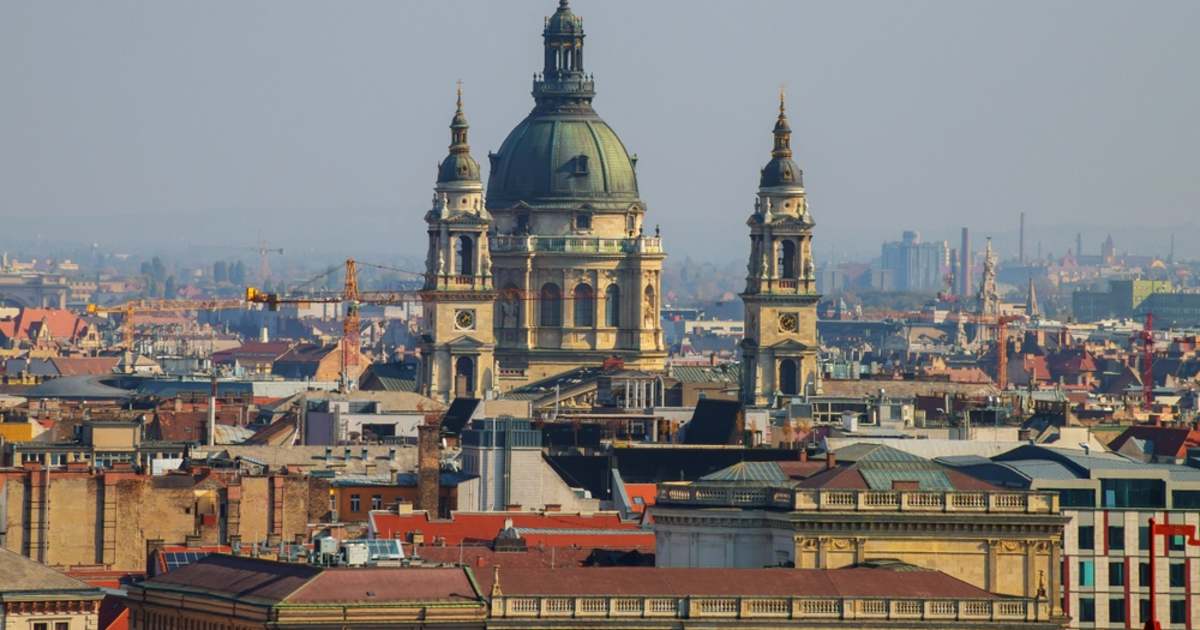
Hungary’s Catholic bishops are urging the faithful to not rush to judgment after the publication of files showing that some of the country’s Catholic leaders collaborated with secret police during the Soviet era.
The country existed as a satellite state of the Soviet Union after World War II and was controlled by communists as the Hungarian People’s Republic from 1949 to 1989. As was common with communist states, the government utilized a secret police service to spy on and control citizens there.
Current Prime Minister Péter Magyar officially opened the government’s secret police archives on Nov. 4, describing the release as “long overdue.” The files contain about 60,000 names of secret police informants.
In a statement after the release of the files, the Catholic Bishops’ Conference of Hungary acknowledged that the list included names of “individuals affiliated with the Church.” Among the names are those of Cardinal László Paskai and Archbishop István Seregély.
The Hungarian bishops urged the faithful to “not … lose sight of the bigger picture.” They noted that the Church in communist-controlled Hungary was subject to severe persecution, including the murder of dozens of priests and monks and the imprisonment of around 2,000 more, while “approximately 11,500 monks and nuns were forced onto the street” and overall Church activity was suppressed.
Some of the named leaders in the secret police files “did indeed collaborate with the one-party state and passed on confidential information about members of the community and others to the authorities,” the bishops said. “On their behalf, we ask for forgiveness from the victims and their families.”
Yet “there were also those who were tortured or blackmailed,” the bishops continued. “There were those who wrote meaningless reports. And among the names on the list are also those whom the authorities merely attempted to recruit” and who ultimately refused to participate.
The “principal perpetrators” of the communist regime were not the “recruited individuals” listed in such files but the communist leaders themselves, the bishops said.
“Social reconciliation and the healing of the wounds of the past can only be achieved through the truth. We should not form hasty opinions about anyone’s actions until we know every detail of their story,” they said.
They urged the faithful to reject “contempt, revenge, or hatred” and opt for “confession, forgiveness, and mercy” instead.
The Hungarian government transitioned to a democratically controlled state in 1989 amid the political turmoil and upheaval sweeping Eastern Europe at the time. The Soviet Union would ultimately dissolve on Dec. 26, 1991.
The Catholic Church played a pivotal role in helping bring about the end of the communist multinational government, in large part from efforts by then-Pope John Paul II.
The British historian Timothy Garton Ash, for instance, wrote that there was a direct link between John Paul II’s papacy and the revolutions of 1989 that helped bring about an end to Eastern European Marxist-Leninist governments.
Leave a Reply
You must be logged in to post a comment.