
The 2008 Vatican document Dignitas Personae affirmed the dignity and rights of frozen embryos and expressed reservations about proposals for prenatal adoption.
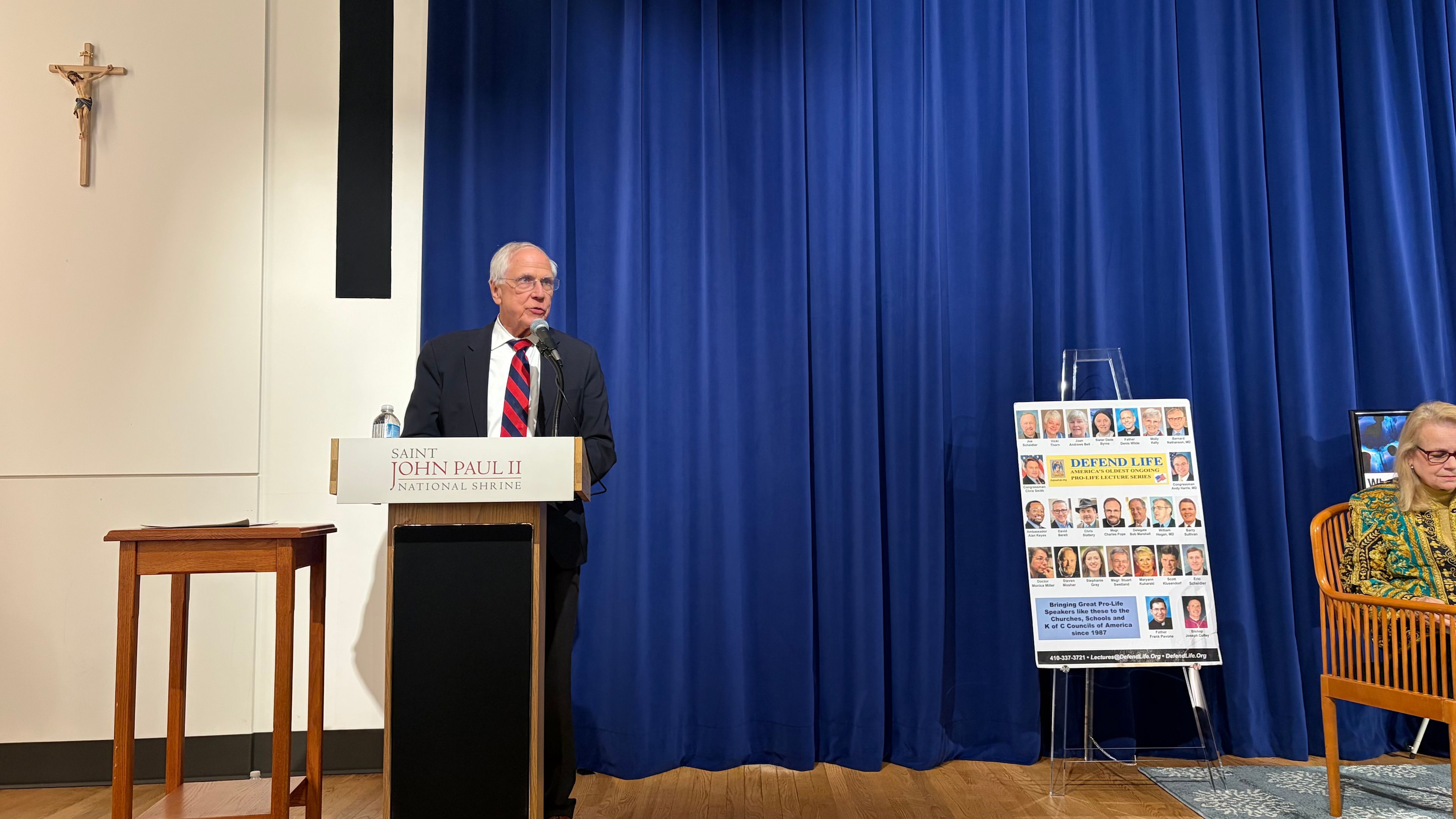
Can embryo adoption be considered morally licit by the Catholic Church? The John Paul II Shrine in Washington, D.C., hosted a debate between two Catholic ethicists Oct. 22 in an event marking the feast of St. John Paul II.
The Catholic Church has not issued a definitive judgment that embryo adoption is morally licit. The issue remains debated among Catholic theologians. In the 2008 Vatican document Dignitas Personae, the Church affirmed the dignity and rights of frozen embryos and expressed reservations about proposals for prenatal adoption.
John Haas, president emeritus of the National Catholic Bioethics Center, argued that embryo adoption is morally illicit as it requires the artificial transfer of a frozen embryo into the womb of a woman who is unrelated to the unborn child — a practice he said both violates the Church’s teachings about sexual ethics in marriage and deliberately endangers the lives of embryos in the thawing process.
Haas further argued that the only moral solution to the question of what to do with frozen embryos is to keep them frozen, as bringing them to life or disposing of them in any way would always be considered illicit. To support this claim, he cited the 1987 Vatican document Donum Vitae, which states: “In consequence of the fact that they have been produced in vitro, those embryos which art not transferred into the body of the mother and are called ‘spare’ are exposed to an absurd fate, with no possibility of their being offered safe means of survival which can be licitly pursued.”
Organized by the pro-life organization Defend Life, the event took place after a Mass in honor of St. John Paul II and was livestreamed on the organization’s website.
Elizabeth Rex, an associate scholar at the Charlotte Lozier Institute, argued in favor of embryo adoption, saying that neither the Vatican nor the U.S. Conference of Catholic Bishops (USCCB) have “ever formally ruled against embryo transfer or embryo adoption.”

While acknowledging the Church’s teaching that in vitro fertilization (IVF) is immoral, Rex argued that the process of IVF and the transfer of the embryo into a mother’s womb should not be separated.
“They go together. You donʼt do IVF just to leave [the embryo] in the petri dish or put it in the freezer. That would be an abortion,” she said. “The baby would die. So, the baby now has been conceived, and it needs to be transferred into the womb. Itʼs a person. Itʼs a child. Itʼs a patient, and it needs medical assistance. And that is what the Church teaches there.”
Haas countered Rex’s argument that the Church has not ruled out embryo adoption, saying: “The only statement from the magisterium of the Church that has fueled this debate is one half of one sentence from Dignitas Personae that the supporters of embryo adoption often donʼt bother to finish when they quote it.”
The paragraph he cited in the document states: “It has also been proposed, solely in order to allow human beings to be born who are otherwise condemned to destruction, that there could be a form of ‘prenatal adoption.’ This proposal, praiseworthy with regard to the intention of respecting and defending human life, presents however various problems not dissimilar to those mentioned above. All things considered, it needs to be recognized that the thousands of abandoned embryos represent a situation of injustice which in fact cannot be resolved.”
Haas argued that the ends do not justify the means with regard to embryo adoption and that the Holy See has not made “a single statement on behalf of embryo adoption.”
If you value the news and views Catholic World Report provides, please consider donating to support our efforts. Your contribution will help us continue to make CWR available to all readers worldwide for free, without a subscription. Thank you for your generosity!
Click here for more information on donating to CWR. Click here to sign up for our newsletter.
Leave a Reply
You must be logged in to post a comment.