
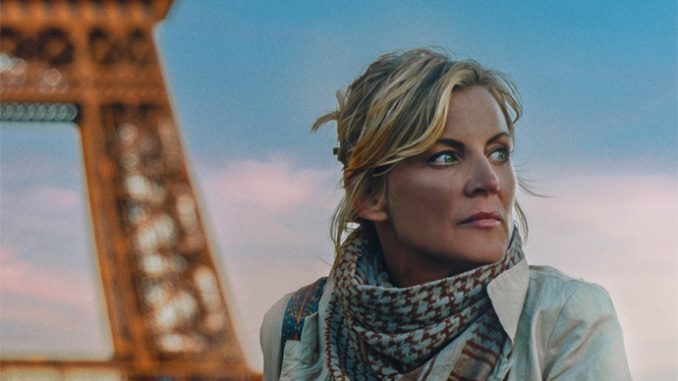
When you hear about unintended or surprise pregnancies, the demographic that likely pops into your head is young people, perhaps those 25 and under. But a new film, set for release on October 16, highlights the fact that there’s a group of women experiencing unplanned pregnancies that most people don’t even consider.
Conceivable is a film written, directed, and produced by Beth Caulfield, and it’s based on the true story of her surprise pregnancy at age 45. It takes viewers through the emotional turmoil she felt from both within and without as she wrestled with the decision to choose life for her baby or abort her.
In a phone conversation, Beth explained to me that she wanted to model Proverbs 3:5-6 throughout the story. That Proverb states, “Trust in the Lord with all your heart, on your own intelligence do not rely; in all your ways be mindful of Him, and He will make straight your paths.”
Beth explained, “The story goes through showing the family seeking God both together and individually, different support people being part of their lives, but in the end showing that when you seek God, He will give you a clear message.”
The voices that made her question everything
In the film, Beth (played by Jana Lee Hamblin) is 45 when she finds that she is pregnant. Overcome with disbelief and shock, she faces a choice she never thought she would have to make. Her character has a 16-year-old son and a 14-year-old daughter (played by Beth’s real-life daughter Camille Joy), a loving husband (played by Eddie McClintock), and had recently embarked on a new adventure. A member of the Methodist Church, she had enrolled in the seminary to become a pastor. When she finds out that she’s pregnant, it feels like her whole world has turned upside down.
And then the voices start—both outside and inside. Her fears are exacerbated by friends who tell her she’s too old and who lament that she will never retire. But it was her pastor’s words that were the most disturbing. When she sought his spiritual advice, he didn’t react with excitement or joy. He didn’t see the baby as a blessing. He talked about the problems she could encounter and then said, “I guess the good news is that we live in an age when you do have a choice.”
He went on to say that he recently counseled another couple, who chose to terminate. He then offered erroneous advice regarding God, saying, “I don’t believe that He sent you this pregnancy, and I don’t believe that He would have any judgment in His heart for any decision you made regarding it.”
Beth explained that she included voices like his because these are real-life examples of what women hear when facing an unexpected pregnancy. And she said she faced them along her journey as well. She stated she had always been pro-life and would never have considered an abortion until faced with that decision so late in life.
She said that while she had supportive friends and family, some friends and colleagues tried to convince her that abortion was acceptable, and their voices made her question her own judgment. She explained, “There were some shocking voices . . . that helped nudge me in that direction [toward abortion]. I want that out there for people to think about.”
She hopes that people come to realize that their words have an immense impact when someone is living in fear of what they will do when pregnant.
Though extremely difficult to watch a pastor get faith and the sanctity of life so wrong, scenes like these are sometimes necessary to give the viewer a realistic look at what others could say and how to counteract those errors.
The Catechism of the Catholic Church is the perfect place to start when looking for consistency and the truth regarding the sanctity of life. It states, “Human life must be respected and protected absolutely from the moment of conception. From the first moment of his existence, a human being must be recognized as having the rights of a person—among which is the inviolable right of every innocent being to life.”
This is the lesson that Beth hopes people will ultimately learn from watching Conceivable.
From personal crisis to the big screen
Beth did struggle with many of the same questions and concerns that her character in the movie struggles with. But after she realized that she could never have an abortion, she knew she had to tell her story to the world in the hopes that it could help someone else. She began writing it down for others and teaching the sanctity of all preborn babies, even those not planned.
But the more she told her story, the more she began to believe it would resonate better with people as a film. She explained, “Movies and TV get people’s attention, good or bad, more than anything else and influence culture, what people think, what they believe, how they dress, what they eat, and we should be there as Christians shining light and giving good stories, and so I knew that it needed to be a movie at that point.”
So she began the movie-writing process, and in the fall of 2022, she audited a screenwriting class at the University of Pennsylvania. In her class was Joe Biden’s granddaughter, and the professor was a first cousin of Kellyanne Conway, President Trump’s former campaign manager. Beth explained that Roe v. Wade had just been overturned, so abortion was a regular topic of conversation. However, she said that the class was “an amazing experience,” and she listened to the students, learned how to respond to their questions, and they all dialogued together. She also shared that they pushed her to be a better writer.
Beth then finished her screenplay, submitted it to a Christian screenwriting competition, and won. When she traveled to accept the award, she met Dean Cain, and Conceivable took off from there.
Beth said that she now partners with several pregnancy resource centers and helps promote them so women know that help is available. She also works with abortion recovery groups such as Save One and Rachel’s Vineyard. And she has a book coming out in November about the ministry behind Conceivable.
Throughout the movie, the viewers see Beth trying to follow God and ultimately choosing life, even though it’s difficult and not part of her plan. Beth shared, “It’s an honest faith film that does bring forward the truth about the preciousness of life.”
Beth hopes that the film evokes compassion for what women go through when faced with a surprise pregnancy. She explained, “I really hope that this is something that can get people talking honestly about this, and I wanted to be vulnerable and share that, yes, I had these kinds of thoughts because I know I am not alone.”
Conceivable will be released to limited theaters on October 16. If it’s not in your area, you can request that it be shown near you.
If you value the news and views Catholic World Report provides, please consider donating to support our efforts. Your contribution will help us continue to make CWR available to all readers worldwide for free, without a subscription. Thank you for your generosity!
Click here for more information on donating to CWR. Click here to sign up for our newsletter.
Leave a Reply
You must be logged in to post a comment.