
The Archdiocese of St. Louis is challenging an immigration detention center’s visitation policies it says prevent Catholic detainees from receiving the sacraments, after a jail official suggested “clergy pass communion in a plastic bag to a prison guard who could then deliver it to the detainee.”
The lawsuit, filed on Oct. 5 by Archbishop Mitchell Rozanski and Father Christopher Schroeder of the Archdiocese of St. Louis, claims that Ste. Genevieve County Detention Center’s no-contact policy bars clergy from ministering to detainees while making exceptions to the rule for nonreligious visitors.
The archdiocese said in an Oct. 5 press release and in the filing that it had asked the facility to accommodate clergy seeking to provide sacraments to detainees but that facility officials refused to do so. “That refusal is troubling, given that other individuals—including lawyers and consular officials—are permitted to visit detained individuals under much more permissive circumstances,” the archdiocese said in the release.
Ste. Genevieve Detention Center houses about 150 immigration detainees and has held about 3,000 detainees, including one who died in the facility, since it began contracting with U.S. Immigration and Customs Enforcement (ICE) in mid-2025, according to the filing. The Department of Homeland Security (DHS), the federal Cabinet department that oversees ICE, did not immediately reply to a request for comment.
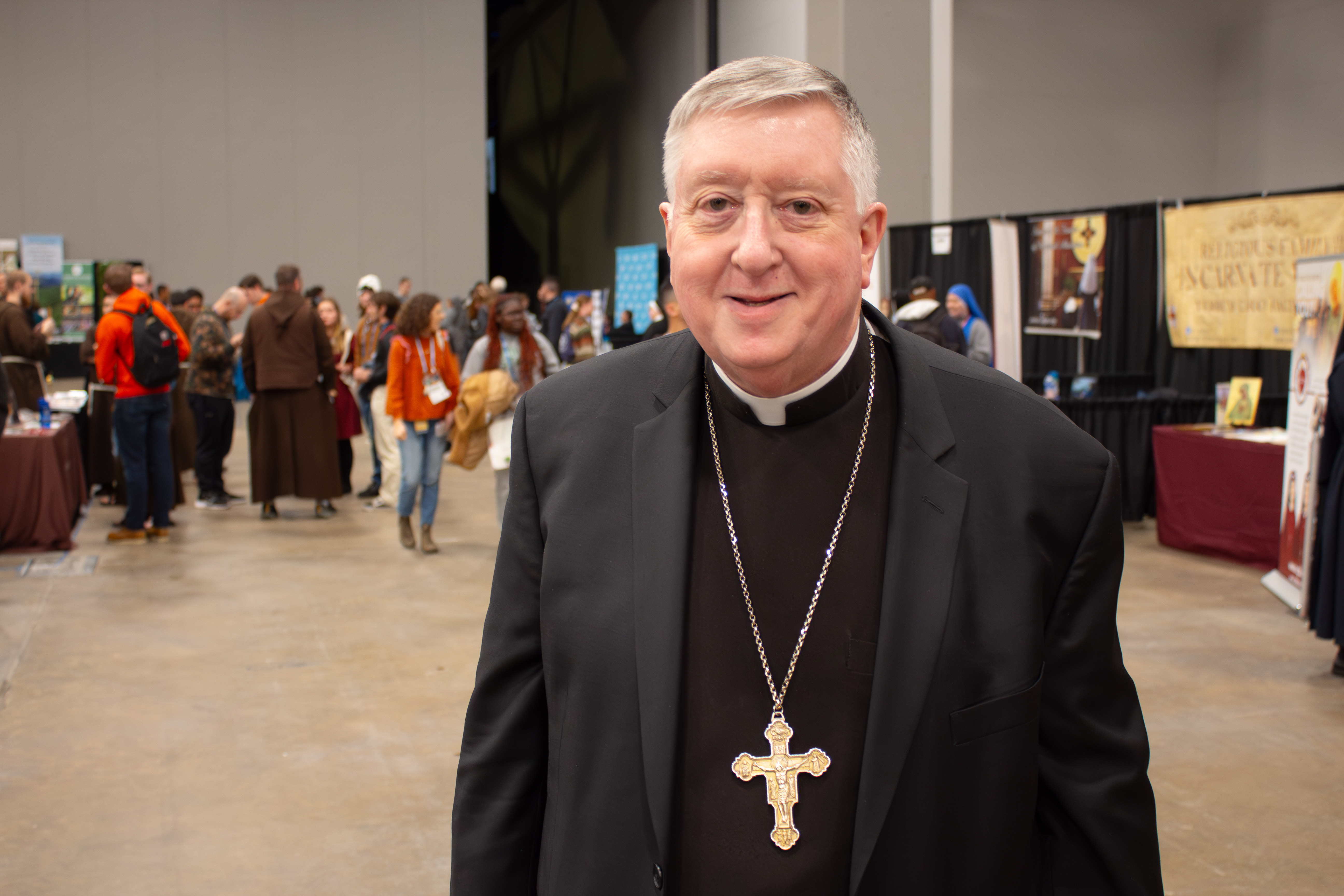
“The first and only time any jail official has proposed any accommodation for religious exercise was in response to a reporter,” the archdiocese said, which culminated in a suggestion from Maj. Jason Schott, who oversees the day-to-day operation of the jail, that clergy deliver Communion to detainees in a plastic bag by prison guards.
“This is no accommodation at all,” the filing states. “Because the celebration of communion is a central piece of the Catholic faith, and because the transubstantiation that occurs in this sacrament involves the real presence of Christ, the Catholic faith imposes strict rules on how communion may be administered. Communion may only be administered by a minister specifically appointed for the purpose.”
A person must be authorized to distribute Communion according to the norms of the diocese and the parish, ordinarily after suitable formation and commissioning by the pastor or bishop. While the Eucharist belongs to the whole Church, its distribution is carried out according to the Churchʼs sacramental and hierarchical order.
The archdiocese said the facility’s “scant defense” for its policies cited concerns for “safety and security risks” and that “priests might smuggle ‘contraband’ to the detainee.’”
“Schott does not explain how the host, which as consecrated is the body of Christ—the very thing priests want to ‘pass to detainees’—could be contraband,” the filing states.
The archdiocese also claimed priests have been barred from accessing the facility during the traditional four-hour window for visitation on Sundays and that “the jail allows clergy to visit only for a 4-hour window on Mondays.”
“The Catholic Church does not seek special treatment,” the archdiocese said in the release. “But only requests the same access as these other groups which, if provided, would allow clergy to offer the Catholic sacraments detainees desperately want.”
Leave a Reply
You must be logged in to post a comment.