
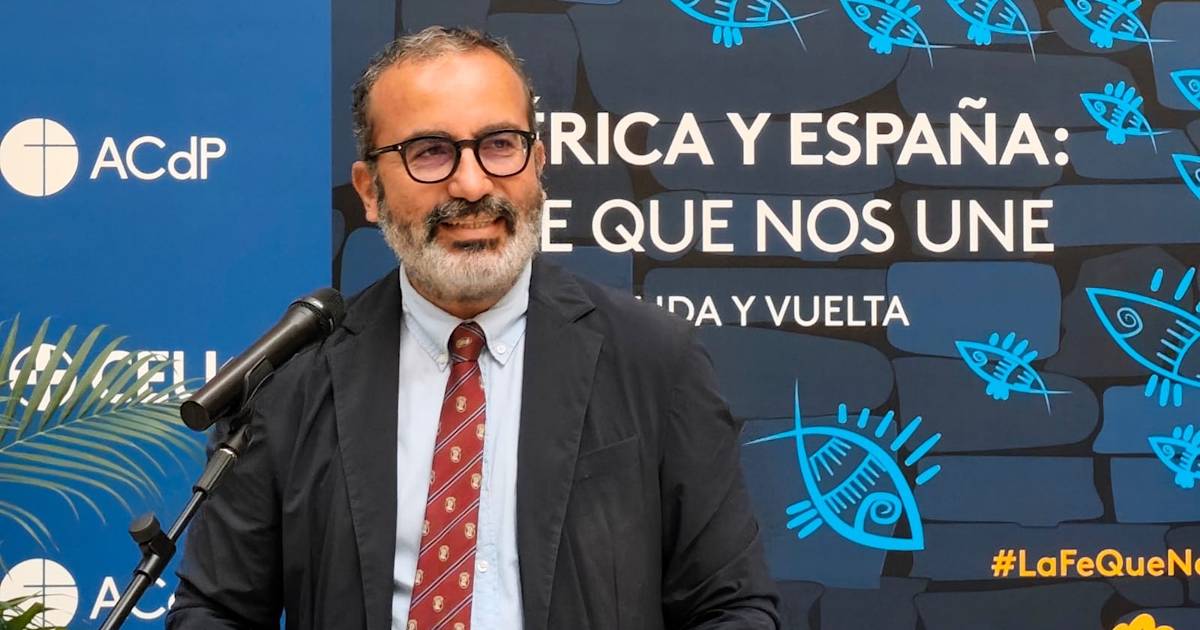
With the aim of “living up to our heritage and fostering its growth,” next month’s Catholics and Public Life Congress in Madrid, Spain, aims to exalt the legacy of “Hispanidad,” a term for the faith-based civilization and union between Spain and the Americas that was first championed by Queen Isabella (1451–1504).
The theme for this year’s Nov. 13–15 congress is “The Americas and Spain: The Faith That Unites Us — A Round-Trip Journey,” and features a joint statement on the subject titled “Manifesto for Hispanidad.”
The text highlights the institutions that emerged from the Spanish enterprise in the Americas such as municipalities, universities, parishes, and hospitals, which “no international treaty has managed to replicate.”
“None of this is artificial. None of this needs to be invented. It simply needs to be recognized and put at the service of the future,” the manifesto proclaims.
“Isabella the Catholic Monarch did not set a mere promise in motion; she set a civilization in motion,” the manifesto continues. Isabella and her husband, King Ferdinand, were given the title “the Catholic Monarchs” by Pope Alexander VI through the papal bull Si Convenit for their defense of the Catholic faith.
From this transatlantic civilization emerged the Laws of the Indies governing the Spanish colonial territories in the Americas through which Spain imposed limits on itself, along with the humanist thought of Francisco de Vitoria at the University of Salamanca, the cradle of international law and human rights.
This legacy, the manifesto continues, resulted in nonnegotiable principles such as “the dignity of the human person; the Greco-Latin heritage that gave us reason and the rule of law; the Christian tradition that shaped our concept of community; respect for the law as a limit on power; civil liberties as a condition for a decent life; and a legal framework capable of protecting property, contracts, and enterprise as engines of prosperity.”
More than 500 years after its inception, this civilization comprises a community of 600 million people who share a common language and presents “a demographic outlook that no other Western project can match.”
Furthermore, the manifesto notes that “Hispanidad is not limited to the political sphere or relations between governments and nations” but rather “demands a profound and, if necessary, radical change of attitude to defend, expand, and develop it” as well as a “cultural and moral dimension worthy of its history.”
Ultimately, the organizers of the Nov. 13–15 congress, the Catholic Association of Propagandists (who says its goal is to propagate or spread the Catholic faith), hold that “reclaiming Hispanidad does not mean looking to the past: It is acting with the confidence of those who start from a position of strength.” For this reason, it urges people to “stop treating as a minor legacy what is, in reality, our greatest competitive and moral advantage in the world to come.”
“Isabella the Catholic Monarch founded it. Vitoria conceived it. The Laws of the Indies codified it. Five hundred years of shared institutions have sustained it. It falls to us, quite simply, to live up to what we have inherited and to make it grow. Together, we are stronger. That is the starting point and also the conclusion,” the manifesto declares.
This story was first published by ACI Prensa, the Spanish-language sister service of EWTN News. It has been translated and adapted by EWTN News English.
Leave a Reply
You must be logged in to post a comment.