
Rick McGinnis:
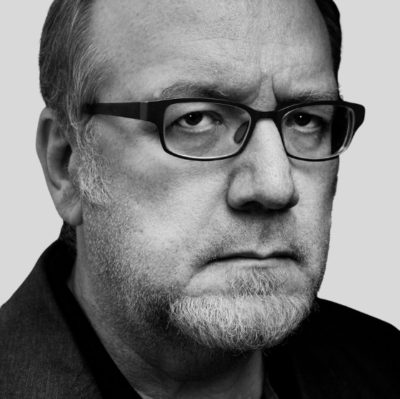
Interim writer, Rick McGinnis, Amusements
The worst part of living through the era of doomscrolling, AI slop and endless, valueless content is getting to witness the final, pyrrhic triumph of the pundit. News and information overwhelm us with little in the way of filters except for the ever-mutating algorithm and its indifferent, inscrutable need to either enrage us or corral us to a “buy now” button. And the only figure confident enough to ride on top of that tidal surge of uncurated information is the pundit, God help us.
This dismal state has been decades in the making, and there is no shortage of attempts to understand how we got here. In 2024, journalism professor Mike McDevitt tried to establish a lineage in an article in the Milwaukee Independent, going back to names like Walter Lippman, H.L. Mencken, Mike Royko, and Molly Ivins. He notes that punditry has been popular for a long time, in print and on television. The New York Times, he writes, had just two opinion columnists in the ‘50s, growing to eight by 1994.
“The rise of a television pundit class in the 1960s established a new type of celebrity,” McDevitt writes, “thanks largely to William F. Buckley’s Firing Line, which ran from 1966 to 1999. Leaning back in a chair, clipboard in hand, eyes darting, the conservative author typically treated guests politely on the public affairs show.”
“In my youth,” Michael Lynch wrote in Forbes magazine back in 2013, “pundits were often reporters who had covered politics for decades and could speak clearly and intelligently on a number of political and policy issues. Now, it seems as if many pundits are little more than an opinionated person who is able and willing to speak about something, usually wittily, and often fervently. But I’m reminded of a remark in a Thomas Cook story, ‘If you’re glib, you finally get to the end of what you can say. There are no words left for anything important. Just sleek words’.”
All the way back in 1993 in The Public Interest, Suzanne Garment gave a brief history of TV punditry in a review of two books about pundits, adding Edward R. Murrow’s name to Lippmann’s at CBS in the ‘50s, which lead to public interest chat shows like Agronsky and Company, Firing Line, The McLaughlin Group, This Week with David Brinkley, Crossfire, The Capital Gang, Nightline and The MacNeil/Lehrer Newshour. “The tone of the programs ranges from sedate to maniacal,” she writes.
“First, they do not give much time to any one subject. In addition, for the sake of amusement, this format prods panelists to be more assertive and simpleminded than they would be if they were expressing their views in print. Indeed, some journalists even construct beastly TV personae quite different from their real-life selves. Viewers of The McLaughlin Group in the 1980s, for instance, had no way of knowing that raging bull Robert Novak is a very nice man once the cameras are turned off.”
Garment had no way of knowing about the internet, and the explosion of punditry from lone wolves posting hot takes from the front seats of their cars to refugees from print and television with staff, sets, sponsors, and budgets. Which brings us to Tucker Carlson.
Carlson’s career is a history of punditry; he worked as a fact-checker for Policy Review then wrote opinion pieces for a newspaper in Arkansas before moving on to The Weekly Standard, The New Republic, Slate and the New York Times, among other publications. I first noticed him on CNN, where he co-hosted Crossfire in his then-customary bowtie (an affectation evoking Arthur M. Schlesinger Jr. and an earlier generation of pundits). In 2004 Carlson and co-host Paul Begala were criticized on-air by comedian Jon Stewart, then at the height of his popularity, who accused them and their show of “hurting America” with hack partisan politics.
Less than three months later CNN let Carlson go and canceled Crossfire, but Carlson moved on to shows on PBS, MSNBC and, finally, Fox News, where he hosted Tucker Carlson Tonight until 2023, when he was abruptly let go and the show canceled. Encouraged by the late Charlie Kirk, Carlson started a self-produced program on Twitter/X where, two and a half months later, he interviewed Donald Trump, then campaigning to win his second, non-consecutive term as president.
Carlson has made himself crucial to conservative politics and media for over a generation, so it’s no shock that his recent defection from MAGA and abandonment of the Republican party would be controversial. But it shouldn’t be surprising: on his first show on X, just over ten minutes long, he said that a crashed UFO and its pilot had been recovered by the U.S., called Ukrainian president Volodymyr Zelensky “rat-like” and claimed his country persecuted Christians, and even checked the 9/11 Truther box.
Recently Carlson has become intensely critical of Israel, opposed the U.S. war on Iran, called Winston Churchill World War II’s “chief villain,” praised Russia and Qatar politically and socially, defended the political legitimacy of Hamas and Nicholas Maduro’s socialist government in Venezuela, expressed admiration for Sharia law, and hosted amateur historian and Holocaust denialist Daryl Cooper and white nationalist Nick Fuentes on his show. This summer he announced that he was considering starting a new political party with other breakaway figures from the GOP like Thomas Massie, Marjorie Taylor Greene, and Joe Kent.
Former colleagues were dismayed; Dinesh D’Souza and Mike Huckabee allowed that he might have changed his mind but wanted him to explain why. A roundtable on Dave Rubin’s show with Dr. Drew Pinsky, Sage Steele, Jillian Michaels, and Russell Brand (reclining shirtless in bed in front of his webcam) was unanimous that the change was hard to square with the man they knew, either personally or as a media peer. Rubin and Pinsky speculated that the temptation to enlist the vast audience of alienated young men presumed to make up Fuentes’ constituency was part of Carlson’s motivation.
Ron Avraham, on a Times of Israel blog, wrote that “Carlson, with more than 30 years in the media industry, knows it inside and out. He understands what keeps people watching: taboo subjects, conspiracy theories, and the feeling that everyone else is hiding the truth.”
Writing about “The Perils of Punditry” in the American Reformer, professor Daniel Strand reflects on how figures like Carlson are products of American civic and political culture and that “our free society and culture of public debate invite us to react to every event, often with little reflection or knowledge. Social media amplifies this. And so we saturate society with reaction and impulsive knee-jerk responses that do little to instruct or inform one another or the public.”
“The problem with reactionary punditry is that it does nothing constructive to help our nation or improve the situation. It offers a temporary relief for our own anxiety or frustrations, but it does virtually nothing to contribute anything of substance to the public discussion or analysis. The ubiquity of access to information tricks us into thinking that we know what is going on, but we don’t.”
The good news for Canadians is that we are in no danger of developing a culture of punditry comparable to the United States. Our institutional tall poppy syndrome and aversion to real charisma in civic culture has limited our pundit class to low-wattage forums like At Issue on CBC’s The National or TVO’s The Agenda. The bad news is that proximity and cultural symbiosis with the United States draws us to engage with their pundits and their culture wars as we doomscroll, if only because the stakes look undeniably higher.
Democrats and their liberal supporters generally don’t have conflicted relationships with their pundits; it’s hard to imagine someone like Rachel Maddow, Ezra Klein, or Lawrence O’Donnell breaking with their party, mostly because they rarely go seriously off-message. Even better, many of their pundits are actually entertainers – chat show hosts like Stephen Colbert, Jimmy Kimmel, Trevor Noah, and John Oliver, all following in the footsteps of Jon Stewart, who was the preferred source of news and opinion for millennials during his heyday, when he delivered that crippling blow to Carlson and Crossfire.
The marvel is that conservatives live in thrall to pundits at all, and especially to the degree they do today. A self-identified conservative might sympathize with one or two of Carlson’s more controversial statements but shouldn’t feel any pressure to accept most or all of them as a package; the movement’s only consistent strategy for decades has been that it’s a big tent, but the career of a Tucker Carlson or Candace Owen suggest that it’s hardly a winning one.
The problem isn’t Tucker Carlson but punditry itself, full to bursting with ambitious non-experts hunting for clicks, clout, and algorithm-rigging audience numbers. We’re running politics like a YouTube channel or Instagram account and there’s no way that can end well.
Leave a Reply
You must be logged in to post a comment.