
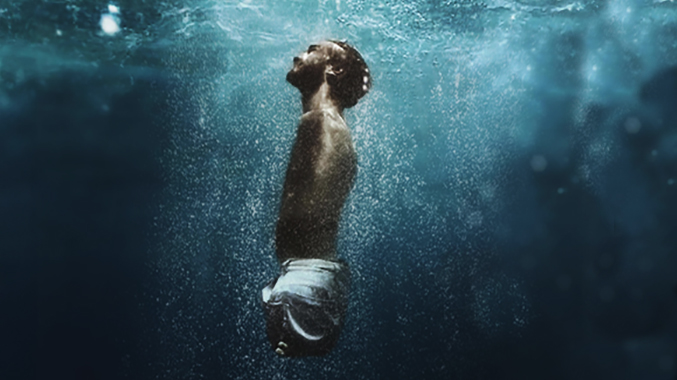
Nick Vujicic’s life is a powerful witness to a truth Catholics hold at the heart of our faith: Every human person is created in the image and likeness of God and possesses a dignity that no disability, illness, or circumstance can take away.
That is why his new documentary, No Limbs, No Limits: The NickV Story, should resonate deeply with Catholic audiences.
Born in Australia without arms or legs, Nick entered the world facing challenges most of us can scarcely imagine. As a child, he endured bullying, loneliness, and depression so severe that he contemplated suicide. Yet through his Christian faith, he eventually discovered that his physical condition did not determine his worth, that God had not abandoned him, and that his life had a purpose.
That realization changed everything.
Nick went on to become a husband, father, bestselling author, and internationally known speaker whose message of hope has reached millions worldwide. Nick is an evangelical Christian whose witness powerfully reflects a truth Catholics deeply affirm: human dignity is not earned by achievement, independence, or physical ability. It is given by God.
No Limbs, No Limits, opening in theaters Sept. 25 through Fathom Entertainment, tells that story through decades of family footage and Nick’s own testimony. The film presents his life not as a spectacle but as an invitation to hope, especially for people struggling to see God’s goodness in the midst of suffering.
The dignity of the human person is foundational to the Church’s social teaching. Human life is sacred, and every person is precious because each one bears the image of God.
Nick Vujicic’s life embodies that principle. He is valuable not because he overcame disability. He was valuable before he overcame anything.
He was valuable before he became famous, before he wrote books, before he spoke to packed stadiums, before he married and became a father.
He was no less valuable as the frightened little boy wondering why God had allowed him to be born without arms and legs.
Catholic teaching doesn’t say human dignity must be earned through productivity, independence, intelligence, or achievement. It belongs to every person because every person bears the image of God.
Pope St. John Paul amplified that teaching in his 1984 address in Vancouver, Canada. “The value and dignity of the human person does not arise from physical or mental qualities, from efficiency, productivity, or speed in one’s actions,” John Paul II said. Rather, it comes from the fact that each person “is created by God and redeemed by the blood of his Son Jesus Christ.”
The Church’s defense of life flows directly from that conviction. The unborn child, the elderly person, the disabled person, the poor, and the sick possess the same fundamental dignity—not because of what they can accomplish, but because of who they are.
That conviction stands in stark contrast to the abortion culture that has taken root across much of the West, where an unexpected pregnancy, disability, or difficult prenatal diagnosis can become a reason to question whether a child should live at all.
Mother Teresa confronted that mindset directly in her 1979 Nobel Peace Prize lecture, calling abortion “the greatest destroyer of peace today.” She insisted that the unborn child, no less than anyone else, is known and loved by God.
Nick’s life makes that truth tangible. No prenatal diagnosis can tell us what a human life will ultimately become—or how profoundly that life might touch the world.
The Catechism likewise teaches that people “whose lives are diminished or weakened deserve special respect” and should be helped to live as fully as possible (CCC 2276). Nick’s parents did precisely that. Rather than defining their son by what he lacked, they helped him discover what he could become.
Nick’s life takes that teaching out of the abstract and gives it flesh and blood.
The 1987 instruction Donum Vitae is even more explicit about prenatal diagnosis, warning that it “must not be the equivalent of a death sentence.” Imagine looking at Nick before birth and trying to determine what his life would be worth.
No arms. No legs. What kind of future could he possibly have? Nick’s life is the answer.
A future filled with faith, friendship, marriage, children, suffering, joy, and a global ministry that has encouraged millions of people not to give up.
Nick has also crossed denominational lines naturally throughout his career. Catholics may remember him from the 2009 short film The Butterfly Circus, in which he starred alongside Catholic actor and producer Eduardo Verástegui. Nick played Will, a limbless man displayed as a sideshow curiosity who gradually discovers that he is capable of far more than the world imagined.
On this fundamental truth, Catholics and Nick stand together: God does not make disposable people.
That may be the film’s greatest gift.
Nick wants the documentary to reach churches, schools, small groups, and especially people disappointed by Christians or wrestling with God’s goodness in the midst of pain.
Catholics should accept that invitation.
Our faith does not promise a life without suffering. It proclaims something far more radical: suffering doesn’t erase dignity, disability doesn’t erase purpose, and weakness doesn’t make a person less worthy of love.
Nick Vujicic, a man without arms or legs, has spent his life becoming, in his own way, the hands and feet of Christ.
His life testifies to a truth Catholics should proclaim with confidence: Every human life bears the image of God—even one with no limbs.
If you value the news and views Catholic World Report provides, please consider donating to support our efforts. Your contribution will help us continue to make CWR available to all readers worldwide for free, without a subscription. Thank you for your generosity!
Click here for more information on donating to CWR. Click here to sign up for our newsletter.
Leave a Reply
You must be logged in to post a comment.