
“I vividly remember driving home with tears streaming down my face, overwhelmed by the feeling that our young Catholic family had been excluded simply because our son experiences the world differently.”
These are the words of Sarah Taylor, a Catholic mother of three whose 9-year-old son, Reid, was excluded from parish activities because of his autism.
“As a mother, it was heartbreaking to see my child denied opportunities to participate in the very community where we sought belonging, acceptance, and spiritual growth,” Taylor told EWTN News.
Reid was asked to leave sacramental preparation classes and Vacation Bible School because the parish couldn’t accommodate his special needs. His mother described this as “devastating” — but she decided to do something about it.
“In the days that followed, I felt a wide range of emotions — sadness, frustration, disappointment, and a fierce determination to advocate for greater inclusion of individuals with disabilities within the Catholic Church,” Taylor said. “My husband and I knew that something needed to change, not only for our son, but for other families who might face similar barriers.”
Taylor reached out to her home diocese of Baton Rouge, who put them in contact with the All Are Welcome ministry. Through the ministry, she and her family found genuine, “life-changing” acceptance.
“We were welcomed not despite Reidʼs autism, but with an understanding that his differences are part of who he is,” Taylor said. “That sense of acceptance was life-changing for our entire family.”
“The ministry has also strengthened our faith journey in unexpected ways,” Taylor said. “During a time when we felt hurt and disconnected from the Church, the kindness, compassion, and support we received reminded us of what it truly means to be the body of Christ. Through the ministry, we experienced the love and inclusion that Jesus demonstrated throughout his ministry.”
An estimated 1 in 4 people have a disability, according to 2022 CDC data. About 3.2% of children — 1 in 31 children — have autism. But ministries designed for inclusivity can be hard to find.
Jodi Devore, who has three children with autism, founded All Are Welcome along with another Catholic mom, Edda Dupaquier, after having similar experiences. The Catholic special needs support ministry began as a backyard rosary group and has since expanded throughout the diocese.
“As we prayed and shared our stories, we realized we all carried the same desire,” Devore said of the backyard rosary group. “We didnʼt want a ministry beside the Church — we wanted our families to fully belong within the Church. We wanted our children to know Christ, receive the sacraments, build genuine friendships, and participate fully in parish life alongside everyone else.
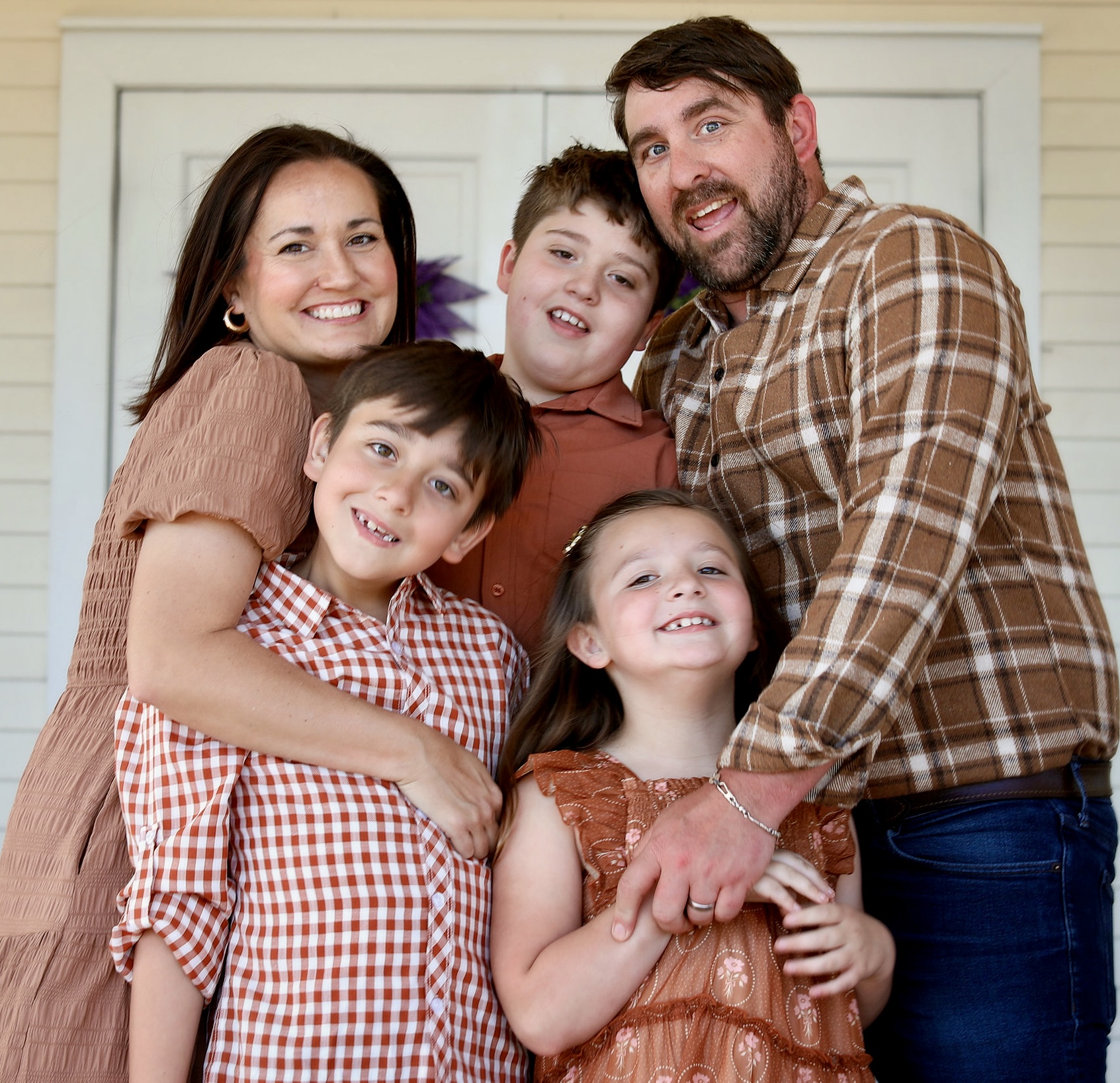
“As we prayed and shared our stories, we realized we all carried the same desire,” Devore said of the backyard rosary group. “We didnʼt want a ministry beside the Church — we wanted our families to fully belong within the Church. We wanted our children to know Christ, receive the sacraments, build genuine friendships, and participate fully in parish life alongside everyone else.
The ministry has had a powerful impact on the diocese.
“Weʼve watched families return to Mass after years away. Children have received sacraments,” Devore said. “Parents who once felt alone have found a community that truly understands them. Most importantly, weʼve witnessed families rediscover that they have a place in the life of the Catholic Church.”
“Our hope has always been simple: that every individual with special and exceptional needs — and every parent, sibling, and caregiver who walks beside them — would know they are not just welcome in the Church, but that they are an essential part of the body of Christ,” Devore said.
Running to the altar: Sensory-friendly Masses
Mass is a key area where families with children with disabilities can feel excluded — but it’s one of the most important parts of being Catholic. Sensory-friendly Masses — designed for people with special needs like autism — are “one of the most meaningful parts of our ministry,” according to Devore.
These Masses feature lower lighting, softer music, and shorter and more literal homilies.

“Families know they can move around as needed without fear of judgment,” Devore explained. “Most importantly, everyone gets Jesus.”
Before and after Mass, the environment is full of excitement and beauty, according to Devore.
“Children and adults with disabilities often run to the altar with joy. They arenʼt afraid. They arenʼt worried about doing something wrong. Theyʼre simply drawn to Christ,” Devore said. “Every time I see it, Iʼm reminded thatʼs what the Church should feel like — a place where people are free to run toward Jesus.”
Attending Mass can be incredibly challenging for families with children with special needs.
“For many families, Sunday morning isnʼt as simple as getting everyone dressed and going to Mass,” Devore said. “Sometimes the clothes are too itchy. The smell of incense can be overwhelming. The music may be painfully loud. Sitting still for an hour can feel impossible. A child may need to move, vocalize, or leave the pew altogether.”
“As a parent, youʼre doing everything you can to help your child, but at the same time youʼre painfully aware of every glance, every stare, and every whispered comment around you,” Devore said.
“What hurts most isnʼt the noise or the outbursts. Itʼs the feeling that you and your child, your family, donʼt belong in the very place where you should feel most at home,” Devore said.
Taylor explained how children with autism may behave differently during Mass, but that doesn’t make them any less reverent.
“As a mother of a child with autism, my hope is that every member of the Catholic Church understands how important it is to welcome individuals with disabilities into the Mass — not just occasionally, but as a natural and expected part of parish life,” Taylor said.
“A child may wear noise-canceling headphones to manage the sounds of a crowded church,” Taylor said. “They may flap their hands when they are excited, rock back and forth for comfort, stim during the homily, or carry a beloved dinosaur up with them when they receive Communion. These behaviors are not distractions; they are part of how that child experiences and navigates the world. They do not lessen the reverence of their worship or the sincerity of their faith.”

“The Catholic Church is meant to be a home for everyone,” Taylor continued. “When individuals with disabilities are present at Mass, they are not interrupting the community — they are enriching it. Their presence reminds us that Godʼs love is not reserved for those who fit a certain mold. It is for all of his children.”
“What matters most is not whether a child sits perfectly still, remains silent, or follows every social expectation,” Taylor said. “What matters is that they are there. They are present. They are experiencing Jesus in the way they are able. They are witnessing the miracle of the Eucharist and participating in the life of the Church.”
“Our differences are not obstacles to Godʼs love; they are reflections of the beautiful diversity of his creation,” Taylor said. “If we truly believe that every person is made in the image and likeness of God, then every person deserves to be welcomed, valued, and embraced within our faith communities. A child with headphones, flapping hands, or a dinosaur in hand belongs at the Lordʼs table just as much as anyone else. And the Church is stronger, more compassionate, and more Christ-like because they are there.”

“These children of ours, they make the ground holy,” said Dupaquier, who helps lead the ministry alongside Devore and Deacon Randall Waguespack. “And they make us better people with more virtues, with more patience, with more understanding — capable of loving in ways that we weren’t sure that we could love.”
Coming home: Communities transformed
The ministry has helped bring families back into the Church; most importantly, it has made the Church feel like home.
Devore and her family experienced feeling “like outsiders in our own Church.”
“Not because people were intentionally unkind, but because many simply didnʼt understand what they were seeing,” Devore explained. “Over time, that judgment becomes exhausting, and for many families, it leads them to quietly stop coming.”
But Devore said the ministry has given her “hope.”
“Iʼve watched parishioners grow in understanding, volunteers embrace these families with incredible love, and parents finally take a deep breath because they know they donʼt have to apologize for their child simply being who God created them to be,” Devore said.
The All Are Welcome ministry hosts family retreats, support groups, and helps support persons with disabilities in participating in the liturgy, not only through sensory-friendly Masses but also through active lay participation.


“Weʼre also passionate about meaningful participation in the liturgy. Individuals with disabilities serve as altar servers, proclaim the readings when theyʼre able, bring forward the gifts, and participate in the Mass in visible and meaningful ways. They arenʼt simply attending church — theyʼre helping lead the worship of the Church,” Devore said.
Through the ministry, Devore has seen transformation not only of families but also of parishes.
“The greatest transformation weʼve witnessed isnʼt just that families return to Mass. Itʼs that they begin to believe they belong there,” Devore said.
“Parishioners begin seeing gifts instead of limitations. Entire parish communities are transformed because they discover that these families arenʼt guests in the Church — theyʼre an essential part of it,” Devore said.
“Weʼve seen families return to Mass after years away,” Devore said. “Weʼve celebrated children receiving the Eucharist when their parents once thought it might never happen. Weʼve watched parish communities discover the incredible gifts these individuals bring to the Church.”
“Our greatest hope is that one day no family will wonder whether thereʼs a place for them in the Catholic Church,” Devore said. “We want every individual, regardless of ability, to know Christ, receive the sacraments, discover their God-given gifts, and live a life rooted in faith.”

Understanding disability: Seeing as Christ sees
Devore and Taylor encouraged people to be accepting of people with special needs, sharing what they believe is most important for others to understand about disability.
“Families affected by disability often face barriers that many people never think about,” Devore said.
“I would want people to understand that no two children with disabilities are alike,” Taylor said. “My son may communicate differently, process information differently, or respond to situations in ways that others do not immediately understand, but those differences do not diminish his value, his intelligence, or his desire to belong. Like every child, he wants to be accepted, included, and loved for who he is.”
It’s not about big gestures, but more about the small moments, according to Taylor. “Simple acts of patience, understanding, and inclusion can make an enormous difference for our families,” she said.
But acceptance is also about how other people “see.”
“Perhaps most importantly, I would want people to move beyond seeing the disability and instead see the child: see their unique gifts, their personality, their sense of humor, their faith, their kindness, and their potential,” Taylor said.
“I would simply ask people to see one another through the eyes of Christ,” Devore said. “If you see a child making unexpected noises at Mass, an adult who communicates differently, or a family that seems overwhelmed, donʼt assume they donʼt care or donʼt want to be there.”
“More often than not, theyʼre doing everything they can just to be present,” Devore continued. “A smile. An invitation. Sitting beside them instead of moving away. Those simple acts of kindness can change someoneʼs entire experience of the Church.”