
The Diocese of Nashville’s Catholic Schools Office is raising awareness among Tennessee Catholic families about how to protect their children from risks posed by AI.
The Sept. 17 talk, titled “Catholic Family’s Guide to AI Safety,” will be given by Megan Garcia, a Catholic mother whose son took his own life while using an AI chatbot. Garcia’s talk will center on the “growing dangers of AI, chatbot risks, and protecting children at home.”
“After the heartbreaking loss of her 14-year-old son, Sewell Setzer III, following an intense relationship with an AI companion chatbot, Garcia transformed her grief into a mission to protect other children and families,” the diocese said in a Sept. 2 press release.
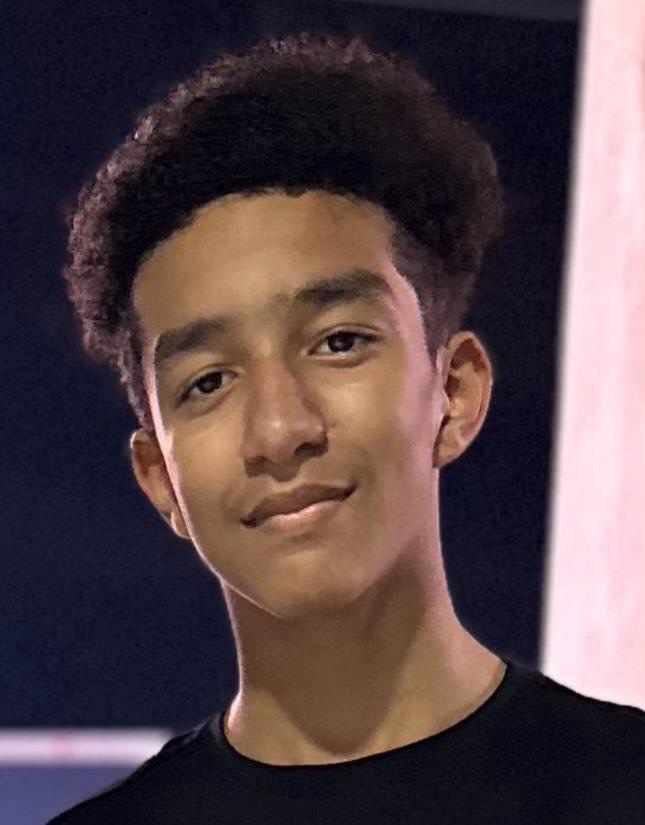
Garcia is an attorney and child safety advocate and serves as chair of the Blessed Mother Mary Foundation. She met with Pope Leo XIV in November 2025 during an audience with participants in a conference on child dignity and AI ethics.
DePaul University partners with Vatican Laudato si’ Center for Higher Education
DePaul University has announced it will serve as the Chicago-based partner for the Vatican’s Laudato si’ Center for Higher Education.
The university will also launch the DePaul Institute for a Sustainable Future “to drive the collaboration, expanding a shared commitment to advancing integral ecology and human development,” according to a Sept. 2 press release from the university.
“As a Catholic, Vincentian university, DePaul recognizes that caring for our common home is inseparable from caring for one another,“ Robert L. Manuel, president of DePaul University, said. ”The health of our planet directly affects the well-being of people and communities around the world, particularly those most vulnerable to a changing environment.”
The university will collaborate with more than 60 research and higher education institutions across 35 countries through its participation in the Global Alliance for Laudato si’, according to the release.
National Catholic Bioethics Center launches master’s degree with Catholic University of America
The National Catholic Bioethics Center has announced its partnership with the Catholic University of America for a master’s degree in moral theology and ethics.
Starting with the 2026-2027 academic year, “students who complete the NCBC’s National Catholic Certification Program in Health Care Ethics can transfer six credits toward CUA’s master’s degree in moral theology/ethics,” according to an Aug. 24 press release from the bioethics center.
“This is a great opportunity for our students to further their graduate education with a trusted, faithful institution of higher education following completion of our Certification Program,” Joe Zalot, director of education at the NCBC, said in the release. “CUA is now the sixth academic partner to which our students can transfer credits.”
Graduates of Catholic colleges more prepared for AI, national study finds
A study carried out on behalf of the Center for Catholic Studies at St. Mary’s University in San Antonio, Texas, has found that graduates of Catholic colleges report higher levels of preparedness in dealing with AI than graduates of secular institutions.
The findings came as part of the Center’s third Holistic Impact Report, carried out in partnership with YouGov, according to a Sept. 3 press release from the university.
About 44% of Catholic college graduates said they use AI at least daily, compared with 36% of secular college graduates, while 33% said their college moderately or better prepared them to use AI, compared with 23% of secular graduates, according to the study.
Catholic college graduates were also slightly more likely to use AI at all and more likely to view it as beneficial to society, with 36% expecting significant or transformative benefits compared with 28% of secular graduates.
“After three studies, we are seeing a remarkably consistent picture of what Catholic higher education contributes to graduates’ lives,” Jason King, Beirne chair and director of the Center for Catholic Studies at St. Mary’s University, said in the release.
“The findings on AI are particularly interesting because the greater confidence graduates of Catholic colleges express in engaging this new technology is accompanied by a stronger sense of meaning and purpose in their lives and work.”
Leave a Reply
You must be logged in to post a comment.