
The U.S. bishops’ Solidarity Fund for the Church in Africa is advancing Pope Leo XIV’s call for deeper unity by funding bicycles that help Marianist sisters reach remote villages in the Central African Republic.
The U.S. Conference of Catholic Bishops (USCCB) has distributed 97 grants, including the bicycle project, totaling more than $3 million in 2025 through its Africa Solidarity Fund, according to a July 21 press release. The fund also supports programs in Mali, Sudan, Burkina Faso, and throughout the Horn of Africa.
Archbishop Thomas Zinkula, chair of the USCCB’s Subcommittee on the Church in Africa, said in a statement: “The gifts of Catholics in the United States to the Solidarity Fund for the Church in Africa underwrite projects that build foundations for peace, as well as projects directed toward evangelization, vocations, environmental stewardship, leadership formation, and other facets of our faith.”
Bicycle ministry opens access to rural areas
One grant enabled the Marianist sisters to train “Gospel volunteers” and equip them with bicycles to distribute Bibles and rosaries, the USCCB statement said. Sister Amala Francis of the Society of Daughters of Mary Immaculate in the Central African Republic said the bicycle project proved highly valuable for young people, especially in rural communities where travel had previously been impossible.
“We crossed the river and preached the Word of God to the unreached places,” she said.
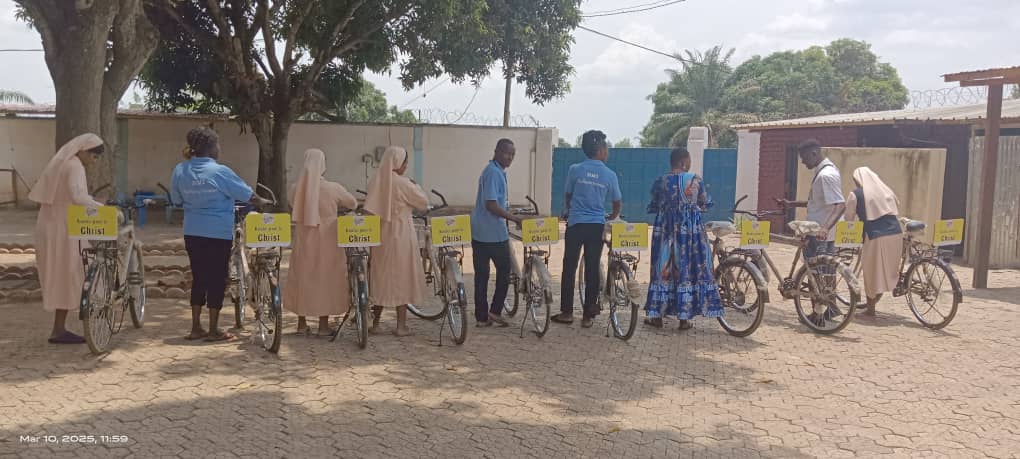
The sisters’ ministry includes the villages of Beagua, Cattin, and Samba, along with St. Philomena School, St. Abraham Parish, and St. Matthew Parish, all located in the rural southwest of the Central African Republic near the border with Cameroon and along the Lobaye River.
Francis described the bicycle project as a “very fruitful time,” noting that 30 sisters were provided with bicycles and carried out their ministry by “going out and distributing Mass pamphlet reflections and then going into schools and ministering.”
Francis said the sisters did not seek to teach merely the catechism in schools but to “bring peace” through the teachings of Jesus through “simple songs” and activities. They also visited families and communities on their bicycles.
Francis shared that another sister told her: “When I drive the bicycle, I see something different, I feel that Christ is coming with me. I feel that I drive this bicycle not just for reaching the place, but I am bringing Christ to the families.”
Confronting wounds of abuse
Francis said she encountered many troubling trends among young people throughout the project, with 400 to 600 children who have not gone to school because they lacked basic services and spent much of their time idle, since neither nongovernmental organizations nor church workers could reach the area because of the river and dense forest.
“I observed during this project,” she said, “the youth are not knowing about Christ because young girls are carrying [children from] sexual abuse and early pregnancy.”
“Many girls are traumatized with their life. They are traumatized because I see that they are youth not formed in the right path,” she said. “So, we have many programs to help guide the youth on the right path.”
Women as ‘messengers’
The sisters have continued to follow up on their efforts funded through the USCCB’s grant and have continued to find ways to boost education and evangelization in the region.
“Since education is very poor in Central African Republic,” Francis said, “and we wanted to give more, we started our English school [and] we get a lot of books for that for the children and are teaching English, so now the children are also learning different languages.”
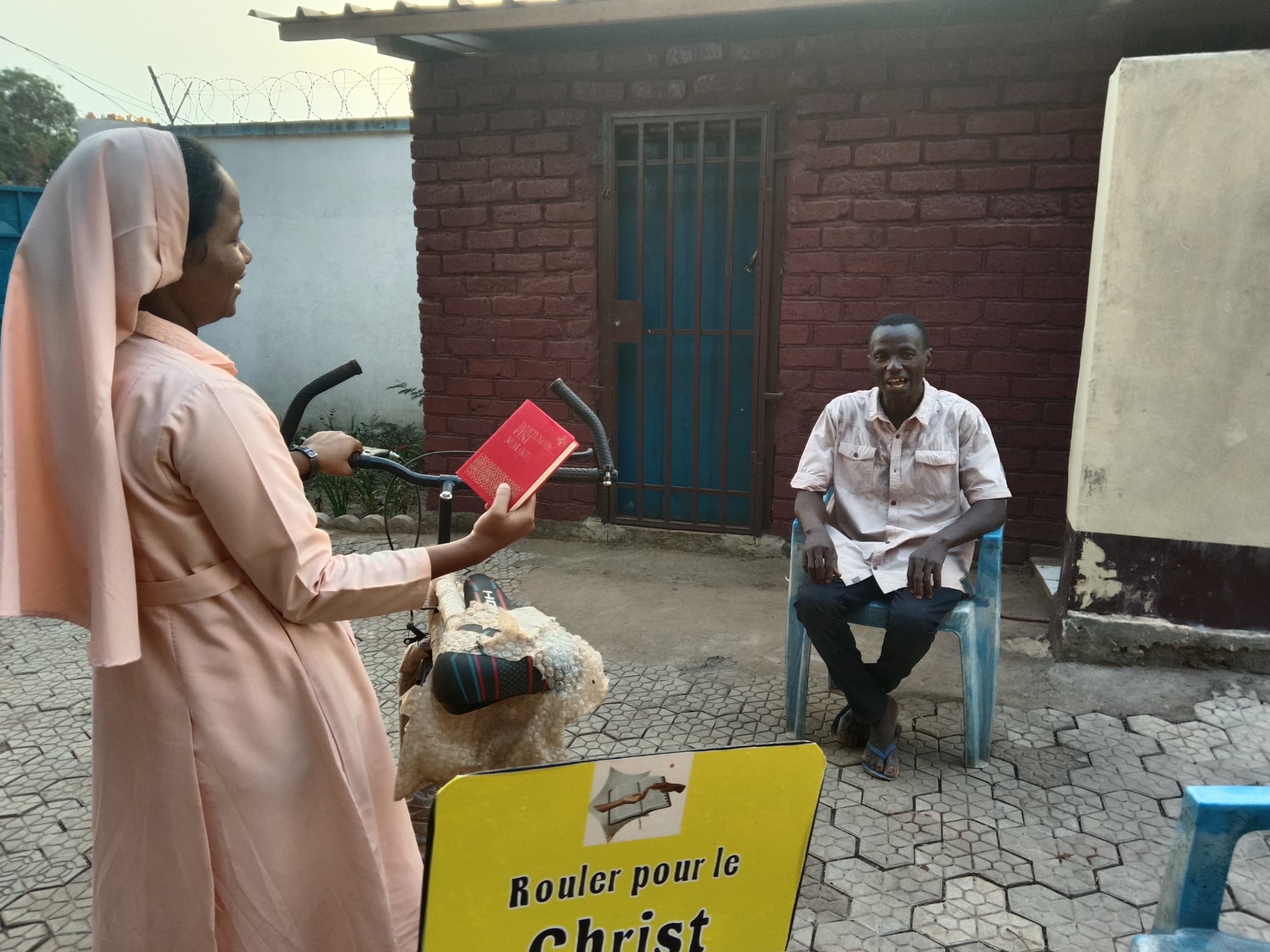
In addition to young people, Francis emphasized the sisters’ efforts to reach women in remote communities, whom she described as “messengers” who “change the mind of the family.”
“Mothers are also important,” she said. “So we are touching the heart of the youth, women, and the children.”
Leave a Reply
You must be logged in to post a comment.