
A growing number of Catholic bishops are instructing the faithful to avoid illicit sacraments celebrated by the Society of St. Pius X (SSPX) after the traditionalist group’s bishops incurred the penalty of excommunication last week.
The Vatican declared July 2 that six prelates involved in the SSPX’s unauthorized July 1 episcopal consecrations incurred automatic excommunication. Despite repeated warnings, SSPX bishops consecrated four new bishops without a pontifical mandate — an act of open disobedience to the authority of the pope that carries automatic excommunication for the six bishops involved.
The SSPX is a fraternity of priests known for its celebration of the Traditional Latin Mass and opposition to the reforms of the Second Vatican Council.
Various Catholic bishops with SSPX locations in their areas are explicitly forbidding Catholics from attending SSPX services while also urging frequent attendees or SSPX priests to seek spiritual guidance and return to the Catholic Church.
Invited ‘home’
Archbishop Bernard Hebda of St. Paul and Minneapolis urged SSPX families in his community to stay with the Catholic Church.
“In the 10 years that I have led this local Church, I have met many sincere people who worship regularly or occasionally at the chapels of the SSPX within the territory of our archdiocese,” Hebda said. “I have been impressed by the strength of their families and their commitment to traditional Catholic values.”
“It is my hope they will not follow the above-mentioned bishops in separating themselves from the successor of Peter, Pope Leo XIV, and from the Church that he humbly leads,” Hebda continued. “Throughout the centuries, our Catholic Church has consistently echoed the teaching of St. Ambrose: Ubi Petrus ibi ecclesia (Where there is Peter, there is the Church).”
“At this difficult moment, we are blessed that the same traditional Eucharistic liturgy beloved by those who have worshipped with the SSPX in the past continues to be celebrated in six locations throughout the archdiocese,” Hebda said. “I am confident that those who prefer the Traditional Latin Mass could find a home here.”
Bishop Terry LaValley of Ogdensburg, New York, noted that in light of the “formal schism,” the disobedience “gravely harms the unity of the Church for which Christ so fervently prayed the night before he died.”
LaValley said in a statement that Catholics are “forbidden” to participate in SSPX sacraments, the only exception being “when there is danger of death.” He noted that the schism “is not simply about the celebration of the Mass.”
“The SSPX repudiates and denounces the teaching of the Second Vatican Council, in particular, ecumenism, religious liberty, collegiality of the bishops with the pope, and the Church’s understanding of and relationship with Judaism,” LaValley noted.
LaValley instructed the faithful to avoid participation with SSPX and invited SSPX priests to remain with the Church.
In a similar vein, Bishop Frank Caggiano of Bridgeport, Connecticut, invited anyone who previously worshipped with SSPX to come “home.”
“The Holy See has made clear that the clergy of the society are now to be regarded as schismatic,” Caggiano said in a statement. “This means that, from this day forward, the sacraments they celebrate are illicit and, most significantly for the faithful, the confessions they hear and the marriages at which they preside are considered invalid by the Church.”
“I know these words are difficult to hear, especially for those among us who have worshipped, whether regularly or on occasion, at liturgies celebrated by priests of the society,” Caggiano said. “Over the years I have come to know some of these families. I have been moved by their love for the beauty of the sacred liturgy, their devotion to our Catholic tradition, and the seriousness with which they seek to raise their children in the faith.”
“My heart goes out to them at this painful moment, and I want them to know that they remain very much a part of our diocesan family,” Caggiano said.
“I also wish to offer a word of reassurance. This excommunication does not fall upon those who have simply attended these liturgies out of a sincere desire to worship and who have never intended to reject the authority of the Holy Father or the teaching of the Church,” Caggiano said. “What the Church now asks is straightforward: Knowing the situation as it now stands, the faithful of the Catholic Church can no longer take part in the liturgies of the society, for to do so knowingly would be to share in a separation from the successor of Peter.”
Caggiano noted that the “vetus ordo,” also known as the Traditional Latin Mass, is still celebrated in his diocese at several parishes throughout the diocese.
He emphasized that the diocese also welcomes any SSPX priest who wants to return to full communion “with open arms and great tenderness.”
Bishop James Johnston of Kansas City-St. Joseph, Missouri, said he will “be preparing guidance to assist our clergy, lay faithful, and especially any of the lay faithful who have worshipped locally with the SSPX at St. Vincent de Paul Kansas City.”
“While it is imperative to not abandon future efforts toward full communion and to fervently pray for such, those who wish to maintain communion with the Catholic Church, including valid reception of the sacraments of matrimony and penance (confession), will no longer find that possible within the SSPX,” Johnston said in the statement.
“In this moment, I wish to reassure the members of the SSPX within this diocese of my pastoral concern as a shepherd with a desire to assist you in this time of crisis,” Johnston said.
Schism ‘wounds’ the body of Christ
Bishop Douglas Lucia of Syracuse, New York, emphasized that the announcement “forbids Roman Catholics of good standing to participate in and to receive the sacraments from bishops and priests associated with the Society of St. Pius X.”
“[F]ormal adherence to schism is a grave offense against God and carries the penalty of excommunication decreed by the Churchʼs law,” Lucia wrote July 2.
“I grieve over the wound that has been inflicted on Christʼs body, the Church, and its effect on the spiritual good of the faithful,” Lucia said. “Although todayʼs action relates to a specific event, I would caution that such wounds occur in the Church, when peopleʼs pain and concerns are ignored and the universal call to holiness is subjugated to personal agenda.”
“I regret that the communion and trust that has been built in my seven years as bishop here in Syracuse is now so imperiled, but there cannot be accord when discord has been sown,” Lucia said.
Bishop Donald Hying of Madison, Wisconsin, instructed Catholics “to refrain from attending Mass at any SSPX chapels.”
“The Catholic faithful should attend Mass at a Catholic church with a Catholic priest where they can receive licit and valid sacraments,” Hying said.
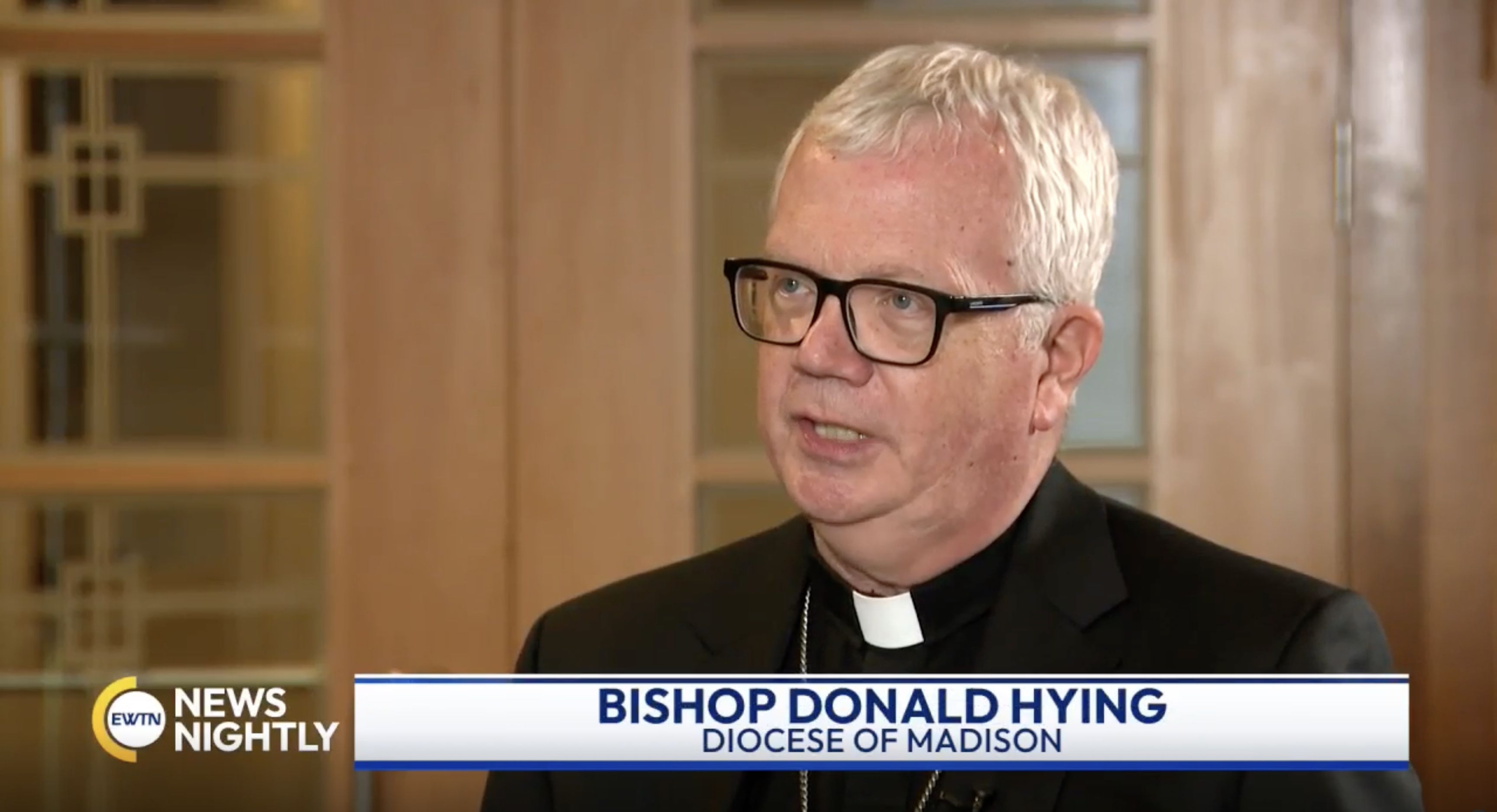
“For many years, the Church has been in dialogue with the leadership of SSPX in the hope that the group would return to full communion with the Catholic Church,” Hying said. “Their continued rejection of papal authority and decision to undertake blatantly schismatic acts have harmed these discussions and wounded the path to unity.”
Archbishop Shawn McKnight of Kansas City, Kansas, called the bishopʼs consecrations “a source of profound sorrow for the whole Church because it wounds the visible unity that Christ desires for his body.” He noted that Pope Francis and Pope Benedict XVI took several steps toward communion and acceptance of the society.
“Fidelity to sacred tradition is never opposed to fidelity to the successor of Peter,” McKnight said in his letter. “Rather, both are gifts entrusted by Christ to his Church and serve together to safeguard the deposit of faith and promote the salvation of souls.”
“The Church’s living tradition is preserved by remaining close to the successor of Peter, by adhering to the apostolic faith handed down through the centuries and safeguarded within the communion of the Church,” McKnight said.
Leave a Reply
You must be logged in to post a comment.