
“The loneliness was one of the hardest parts,” said Jared Plasberg, a 23-year-old who ran across the country from February to June to raise money for pregnant women in crisis.
The trek took 114 days, about four months, and spanned thousands of miles.
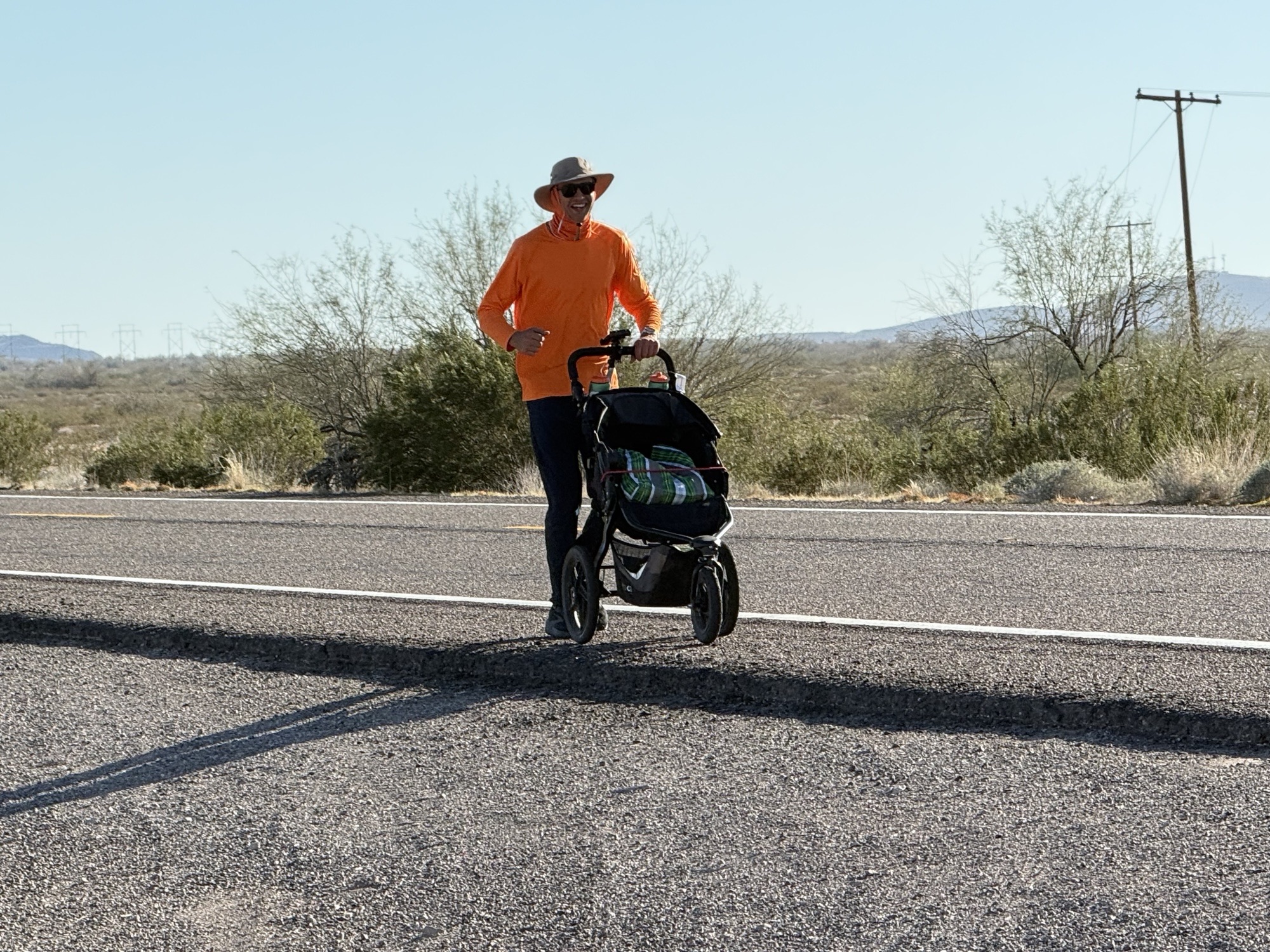
The whole time, Plasberg pushed an 80-pound stroller. It held his supplies but symbolized something more: a reference to mothers who need support. By the end of the 3,000 miles — beginning in San Diego on Feb. 19 and ending in St. Augustine, Florida, on June 13 — Plasberg raised $20,000 for a local pregnancy help center.
“Every day required making many decisions: where to sleep, where to find food, how to navigate the route, and how to stay safe,” Plasberg said. “There were many days when I felt discouraged, exhausted, or overwhelmed.”
“Throughout the journey, I often thought about how many mothers face challenges and sacrifices that are far greater than anything I was experiencing on the road,” he said.
Plasberg donated the money to Front Royal Pregnancy Center, a group local to the college he graduated from, Christendom College in Virginia.
“The run became a way for me to raise awareness and support for a ministry that walks alongside and supports these mothers,” he said.
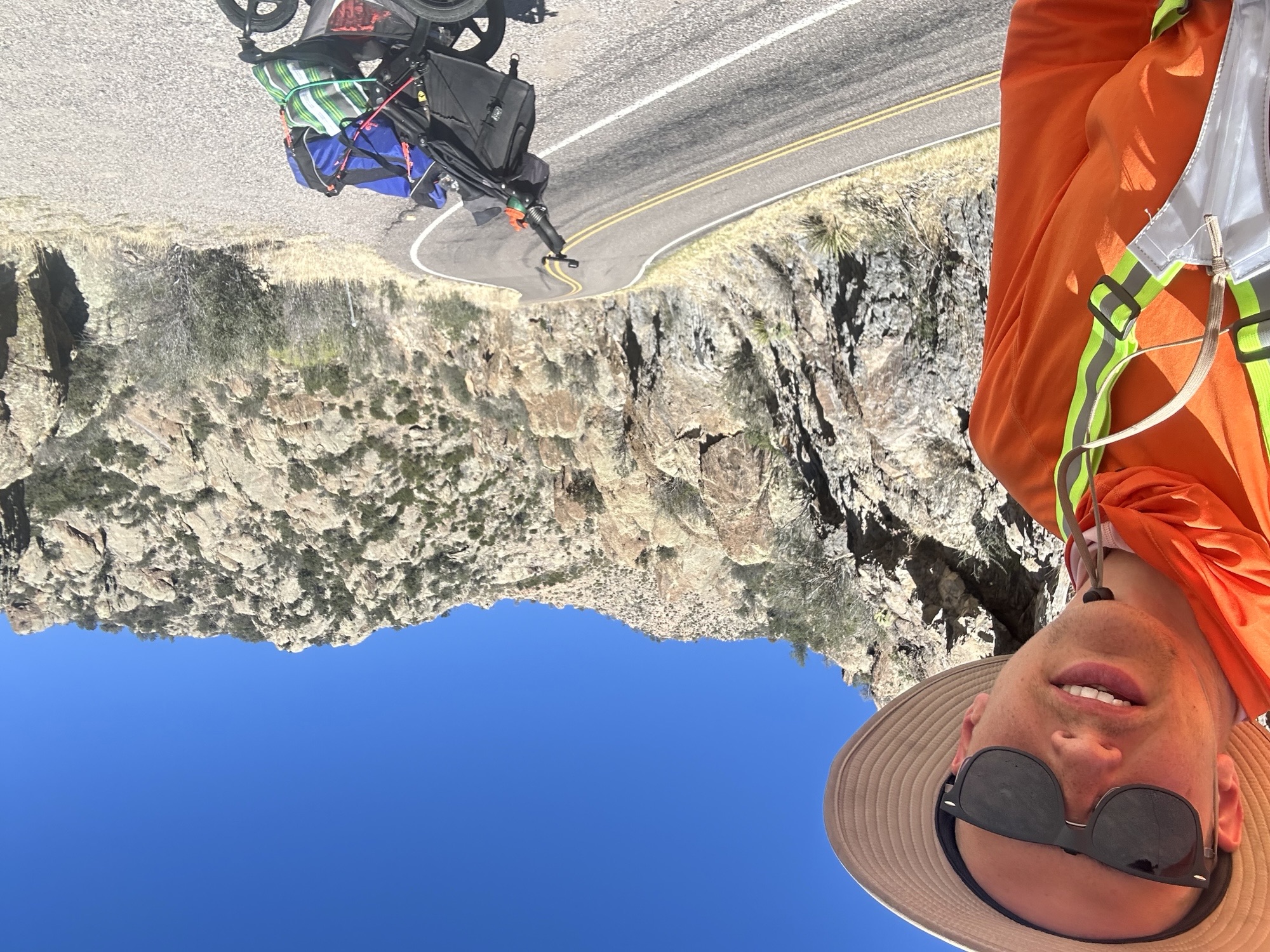
The run was also a spiritual journey for Plasberg; it gave him time to think about his calling to become a monk. He is currently discerning a vocation to the Carthusian order, a contemplative order of monks founded by St. Bruno in 1084.
“The run continually reminded me that I depend on him [God] for everything,” Plasberg said.
He took inspiration from the Camino de Santiago, a famous pilgrimage in Spain and France. Many people journey along the Camino, whether walking or biking, Catholic or not.
The most famous Camino path runs from France to Spain. Plasberg’s run was from San Diego to Florida, but it was a prayerful pilgrimage of its own.
“I carried many intentions throughout the journey,” Plasberg said. “I prayed for mothers facing unexpected pregnancies, for the unborn, for the supporters and staff of the Front Royal Pregnancy Center, for my family and friends, and for all the people who entrusted me with their intentions along the way.”
When he was a college student, Plasberg would pray the rosary outside abortion clinics on Saturdays with other students.
“The pro-life cause is something dear to my heart because every human life has inherent dignity and worth,” he said.
“During my years in college, I often pondered the saying of Pope Benedict XVI: ‘The world offers you comfort. But you were not made for comfort. You were made for greatness,’” Plasberg said. “Also, St. Pier Giorgio Frassatiʼs phrase ‘Verso lʼalto’ inspired me to pursue true greatness.”
“Verso lʼalto,” meaning “to the heights,” is an Italian phrase coined by Frassati, who loved mountain climbing, which carries a deeper spiritual meaning.
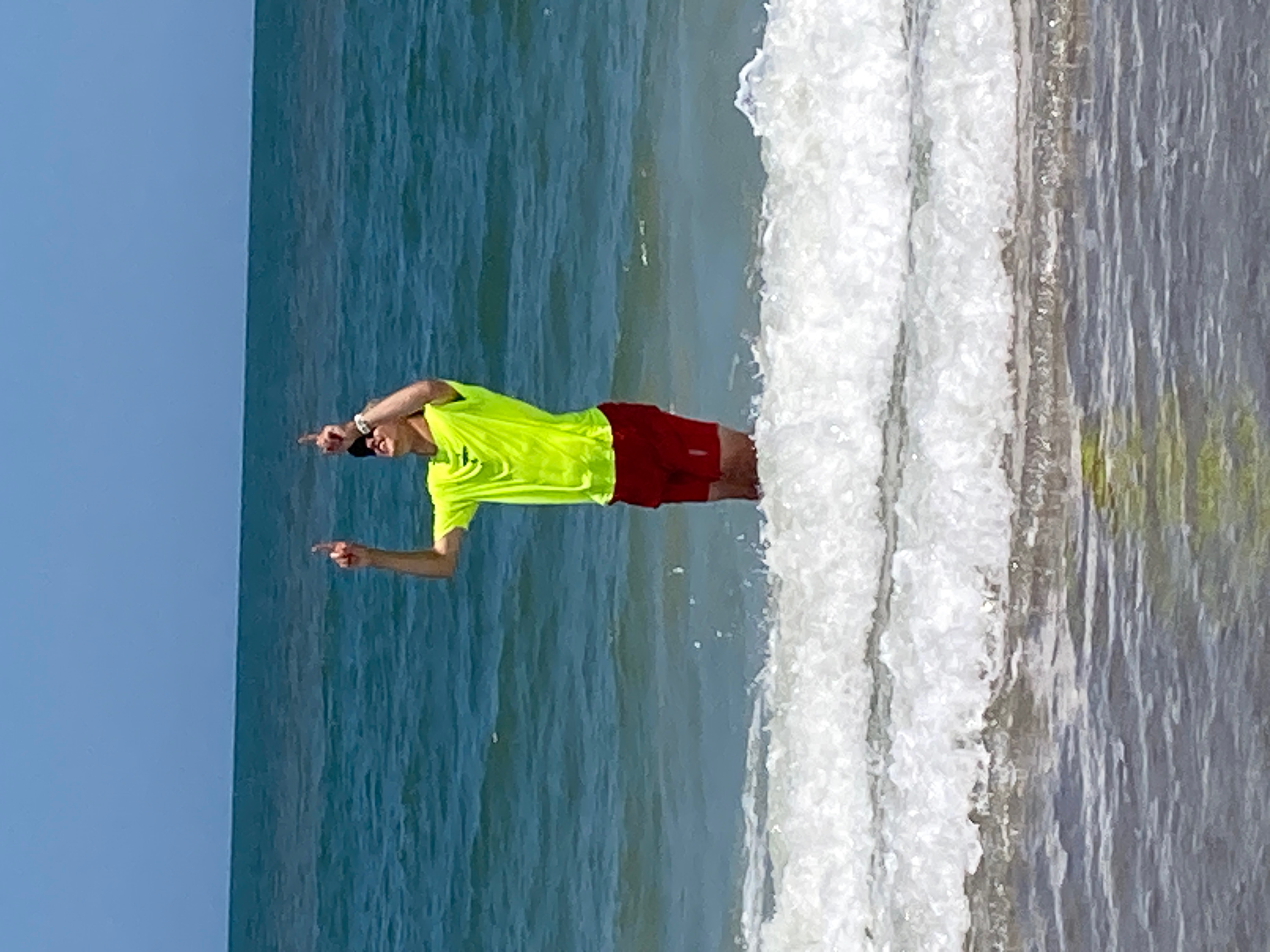
“As the journey continued, I also found myself praying more for the people I encountered every day,” Plasberg explained.
The stroller was “a conversation starter.”
“People would stop and ask what I was doing, and those conversations often led to opportunities to share the mission of the pregnancy center,” he said.
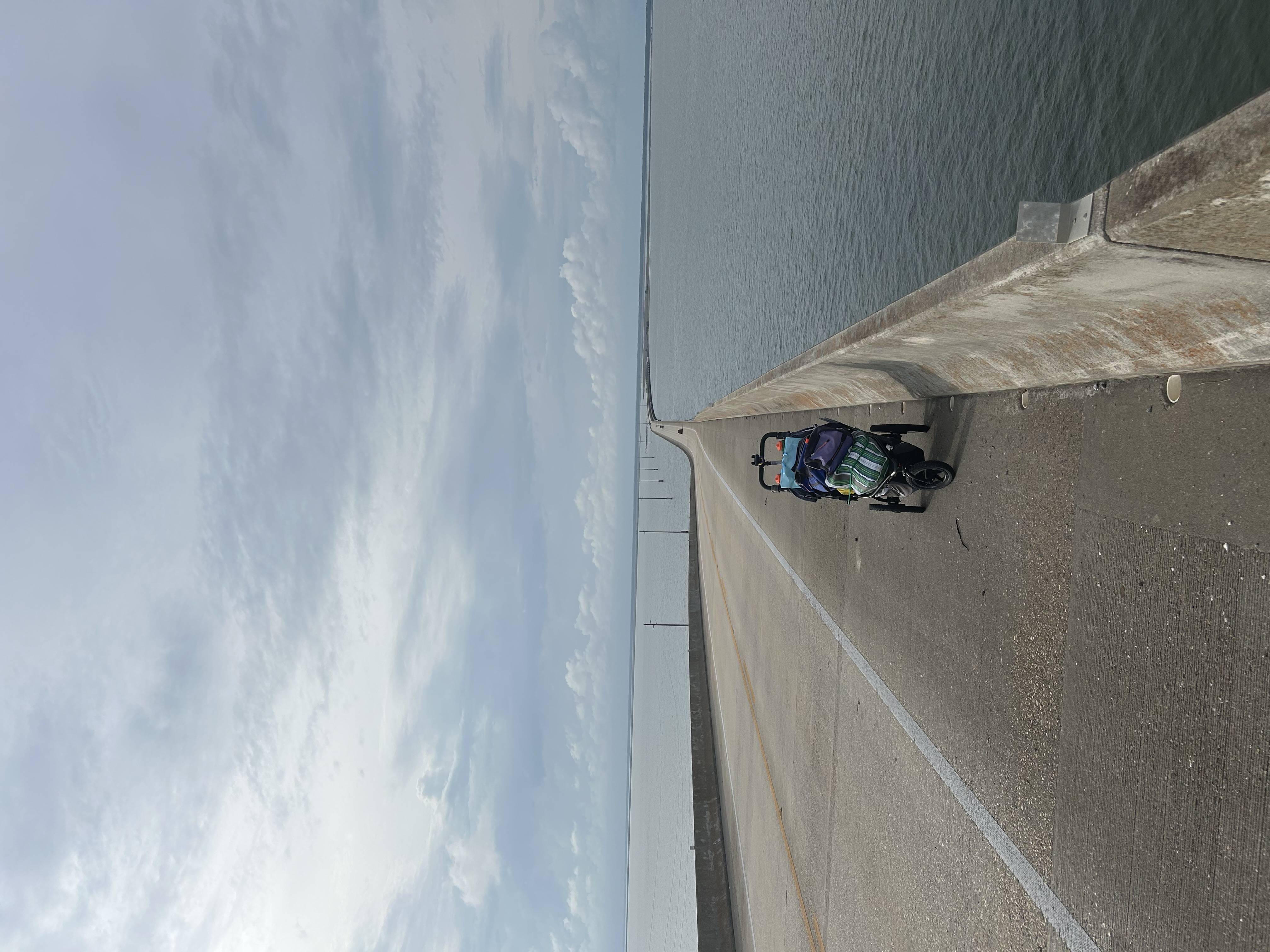
“I prayed for the drivers passing by, store clerks, families, hosts, priests, fellow travelers, and strangers I would never meet again,” he said.
Carried by God
“The run taught me gratitude for my family, appreciation for the kindness of strangers, and a deeper awareness of God’s providence,” Plasberg said. “It taught me that strength is not the absence of weakness but the willingness to keep moving forward despite it.”
Though Plasberg generally stayed in motels, he sometimes stayed with families along the road.
“One of the greatest gifts of the journey was meeting people whose lives reflected extraordinary generosity and faith,” he said. “I stayed with families who welcomed a complete stranger into their homes, fed me, prayed with me, and treated me like family.”
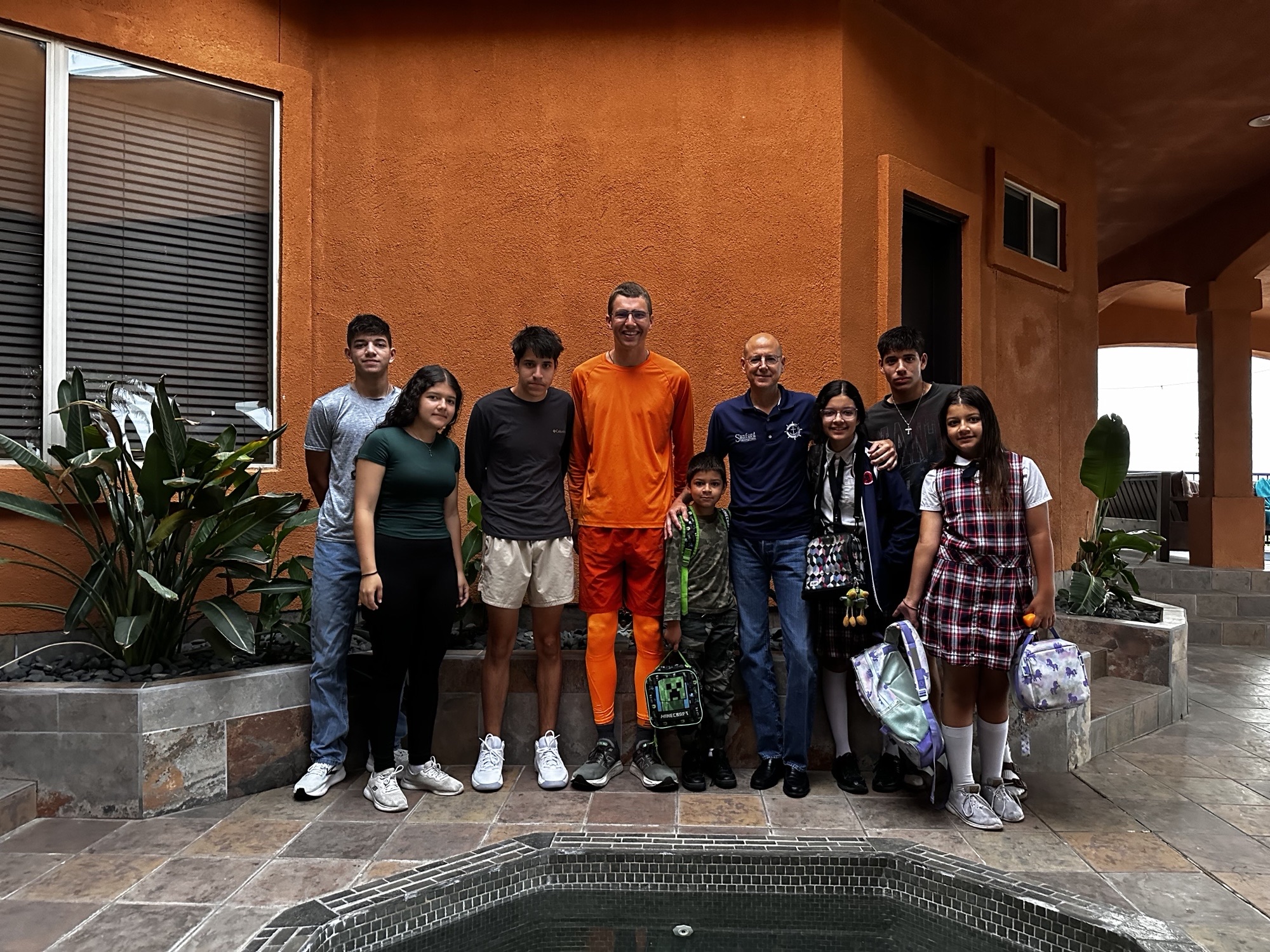
“I met widows who showed remarkable hospitality despite carrying their own crosses,” Plasberg said. “I met religious communities, priests, cyclists crossing the country, and countless ordinary people who quietly lived lives of virtue.”
“Maybe the greatest lesson I learned from [my] journey is that we are not meant to carry our lives by ourselves,” he said. “Rather, we are meant to let ourselves be carried by God, and sometimes it takes 3,000 miles to learn that.”
Discerning monastic life: ‘I was brought to tears’
His next journey is to France, where he plans to join a Carthusian monastery.
“In many ways, this journey became a preparation for that discernment,” Plasberg said.
Along his run, he met a hermitess — a woman continuing an old practice in a modern world. A priest connected Plasberg with her after a Mass he attended in New Mexico.
“I spent about an hour speaking with Amma Chiara, but that hour left a profound impression on me,” Plasberg said. “She radiated joy, peace, and holiness in a way that immediately drew my attention to God.”
Plasberg had a unique connection to Chiara — she had walked across the United States.
“She shared her own story with me and explained that, before becoming a religious sister, she had actually walked across the United States herself about 30 years earlier.”
“Even now, months later, I still think about that encounter,” he said. “Her example showed me that a life completely dedicated to God is not restricted or empty but deeply joyful and fulfilling.”
“Without many of the distractions of ordinary life, I became more aware of both my weaknesses and my need for God,” he said.
Plasberg has another connection to the hermitess — the order he might join involves living like a hermit.
The Carthusians “are one of the most secluded and prayer-focused religious orders in the Church,” he explained.
“Their vocation combines elements of both the solitary life of a hermit and the communal life of a monk,” Plasberg said. “Most of the day is spent in silence, prayer, spiritual reading, and work within an individual hermitage, while the monks also come together for certain liturgical prayers and community observances.”
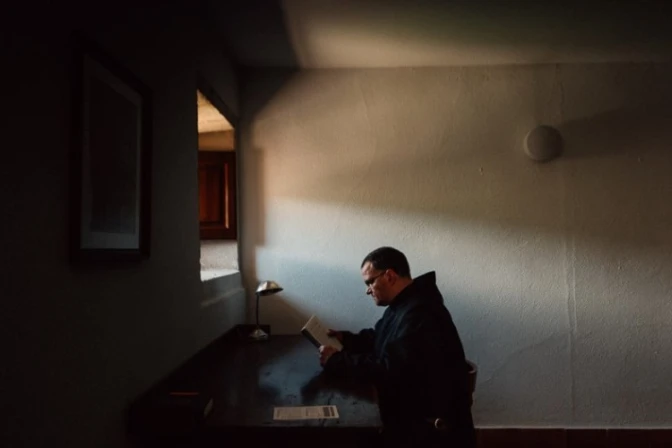
“Unlike many religious communities, their lives are largely hidden from the world,” Plasberg explained. “Each monk lives in a small hermitage with a garden and spends much of his day alone with God.”
The monks don’t see themselves as retreating from the world; rather they pray for everyone who needs prayers and are brothers and fathers to one another.
“The silence and solitude are not meant as an escape from the world but as a way of dedicating oneself entirely to prayer for the Church and the salvation of souls,” Plasberg said.
After spending time at the monastery of the Grand Chartreuse in discernment, the monks welcomed Plasberg to be a postulant, the first formal stage in joining a religious order. He will go there after he obtains a long-stay French visa.
The run was formative for his discernment, he said.
“In some ways, this run across America became part of that discernment. Spending nearly four months alone on the road gave me plenty of opportunities for silence, prayer, and reflection,” Plasberg said. “It exposed many of my weaknesses, attachments, and limitations, but it also helped me experience more deeply my dependence on God. I think I realized the importance of humility, gratitude, and trust as a result of this journey.”
“While I still have discernment ahead of me, the journey confirmed my attraction to a contemplative vocation and my desire to give my life completely to God,” Plasberg said.
“Perhaps the most important lesson was learning that holiness is not something we achieve through our own strength,” he said. “Rather, it comes from allowing God to work through our weakness. Holiness starts with allowing God to love us as we are in this present moment, even in our brokenness.
Leave a Reply
You must be logged in to post a comment.