
Throughout 2026, a museum in Puebla, Mexico, is hosting the exhibition “When Faith Challenged Power,” which depicts the history of the Cristero War, a popular uprising against religious persecution in Mexico that frequently goes unmentioned in education and public discourse.
Marking the centenary of the outbreak of the conflict, also known as the La Cristiada, the exhibition on display at the museum at the Universidad Popular Autónoma del Estado de Puebla (UPAEP by its Spanish acronym) aims to highlight “everything involved in the defense of religious freedom” in early 20th-century Mexico, and how Mexicans “decided to defend something that was important to them.”
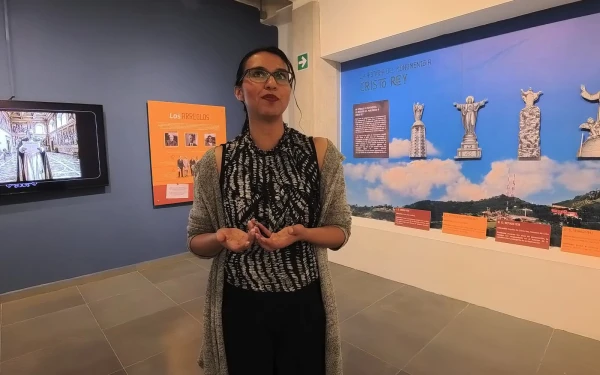
Mariana Cruz Ugarte, coordinator of the UPAEP Museum, told ACI Prensa, the Spanish-language sister service of EWTN News, that the exhibition presents “a reflection that seems very pertinent both today and always: what is important to us, and why is it worth defending?”
A war Mexico rarely talks about
Although tensions between the Church and the Mexican state were rooted in the anticlerical 1917 Constitution, the Cristero War erupted in 1926 when the so-called “Law on Tolerance of Religious Worship” or the “Calles Law,” named after then president Plutarco Elías Calles, went into effect in July of that year.
The regulations promoted and enforced by Calles severely restricted religious freedom, banning public worship outside of churches, prohibiting religious attire, dissolving religious orders, and deporting foreign priests.
Faced with the restrictions, Mexican bishops decided to suspend religious services. Tensions with the authorities escalated, and groups of Catholic faithful across various parts of Mexico spontaneously took up arms against federal repression.
Many of these men and women faced persecution while shouting “¡Viva Cristo Rey!” (“Long live Christ the King!”) — a rallying cry that gave rise to the name by which they would become known: the “Cristeros.”
“There is talk of more than 250,000 deaths in the Cristero War resulting from the armed conflict,” noted Cruz, pointing out that despite the magnitude of that war, it is a “little-known” event.
In Mexico, she said, the War of Independence in the first half of the 19th century and the Mexican Revolution in the 1910s are “very deeply ingrained” in our minds, yet the Cristero War is “a moment in our history that little is said about.”
“That’s why it is important” to remember this war, she said, for “when we forget these lessons, which cost our nation dearly in blood, we risk the possibility that it could happen again, that it could continue to occur in other ways.”
Furthermore, she emphasized, “even though this happened long ago, it helps us reflect on the importance of dialogue versus a response that descends into violence.”
An exhibition that seeks to surprise
The immersive exhibition invites visitors to witness the private lives and concerns of the Cristeros “as if we were observing it ourselves,” and to see “how peopleʼs lives changed” due to the war.
“That really adds to the element of surprise, because people don’t imagine the characters speaking,” noted Cruz, pointing out how visitors approaching certain areas of the exhibition are startled by sounds recreating the lives of persecuted Catholics.
In this way, it feels as though “they are living their lives and we are spying on them,” even witnessing the “fear” experienced by those who “decided to defend something that was important to them.”
“We wanted to surprise people,” she emphasized, noting that this is “an exhibition that differs greatly from what we have traditionally presented at the UPAEP Museum.”
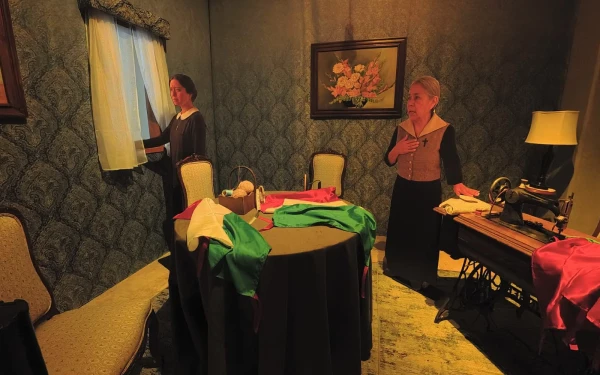
In one area of the exhibition, two women can be heard conversing in hushed tones. “We are seeing these women making flags that they’re going to donate to the Cristero army,” the museum coordinator explained.
Then, one makes one’s way in the dead of night to the center of a village, where the church stands closed and guarded by the federal army.
There, “we approach very discreetly so as not to interrupt what is taking place, the way people continued to live out their faith in secret, inside their homes, in the early hours of the morning,” she added.
Inside one of the “houses” recreated by the exhibition, another exchange can be heard: “The priest is celebrating Mass, and they ask him to please lower his voice so they won’t be discovered,” Cruz explained.
“We seek to stir emotions but also to engage the senses,” she said, noting that visitors “can even smell the grass in the village center.”
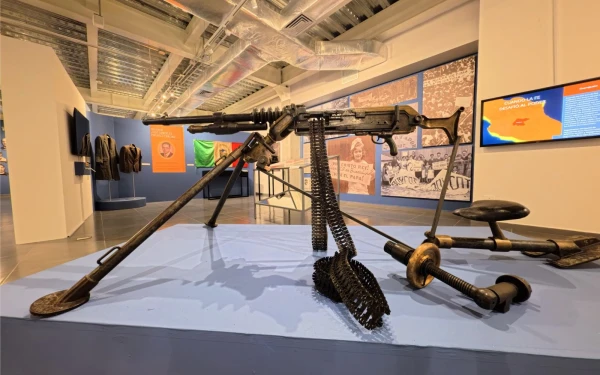
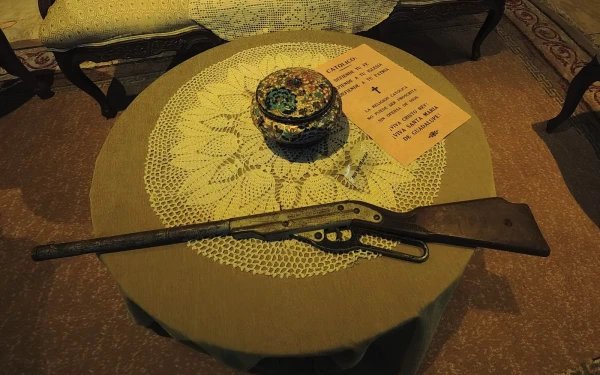
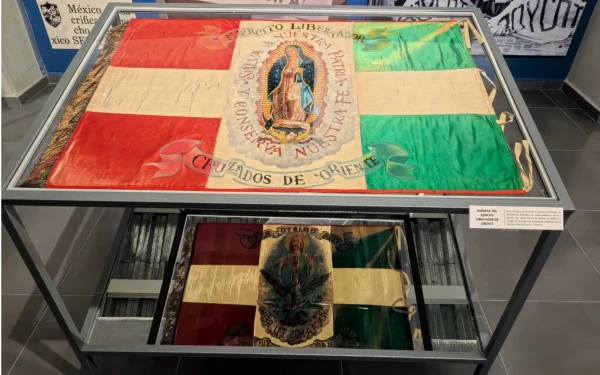
The exhibition is further enriched by authentic Cristero artifacts ranging from flags and photographs to clothes and even weapons used by those who took up arms against the Mexican governmentʼs repression.
The UPAEP Museum coordinator emphasized that the exhibition aims to foster “reflection on peaceful coexistence,” as well as “the importance of dialogue, always as a means to facilitate and reach conflict resolution.”
However, a key point, she noted, is “the importance of getting involved and staying informed about what is happening in political life.”
“One thing we can see is that political decisions affect people’s lives,” she said, pointing out that such decisions “transform even our everyday lives, the way we are accustomed to living them.”
This can be especially relevant when “it seems there are young people today who do not feel particularly compelled” to pay attention to these developments.
The exhibition at the UPAEP Museum is open to the public free of charge and will remain open until Jan. 16, 2027.
This story was first published by ACI Prensa, the Spanish-language sister service of EWTN News. It has been translated and adapted by EWTN News English.
Leave a Reply
You must be logged in to post a comment.