
A relic of the true cross and a decorative silver panel that hung in Christ’s tomb will remain on display until July 12 at the Kimbell Art Museum in Fort Worth, Texas.
The exhibit also includes vestments, candlesticks, metal flowers, and numerous liturgical objects used in Jerusalem hundreds of years ago.
Catholic kings sent these items to Franciscan friars in Jerusalem for the celebration of the Mass over the course of many years. Similar metalwork was common in Europe but was often melted down for wars or lost due to natural disasters. In Jerusalem, however, the items were preserved despite many wars and being ruled by Ottomans, the British, and eventually the state of Israel.
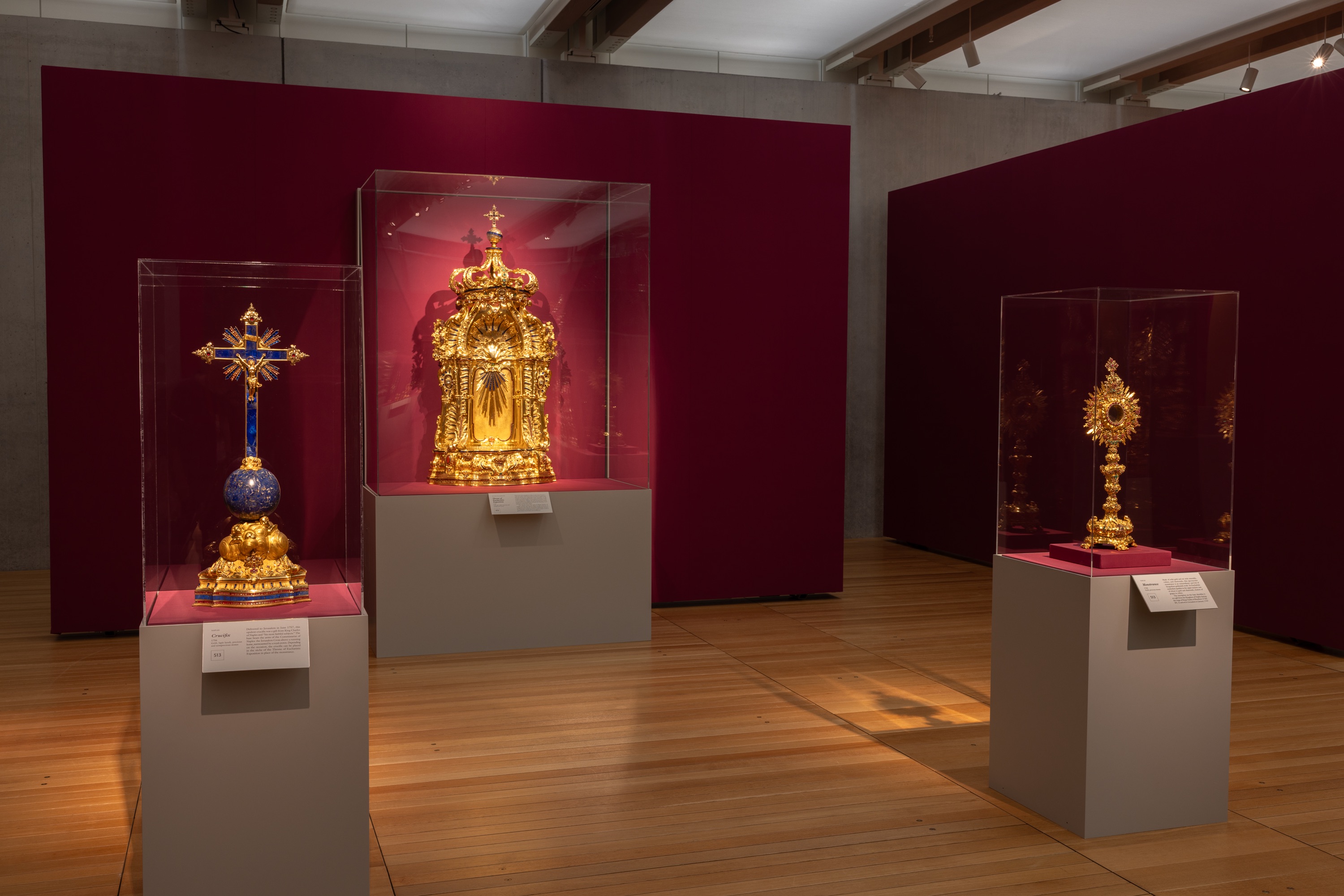
“We are so honored to present these works of art to our audiences — and delighted, too, that so many people have come to see the exhibition so far,“ George T.M. Shackelford, Kimbell curator and deputy director, told EWTN News. ”People from all over are making the trip to the Kimbell and telling their friends about the experience. That rewards all the work the many members of our team have put into it.”
One reason for the survival of these sacred objects is that few people knew about them. Europeans forgot about them for centuries and local attempts to control the Church of the Holy Sepulchre resulted in damage and destruction of some of the objects. The Ottomans eventually codified the arrangement and damaged items were repaired by artisans.
The Franciscan friars also reclaimed many items and purchased some from the Orthodox. Some items were irreparably damaged but sent to Venice, Italy, where they were melted down, remade, and sent back to Jerusalem.
Similar efforts were needed to repair metal flowers used to decorate altars. During Jerusalem’s dry summers, there is little rain from May to September and it is difficult to grow flowers. Adorning altars with metal flowers saves money and scarce water.
The history of the Venetian artists who melted down broken silver objects and made two torchères for the monks can be seen in the exhibit alongside one of the torchères, or lamps, that was damaged and then remade in 1762.

Stephen Marshall, who works as a concierge at a nearby hotel, has been to the exhibit twice with his family.
“I was impressed learning how all these adornments got switched around after they were made and how mercury was used to embellish gold onto silver,” he said. “The processes and gifts from kings and queens in the exhibit, that one torchère that was leaning I can see the constant effort of maintenance. These items were given so much effort beyond the actual cost of the material used.”
Monarchs in previous eras rarely visited the Holy Land, so they sent these objects to the Franciscans. Anything created by the French had French symbolism like the fleur-de-lis. The Portuguese used emblems depicting five shields. One Portuguese prince donated a silver bowl for foot washing for the liturgy of the Last Supper.
King John V paid to have a sanctuary lamp made in the 1740s; however, it didn’t arrive in Jerusalem until the 1750s when Joseph I was king of Portugal. An earthquake hit Lisbon in 1755, and most similar metalwork was destroyed.
Gazing at the Spanish sanctuary lamp, Elizabeth Felderhoff of Krum, Texas, told EWTN News: ”It is a blessing to have the opportunity to have all of these pieces so easily available to the public to appreciate.” She said she felt that artists who create good, quality work help others dwell on God during worship.

A humeral veil on display in the exhibit was originally used for secular purposes by a now-unknown Muslim. Somehow it became property of a Christian and was transformed into the veil used by priests during Eucharistic adoration to keep the priest from having to touch the monstrance.
One of the chasubles displayed in the exhibit has images of instruments of Christ’s crucifixion. This chasuble would have been especially used during Lent.
Another visitor, Joann Cox, said: ”The dream of going to the Holy Land is a bit remote. This is just an incredible opportunity to see the aspect of our Catholic Christian faith, the symbolism and history of every piece on display, and we are grateful that itʼs here.”
Her sentiments were echoed by another attendee, Cintia Vera, who, reflecting on the exhibit, said: “Itʼs beautiful. Iʼm Catholic and thankful the Kimbell was able to host this exhibit.”
Andrew Eubank, marketing and communications manager at the Kimbell, said: “The exhibition has had visitors from international locations including Australia, New Zealand, China, Japan, Korea, South America, and Europe.”
Along with the Holy Sepulchre exhibit, visitors can see sacred and secular art of the same and earlier time periods in Kimbellʼs permanent exhibit, which is free for viewing.