
New York Archbishop Ronald Hicks urged people to be “vigilant” about assisted suicide legislation as implementation of the state law draws near.
The New York State Department of Health released proposed rules for the assisted suicide law set to take effect Aug. 5, two days after the comment period ends.
The law enacted Feb. 6 would let people with terminally ill diagnoses of six months or less request drugs to end their lives.
The proposed rules would require two verbal requests from patients separated by at least 48 hours; a written request with two witnesses; and a final attestation form completed by the patient 48 hours before taking the medication. A five‑day waiting period applies to the time between when the prescription is written and when a pharmacy may fill it. Patients would self-administer the life-ending drugs. The death certificate would list the underlying disease or condition as the cause of death.
Hicks described the New York legislation as an “assault on human life, the next step toward a complete throwaway mentality” in a June 2 article in First Things.
“When this law becomes effective, a new and frightening era begins in New York,” Hicks said. “How long before this so-called ‘compassion’ for the terminally ill evolves from a ‘choice’ into an expectation to kill oneself for all sorts of vulnerable individuals, including those with disabilities, the elderly, and those in impoverished and medically underserved communities?”
Jose Hernandez, a disabilities advocate for the New York Association on Independent Living, criticized the law given its negative affect on people with disabilities. He told EWTN News that society already treats many people with disabilities as a “burden.”
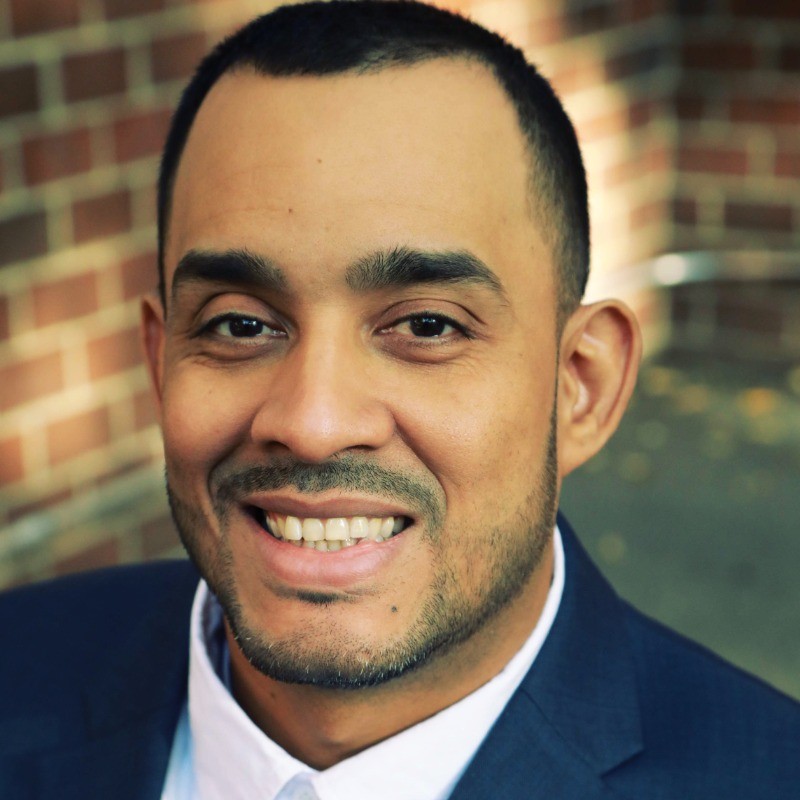
For people with disabilities, “everything is a fight,” said Hernandez, who became a C-5 quadriplegic after a diving accident at 15 years old.
As a New Yorker who grew up in the South Bronx, he voiced concerns that insurance companies would be incentivized to approve the cheaper alternative of assisted suicide.
Hernandez said his perspective is shaped by his own childhood: When he was 8, his mother was diagnosed with terminal cancer and given six months to live — the same prognosis that would make someone eligible for assisted suicide under New York’s law. She went on to live another 13 years.
When asked what he would say to people considering assisted suicide, Hernandez urged people to consider alternatives such as hospice and palliative care, or even induced comas, to pass with “peace” into the next life.
Hicks encouraged people to consider the witness of Pope Francis when he was dying.
“Our lives are sacred gifts from God that we are to protect and cherish,” Hicks wrote.
“We saw the beauty of a natural death exemplified just over a year ago when Pope Francis, clearly weakened by illness and age, traveled through St. Peter’s Square in the popemobile on Easter Sunday, demonstrating the dignity of life even while suffering the afflictions and ailments that would claim his life the very next day,” he wrote.
Jamie Towey, spokesman for Aging With Dignity, told EWTN News that “assisted suicide is the wrong answer to real problems.”
“Americans should be seriously concerned by New Yorkʼs assisted suicide law, not only because it classifies the elderly and people with disabilities as worthy of suicide, but because this isnʼt the end; itʼs just the beginning,” Towey said.
“The original version of the bill was extraordinarily radical — no waiting periods, no state residency requirements — and the suicide-affirming care lobby will fight to bring this version of the bill back. That is their playbook,” Towey said.
Taking inspiration from St. Teresa of Calcutta, Aging With Dignity is dedicated to protecting the rights of people approaching the end of life. Through its “Five Wishes” program, Aging With Dignity helps those who are elderly or nearing death define how they want to be treated.
“The good news is, there are real solutions we can provide the dying and those with serious illness: advance care planning resources, access to palliative care, timely referral to hospice, patient-centered care, quality pain management, and loving, personal accompaniment,” Towey said.
Jessica Rodgers, coalitions director for Patients’ Rights Action Fund, criticized assisted suicide laws for failing to protect vulnerable patients.
“Assisted suicide laws across the United States are written to protect prescribers, not patients, and nothing in the proposed regulations addresses that reality,” Rodgers said.
“Current regulations offer no oversight after the drugs are dispensed and no follow-up with the patient,” Rodgers said. “As it stands, we will continue to see vulnerable patients harmed by this discriminatory policy.”
Hicks warned New Yorkers of “the slippery slope” the New York law creates.
“What begins as a personal choice could lead to situations where external forces, such as government agencies or insurance companies, begin to influence or even dictate end-of-life decisions,” Hicks said. “This shift could undermine the respect and protection due to every human life.”
“It’s a future we must guard against with both compassion and vigilance,” Hicks said.
Leave a Reply
You must be logged in to post a comment.