
“Jesus was waiting for us,” a priest in southern Lebanon said after returning to his damaged church in the town of Tbenine following the ceasefire on April 17.
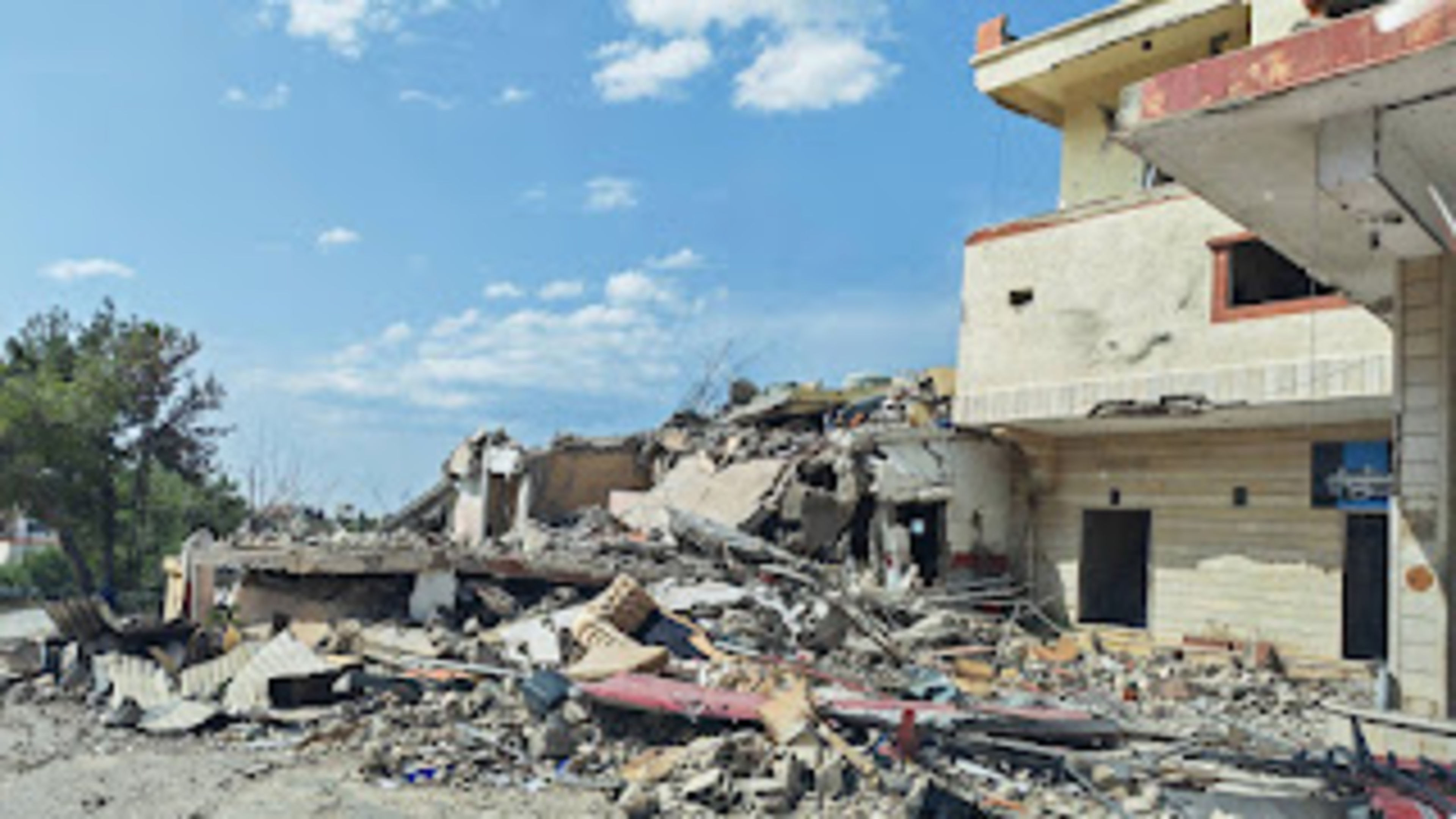
Amid widespread destruction and amid the rubble in the southern Lebanese village of Tbenine, what some call a “miracle” in St. George Church offered renewed hope and reminded parishioners that Christ’s presence does not fade, even in war.
Melkite Greek Catholic priest Father Marios Khairallah told ACI MENA, the Arabic-language sister service of EWTN News, that he returned to the Lebanese town of Tbenine on April 17 following the ceasefire that had come into effect. Entering the church, surrounded by shattered glass, he found the consecrated bread exactly where he had left it weeks earlier — unchanged despite the absence of people for 47 days. He described the discovery as a confirmation of God’s enduring presence amid suffering.
“After 47 days, there is no scientific explanation for why the bread did not spoil,” Khairallah said. “But for us, this is not strange, because we believe this is the body of Christ. This is our faith, it is neither new nor unfamiliar. We believe in God’s presence in the Eucharist.”

He said the story was a “message of hope for the parish,” adding: “It is true that there is destruction in Tbenine. But there is also an encounter with Jesus… Jesus waited for us for 47 days, without human presence.”
Khairallah also noted that a statue of the Virgin Mary remained standing amid the devastation, describing her as “the mother who awaits her children.”
Khairallah also spoke about the situation of residents, noting that the town is home to around 55 Melkite Catholic families who were forced to leave due to the war. After the ceasefire, some returned temporarily to retrieve clothes and belongings, while most are now staying with relatives, in rented apartments, schools, monasteries, or with friends.
The priest pointed out that aid remains almost nonexistent so far, except for assistance that arrived through a papal mission, while some individuals have helped provide medication.

He also praised the role of the apostolic nuncio to Lebanon, Archbishop Paolo Borgia, describing him as “a true shepherd and father who cares for everyone” and noting that “he does what no one else does, visiting us even under shelling.”
As for the town itself, he said it suffers from an almost complete lack of basic necessities: no water, no electricity, and no internet, along with harsh cold that worsens the already difficult conditions. He explained that most of Tbenine’s residents are of limited means: retirees, teachers, soldiers, and farmers with no affluent class able to absorb the impact of the crisis.
This story was first published by ACI MENA, the Arabic-language sister service of EWTN News, and has been translated and adapted by EWTN News English.
If you value the news and views Catholic World Report provides, please consider donating to support our efforts. Your contribution will help us continue to make CWR available to all readers worldwide for free, without a subscription. Thank you for your generosity!
Click here for more information on donating to CWR. Click here to sign up for our newsletter.
Leave a Reply
You must be logged in to post a comment.