
An international rosary in Rome united clergy, religious, and lay faithful to mark the 100th anniversary of World Mission Sunday.
The rosary was held on the grounds of the Pontifical Urban University on Oct. 17, the eve of this year’s World Mission Sunday on Oct. 18.
Led by Cardinal Luis Antonio Tagle, dean of the College of Cardinals and Grand Chancellor of the university, the rosary was recited in 13 languages across five mysteries representing Africa, Asia, the Americas, Europe, and Oceania.
The occasion also marked the 75th anniversary of the rosary’s establishment by Blessed Fulton J. Sheen, who was U.S. national director of the Pontifical Mission Societies from 1950 to 1966.
Sister Mary Teresa Baron, recently appointed president of the Pontifical Mission Societies, was not present during the rosary.
Several participants in the rosary explained how the faithful can support the Church’s missionaries beyond financial contributions.
Archbishop Fortunatus Nwachukwu, who serves as a secretary at the Dicastery for Evangelization, urged a focus on the Word of God.
“I am always a bit wary about monetizing mission,” Nwachukwu said to EWTN News. “So, I do not want to begin with money; I want to begin with the Word, because mission is all about bringing the Word of the Lord to the ends of the earth.”
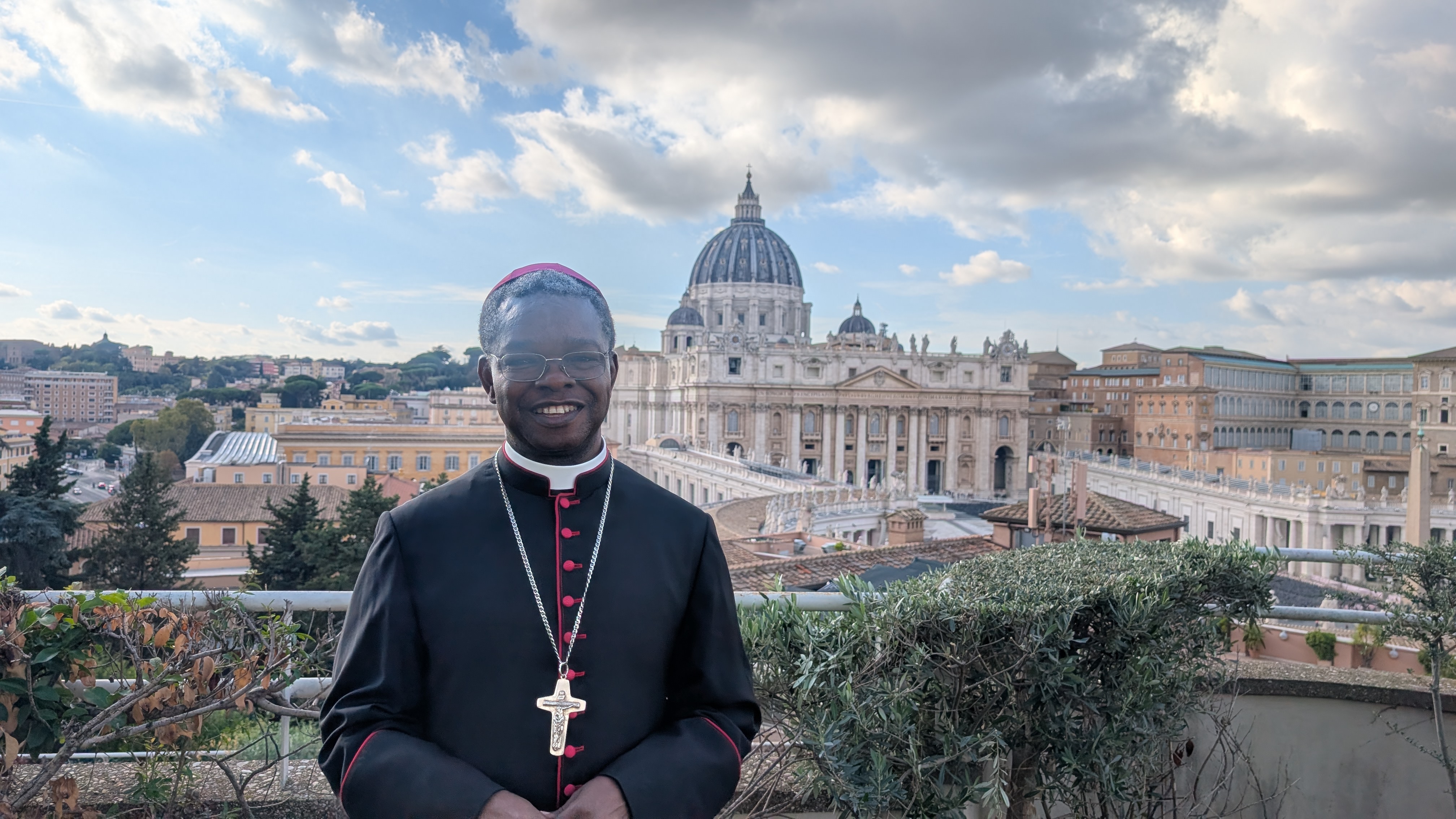
At the same time, Nwachukwu indicated that supporting missionaries also means providing “the means to bring the Gospel to various places.” That support, he said, involves money.
“[Today] is also an occasion to tell people: please, be generous to missionaries,” Nwachukwu said.
Msgr. Thomas George Schluep, who also serves at the Dicastery for Evangelization, cited Pope Leo XIV’s message for World Mission Sunday as a reminder that unity in Christ precedes material support
“Pope Leo, in his message for this 100th Anniversary of World Mission Sunday, reminds us that we first must be one in Christ,” Schluep told EWTN News. “Our baptism calls us to be missionaries: to share that love with our families, our friends, our coworkers.”
Memories of missionaries, Pope Leo’s return from the hospital
Participants also shared personal anecdotes about missionaries and their impact on their faith journey.
Schluep shared his memory of Father Gerard Hammond, an American Maryknoll missionary priest known for his decades of humanitarian work in North and South Korea.
“I met him in Korea, where he had been serving since 1960 when he was ordained and sent on mission. He was celebrated by thousands of people in South Korea for bringing the faith to them over the course of 65 years,” Schluep said.
“In North Korea he could not speak of Christ, but his “apostolate of presence” and love for those suffering from tuberculosis was itself evangelization. He taught me a lot about the importance of being present to people, exactly where they are at in their lives, no matter the personal cost.”
Around the time the rosary was taking place, Pope Leo XIV returned to the Vatican after being hospitalized for surgery Oct. 13 at Rome’s Gemelli Hospital. Nwachukwu expressed happiness at his return and hoped that “the Lord will keep him quite long among us”.
“We are all praying for him. We love the Pope, and we love what he is doing.”
The contributions of Americans
Schluep, an American from Pittsburgh, Pennsylvania, also noted the significant contributions of Americans, such as Blessed Fulton Sheen, to missionary work through the Pontifical Mission Societies.
“The American contribution to the missions historically has been enormous,” Schluep noted.
“It was a great joy to see Fulton Sheen beatified, who did so much to evangelize the United States, but also who traveled personally to so many missions around the world and did so much to raise funds for those missions.”

Schluep said he hoped the example of Pope Leo XIV, the first U.S.-born pope, would encourage renewed American support.
“The fact that the Holy Father understands American culture and missionary life in Peru can help him in his particular guidance for us, but now he is the Pope of the entire world, and he calls us to think also of the entire world and not just our country, our families, and especially ourselves,” Schluep said.