
MPAA Rating: Not rated at the time of this review
Reel Rating: 4 out of 5 reels.
I am the only person I know who considers his middle school years a golden era. For most other red-blooded humans, early adolescence is often awful, although also often transformative.
This is certainly true of Michael (Etienne Kellici), whose late summer of bike rides and ill-conceived pranks comes to an abrupt halt when he discovers a terrible secret and the temptation to share it. What unfolds is a taut and heartbreaking drama that shows God can bring great things out of even the worst circumstances.
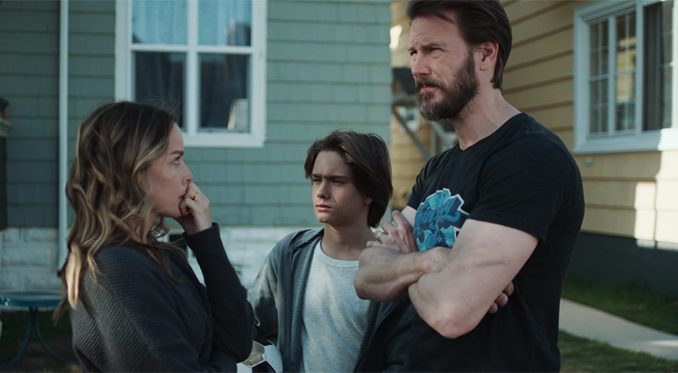
Michael lives an ordinary lower-to-middle class life in northern Georgia. His home is small but tidy, with access to all the basics. His father, Brian (Bill Heck), is unemployed and depressed. His mother, Rosemary (Allison Miller), works as a nurse, trying to keep the family together. He also shares his room with his grandmother (Carol Kane), who plays bingo and pretends not to smoke. He spends most of his summer just hanging out with his friends, especially Alice (Kennedi Butler). They go biking, swim in lakes, gossip, and wonder about their futures.
One night, his father falls asleep drunk, so his mom goes to a friend’s party by herself. When Michael wakes up, he sees his parents arguing fiercely. His mom seems distraught and has bruises on her face. Suddenly, all their family friends are distant. Yet when Michael confronts his parents, they are evasive. Not getting any information, but knowing something is wrong, he starts down a destructive path.
A clever story element employed by writer Tessa Blak is making sure the audience never knows more than Michael. Sometimes characters in the story know more than him, sometimes less, so there’s always a nice sense of tension that keeps the script rolling. This makes Michael an unreliable narrator, but it fits with his experiences as a tween—no longer an ignorant child but also unaware of the complexities of life. While this is more pronounced earlier in life, all of us “see through a glass darkly,” only perceiving a small amount of God’s providence. This should move us to humility and mercy, as the wrongs others commit may not come from full knowledge.
Pope St. John Paul the Great said that his favorite Bible verse was John 8:32b, “the Truth will set you free.” A truth is kept from Michael, and with disastrous consequences. Like many of his neighbors, he believes his father is abusing his mother, despite her insistence he is not. This causes unnecessary estrangement between them and a heightened sense of protection.
The truth is that a great evil did befall his mom, but his father was not involved. Fortunately, they eventually tell Michael the truth, but it is clear that they should have been honest from the beginning.
His parents instruct Michael that the truth must be kept a secret despite rumors and misunderstandings. They don’t even tell the police. Yet when this same evil happens to Alice’s mom, Rosemary and Michael are racked with guilt. In neither case is anybody lying. Keeping the Eighth Commandment means that people have a right to privacy. Not all information is owed to all people. Yet when revealing events, even painful ones, can help others, it might be a sin of omission to withhold your story.
When the truth eventually comes out, it creates tension and shunning. Yet God’s work is hardly done. When Alice’s mom suddenly begins to give birth to a child during a power outage, Rosemary must come to the rescue. Their tense situation produces a beautiful reconciliation, not just for themselves but also for their families. Forgiveness is always possible, though sometimes a “giant push” is needed.
By the end, Michael has stood as a witness to all this. The film finishes with him riding a bike to the new child’s baptism. The washing away of original sin also gives him a new start.
I suspect I have been frustratingly vague in analyzing the themes in this film, but it is only to resist providing well-constructed spoilers, not just about the events, but about how and when they happen.
This is one of the few films that is brutally honest about early adolescence without being overly graphic or sensational (Euphoria being the worst example of that). In a year with a slew of surprisingly good films (Young Washington, Project Haily Mary, The Sheep Detectives), here is another entry in what may end up being the best cinematic year of the decade.
If you value the news and views Catholic World Report provides, please consider donating to support our efforts. Your contribution will help us continue to make CWR available to all readers worldwide for free, without a subscription. Thank you for your generosity!
Click here for more information on donating to CWR. Click here to sign up for our newsletter.
Leave a Reply
You must be logged in to post a comment.