
Out of the horrors of the Burundian Civil War and the Rwandan genocide emerged a woman willing to risk her life for peace.
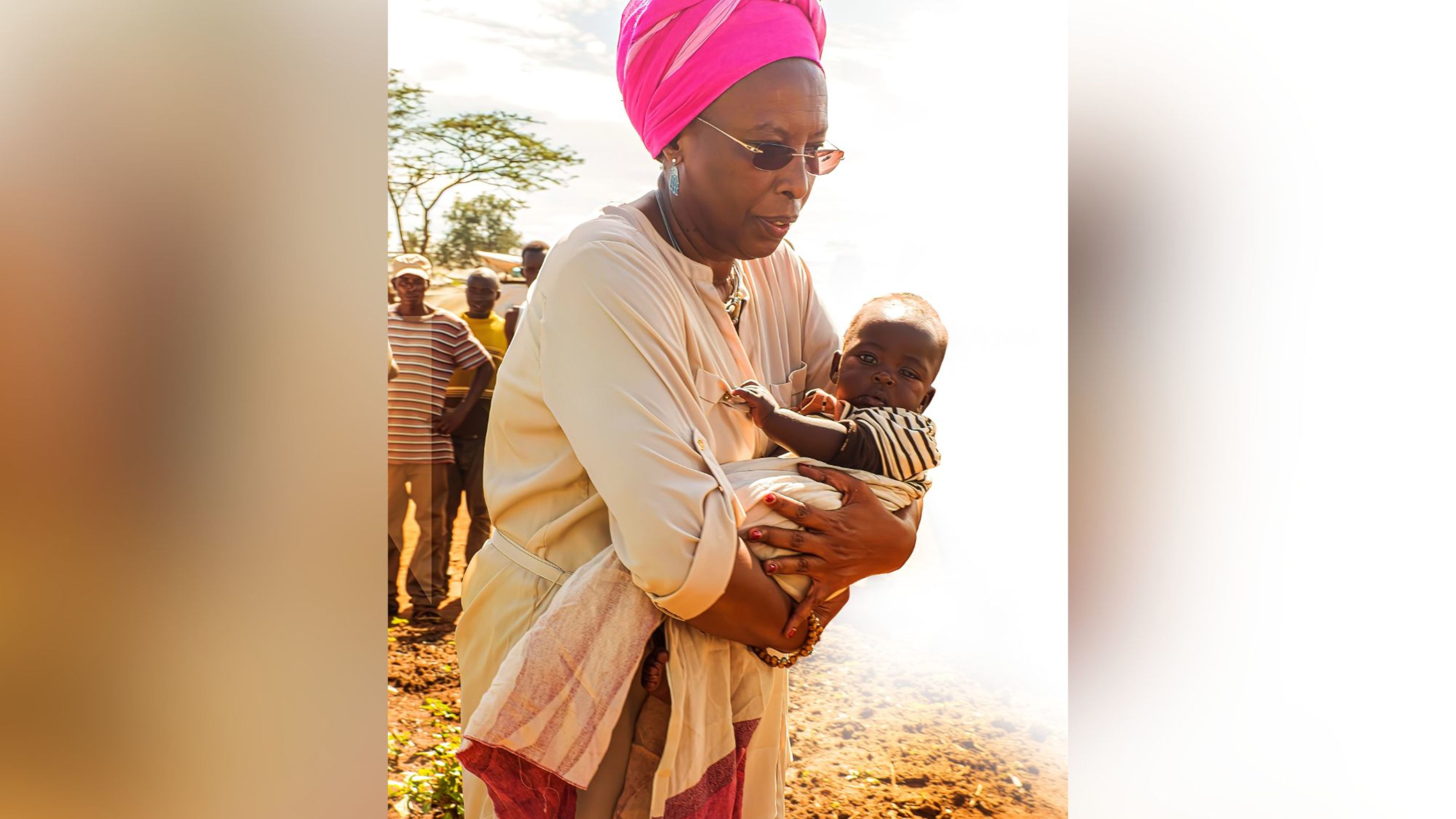
In a chapel in Burundi in 1993, after she saw 72 of her friends, family, and colleagues executed, Marguerite Barankitse told God she no longer believed he was love.
“How could God create those killers?” she recalled asking through her tears.
As mass killings and ethnic violence tore apart her home country after a coup, Barankitse fled with 25 children, both Hutu and Tutsi, to the safest place she could think of — a Catholic church.
But her faith had been challenged.
“I felt broken,” she told EWTN News. “After witnessing continued massacres and the deaths of my friends and family, I lost my voice and spirit.”
“[I] told God I no longer believed he was love because I could not understand how he could have created such hatred and killers,” she said.
Then, she heard the voice of a little girl — one of the first children she had rescued.
“We’re still in life,” little Chloe said. “We are here.”
“In this moment, I was reminded and saw that God is love,” Barankitse said.
She prayed for the strength “to go and shine in his glory.”
“I knew God had not abandoned me,” she said.
This wasn’t the only moment that shook Barankitse’s faith to her core. She would see more violence and death over the years. But it would become a defining moment for her.
Beginning with the 25 children she saved, Barankitse would go on to rescue and raise tens of thousands of children, eventually formally creating an organization called Maison Shalom.
Maison Shalom didn’t just provide for the children’s practical needs like shelter, education, and healthcare. Barankitse wanted to teach them to love and forgive, across ethnic barriers.
It was the children who came up with the name.
“We took the name ‘Shalom’ because my children heard on the radio that shalom meant peace, and that is our dream,” she explained.

“From the beginning, Maison Shalom was more than a shelter — it was a community where every child could belong, regardless of ethnicity,” she said.
Barankitse had seen firsthand the destruction of hate, and she wanted to break the cycle.
“Hate destroys not only its victims but also those who carry it,” she said.
“It is not entire ethnic groups that hate each other; it is individuals who choose hatred,” she said. “I refused to make that choice.”
“I asked myself, what could I do to raise children who would break this cycle?” Barankitse continued. “My answer was to raise children with compassion, forgiveness, and love.”
“My strategy has always been to love, because love is creative and transformative,” she said. “Through this love, I choose to respond to violence with compassion, protection, and reconciliation.”
“Love made me an inventor, and I sought to build a community infused with compassion.”
“Forgiveness, as taught by the Church, is radical — it asks us to break the cycle of vengeance and hatred, even when it seems justified,” Barankitse said.
“Love is not just a feeling; it is a force that builds futures out of the rubble of war,” she said.
“And I know that I can never give up because the children I help give me the strength and courage to always stand up, their resilience inspiring me every day,” Barankitse said.
Walking through war zones
Barankitse would walk through war zones to save orphans — even those other people thought weren’t worth saving.
“As the brutal violence and killings continued, I fought for the safety of these children,” she said. “More and more children continued to find refuge with me.”
“I walked directly into war zones and picked children out amid piles of dead bodies because these children deserved the opportunity to live, be treated with dignity, and build peace,” she said.
Barankitse fought for those who other people thought weren’t worth saving.
“One day, I came across a mother who had been killed in a grenade attack with her 4-month-old baby strapped to her back,” she recalled. “The baby was severely injured and people told me to leave him, but I knew I could not give up.”
“I chose to protect him and find medical help for him,” Barankitse said.
In spite of his injuries, the 4-month-old baby would live.
“I am proud to say that he survived and has grown up into a successful young man,” Barankitse said.
Baranktise still remembers another harrowing moment when she had to fight to get medical help for a child who was injured with a deep gash in her neck.
She took her to the airport to bring her to a hospital that could treat her — but other passengers “were refusing to let me aboard due to her condition,” she said.
“They were afraid,” Barankitse said. “I said, ‘No, you have no compassion. You will help me.’”
“Eventually, they listened to me and let me on the plane, putting a curtain between myself and the child and the other passengers,” Barankitse said.
The little girl survived. Now she is married with two children of her own.
“Sometimes love means standing strong for those who need help,” Barankitse said. “Nobody can stop love, and it remains my way of remaining strong against violence and hatred to this day.”
Barankitse had another “deep spiritual crisis” in 1996 after another wave of killings in which she witnessed the death of one of her best friends.
“I spent a month in prayer and returned humbled, realizing I am just a small instrument in God’s hands,” she said. “That is why I continue to pray to God to give me enough strength to continue doing his work.”
“Faith does not shield you from suffering; it walks with you through it,” she said.
“My strength comes from my faith and from the children themselves,” Barankitse said.
“Even as a child, I was troubled by violence and dreamed of becoming a teacher to change the world by teaching children compassion and love,” she said. “Throughout my childhood, my mother taught me that God is love, and when we are created, he gives us strength.”
Faith amid violence
Even after being forced out of her home nation in 2015 due to threats of violence, Barankitse has continued her work, relying on her faith to motivate her.
She left Burundi for Rwanda, where she created Oasis of Peace, which served more than 70,000 Burundian refugees.
“My faith taught me that we are created in love and that God gives us enough strength — ‘Do not be afraid, I will be with you until the end of the world,’” Barankitse said. “That is where I found my smile and my joy, even in the darkest moments.”
Barankitse’s work is founded in her Catholic faith.
“Being Christian is not just about going to church and praying; it is about restoring dignity to every human being,” Barankitse said.
“You can give someone food or clothes, but if they have no dignity, they have nothing,” Barankitse said. “By showing my love to the people around me, I seek to give back dignity to all — deciding to see the humanity in everyone, even those who have hurt you most.”

“This is how I build a future where no child has to suffer as my family and friends did,” she said. “Hate will never have the last word. Not as long as we practice love.”
“Catholic teaching tells us that every person is made in the image of God and deserves reverence and love,” she said. “This belief is a foundation for all of my work.”
Oasis of Peace offers counseling for victims of torture and rape, as well as education, vocational training, and micro-financing “so families can rebuild their lives with dignity,” Barankitse said.
Oasis of Peace also provides education for children. The recently launched École Sainte-Anne de Kigali initiative helps in “bringing together children from both underprivileged and more privileged backgrounds in a shared space of learning, growth, and dignity,” according to Barankitse.
“When I see a child orphaned by violence, I see a child of God. When I meet a woman who has survived rape, I see a person of infinite worth,” Barankitse said. “I believe in celebrating differences because this reminds us of how we are all created uniquely. We all deserve to feel love, compassion, and dignity.”
Barankitse continues her work every day, expanding Oasis of Peace, and speaking internationally about her story and the needs of the people she helps.
“Every day is full and purposeful,” she said.
“My hope is to continue sharing my story and the stories of Mason Shalom, inspiring others by showing them the power of love. My days are spent listening, organizing, and dreaming with those I serve.”
Barankitse won the Aurora Prize for Awakening Humanity, which provided her with funding to help more refugee children.

“My dream is to create Shalom Houses everywhere, so every person knows they belong,” she said.
When asked what message she wanted to share, Barankitse said: “Do not give up.”
“The world can show you things that make you want to despair — I have seen them,” she said. “I have been forced to watch friends be murdered, held mutilated children, and fled my country as a refugee. Yet I still believe love is stronger.”
To support or learn more about Barankitseʼs work, visit https://maisonshalom.org/.
If you value the news and views Catholic World Report provides, please consider donating to support our efforts. Your contribution will help us continue to make CWR available to all readers worldwide for free, without a subscription. Thank you for your generosity!
Click here for more information on donating to CWR. Click here to sign up for our newsletter.
Leave a Reply
You must be logged in to post a comment.