
Paul Tuns:
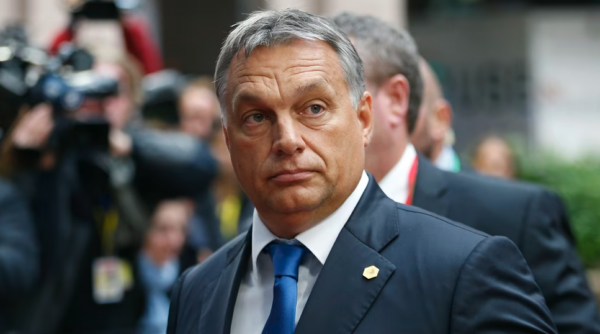 After 16 years in power, Prime Minister Viktor Orbán and his Fidesz party were roundly defeated by the centre-right Péter Magyar.
Orbán promoted family values, encouraged larger families through fiscal policy tax cuts and family benefits, and defended Hungary’s national sovereignty from invasive immigration and the European Union.
With tax advantages and handouts, Hungary under Orbán saw its fertility rate rebound from 1.25 children per woman of child-bearing age in 2010 to 1.61 in 2021, although it has slid backward to 1.55 in recent years. The EU average is around 1.5. Demographers have said that Hungary’s sliding fertility rate suggests that aggressive pro-family policy designed to encourage having more children is actually effective only in encouraging women to have children earlier than they might have otherwise, not more children.
Despite being a beacon to pro-natalist activists, Orbán left in place the 1992 law that permitted abortion up to 12 weeks (24 weeks in cases to protect the mother’s life or health, rape, and fetal impairment).
After winning four elections, though, the government had become corrupt and led an economy that was anemic by European standards. Voters were open to a new government and unlike his four previous campaigns, Orbán faced a largely united opposition in which liberal, centrist, and right-of-centre political parties rallied behind Magar, a Member of European Parliament, who campaigned to largely keep Orbán’s policy in place although he says he wants greater Hungarian integration into the EU.
Magyar’s Tisza party won 55 per cent of the vote, Orbán’s Fidesz won 37 per cent, and the right-wing nationalist Our Homeland Movement won nearly six per cent of the vote. Tisza won 141 seats, Fidesz won 52, and HM won six. No other party won enough votes to earn representation in the Hungarian legislature. Tisza has a supermajority of two-thirds of seats which enables the new government to easily alter the Fundamental Law of Hungary, the country’s constitution.
Despite suggesting continuity in social policy during the campaign, during his victory speech Magyar, a former Fidesz member, repeated the homosexualist line of accepting people regardless of “who they love.”
Over the past two terms, Orbán has banned same-sex adoption, outlawed the promotion of LGBTQ propaganda aimed at children through schools and books, and enshrined the natural family into the national constitution. In 2022, when the EU criticized Hungarian legislation to ban the promotions of homosexuality and transgenderism to minors, he ignored their entreaties.
While celebrated by many conservative nationalists and post-liberals, Hungary often voted with the EU at the United Nations on abortion and gender ideology, and still permitted abortion in the first trimester. C-Fam, a Catholic pro-life group that monitors the UN, has frequently criticized Hungary’s abject failure to resist the anti-life, anti-family agenda promoted by the United Nations, left-wing non-government organizations, and most western delegations.
Orbán is also suspected of orchestrating the downfall of the pro-life president of Hungary, Katalin Novak, by requesting she pardon a state official who covered up child sex abuse and then firing her for doing so. (Magyr was married at the time to then-justice minister Varga Judit, who was also forced to resign because of the pardon.)
Magyr used populist rhetoric to indicate he would continue some Orbán policies such as restricting immigration and supporting the family, but vowed to turn around the economy by integrating Hungary into the EU, fight corruption, restore rule of law, and reverse course on Orbán’s policy of opposing assistance to Ukraine in its battle with Russia.
As prime minister, Orbán had several times changed election law, imposed strict controls on state-media, and closed universities to secure his grip on power, leading the EU to describe the country as backsliding from democracy to autocracy. European Union Commission President Ursula von der Leyen welcomed Orbán’s defeat, calling it a “victory for fundamental freedoms.”
Orbán served as prime minister in a coalition government from 1998 through 2002 and again from 2010 to 2026. He benefited electorally by a divided opposition of left-wing, liberal, centrist, and right-of-centre opponents. Beginning in 2022, those parties began discussions about fielding fewer alternatives to the ruling Fidesz, with Magyr forming the Tisza Party in 2024. In response, the Green Party, Hungarian Socialist Party, and The Dialogue agreed to run under a single banner but that agreement would not survive local elections later that year. In 2025, the Momentum Movement, Everybody’s Hungary People’s Party, and the Leftist Alliance/Yes Solidarity for Hungary Movement all announced they would not contest the 2026 national election. In January of this year, three minor parties, the Solution Movement, Second Reform Era Party, and Green Party said they would not field candidates in the April parliamentary election, followed by the Hungary Socialist Party in February.
With the broad political spectrum united behind one party—Magyr’s Tisza Party— Orbán, who was suffering lower-than-usual polling numbers amid economic stagnation and corruption, had little chance to be re-elected and announced election night that he accepted the results of the vote.
Leave a Reply
You must be logged in to post a comment.