
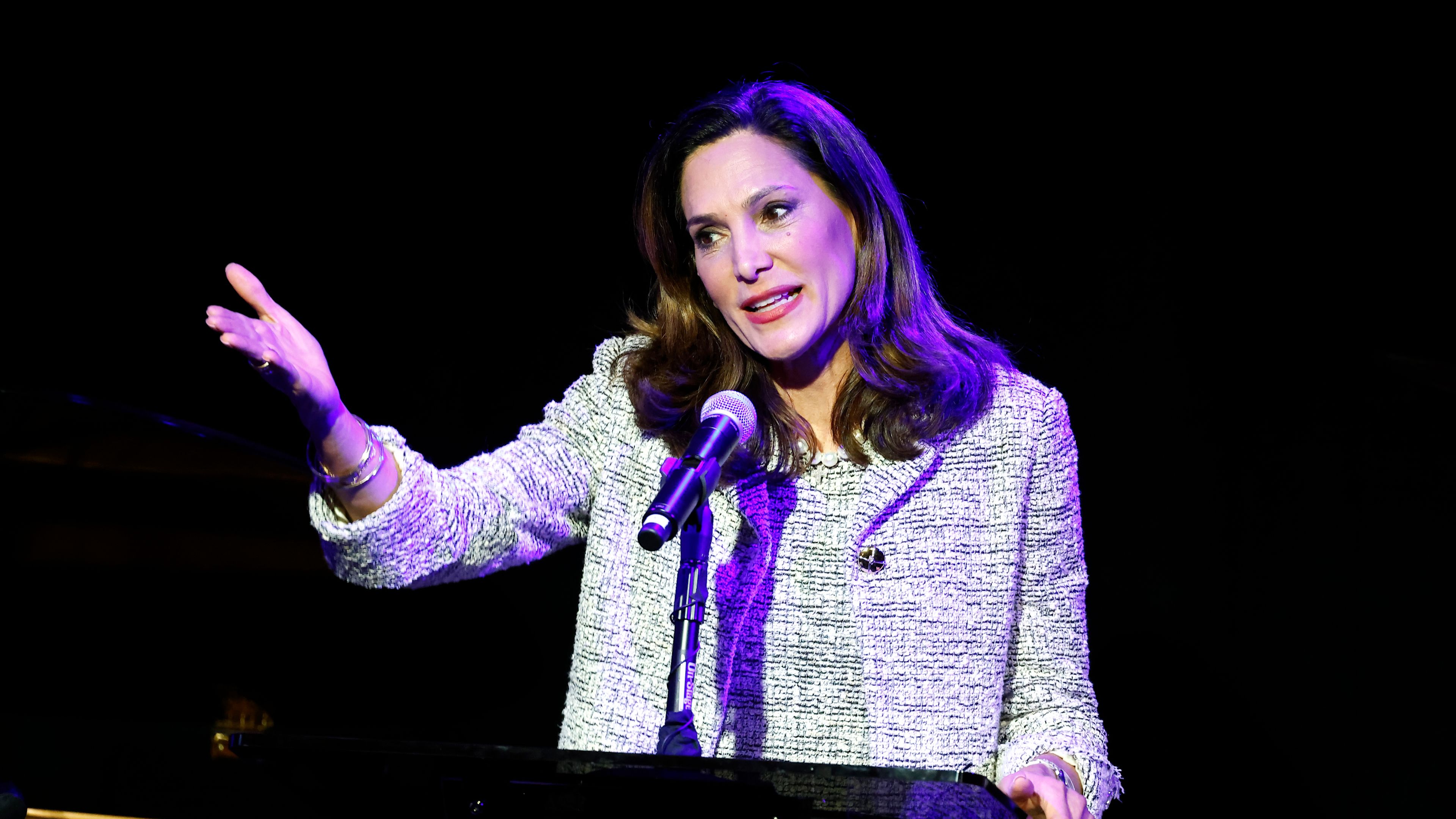
In an interview with “EWTN News Nightly” anchor Veronica Dudo that aired on March 11, Salazar said: “We need to start a national conversation as to what [we are] going to do with those people who do not have a criminal record, and they have been contributing to our economy for years.”[embedded content]
The measure, HR 4393, which Salazar named the “Dignity Act,” would give some people who are in the country illegally the ability to earn legal status through labor and financial penalties if they lack a criminal record.
The bill had 39 Republican and Democratic cosponsors as of March 11 but has not received a floor vote in the House of Representatives.
“What are we going to do with them?” Salazar said about people lacking legal immigration status. “We should give them the dignity status, which is the name of my legislation.”
The bill would create the “Dignity Program” for people who entered the country unlawfully five years ago or earlier, offering a seven-year temporary status if the person incrementally pays $7,000 in restitution and gives 1% of their salary to the government. No one in the program could receive government benefits or entitlements.
The program would not create a pathway to citizenship, but the temporary legal status could be renewed every seven years if they maintain good conduct. “Dreamers” and Deferred Action for Childhood Arrivals recipients would be able to obtain a pathway to permanent legal status but not citizenship.
Additionally, the bill would fund physical barriers and technology to help secure the border. It would increase penalties for illegal border crossings and asylum fraud and mandate e-verify for employers.
The measure would authorize funding for border security and create centers for asylum seekers during consideration of their case. It would require asylum cases to be completed within 60 days.
“It’s not a path to citizenship,” Salazar said. “It’s not giving them a break.”
Some Republicans have objected to the bill, which Salazar said is caused by “a lot of fear” that they will be accused of supporting amnesty. She called amnesty “a word that has no definition” and emphasized that her legislation does not grant citizenship but does impose fines.
“We have to be realistic that it’s true that these people, 10-plus-million people, broke the law,” Salazar said. “Yeah, it’s true. And someone gave them a job because that someone, the owner of construction, hospitality, agricultural, health care, they needed hands, and those hands were not found [in native-born] Americans.”
“I understand we [have] to be realistic,” she said. “And the immigration laws that we have on the books right now in place are archaic. They were written decades ago, but they are not up to the times that we’re living. And that’s why in Congress, we need to rewrite those laws and make them modern, and make them according to a reality in our economic needs.”
Some Catholic bishops have expressed openness to the legislation.
In January, Los Angeles Archbishop José Gómez wrote an op-ed that called Salazar’s plan “a genuine, good-faith starting point.” He said the bill was “not perfect,” but “it is realistic about the political landscape and it should be the beginning of a conversation.”
El Paso, Texas, Bishop Mark Seitz, the former chair of the U.S. Conference of Catholic Bishops’ Committee on Migration, said in July 2025 that the bill is “a step toward fulfilling the call made by our Holy Father to offer a better way forward — one that begins and ends with respect for the God-given dignity of every person.”
Denver Archbishop Samuel Aquila also spoke highly of the proposal in November 2025, saying in an op-ed for the Denver Catholic that it will “take care of immigrants who have come to this country.”
Salazar said Pope Leo XIV has received her book and that she will have a meeting with him to discuss immigration.
“I’m going to be able to have a one-on-one conversation with [the pope],” she said, describing the Holy Father as “the ultimate authority for the Catholic Church.”
Salazar said she believes her policy is guided by the Holy Spirit, adding that “we know that we are being guided by the light because we want to do good.”
Salazar asks for prayers for Trump
The congresswoman praised President Donald Trump’s actions to secure the southern border but expressed concern about how the administration has handled deportations.
Sealing the border was a promise kept by the president, Salazar said. However, she said Trump promised to deport criminals rather than “those people who have been here for years contributing to the economy.”
Salazar said she believes the recent removal of Homeland Security Secretary Kristi Noem is a “course correction.”
Although Trump has not disavowed his plans for mass deportations, Salazar asked people “to pray for the president” so that “the light and the Holy Spirit will go and will touch our president for him to understand that dignity is what these people need.”
If you value the news and views Catholic World Report provides, please consider donating to support our efforts. Your contribution will help us continue to make CWR available to all readers worldwide for free, without a subscription. Thank you for your generosity!
Click here for more information on donating to CWR. Click here to sign up for our newsletter.
Leave a Reply
You must be logged in to post a comment.