
While Catholic leaders thanked the government, Bishop Sebastian Tudu warned that accepting state money could invite political pressure.
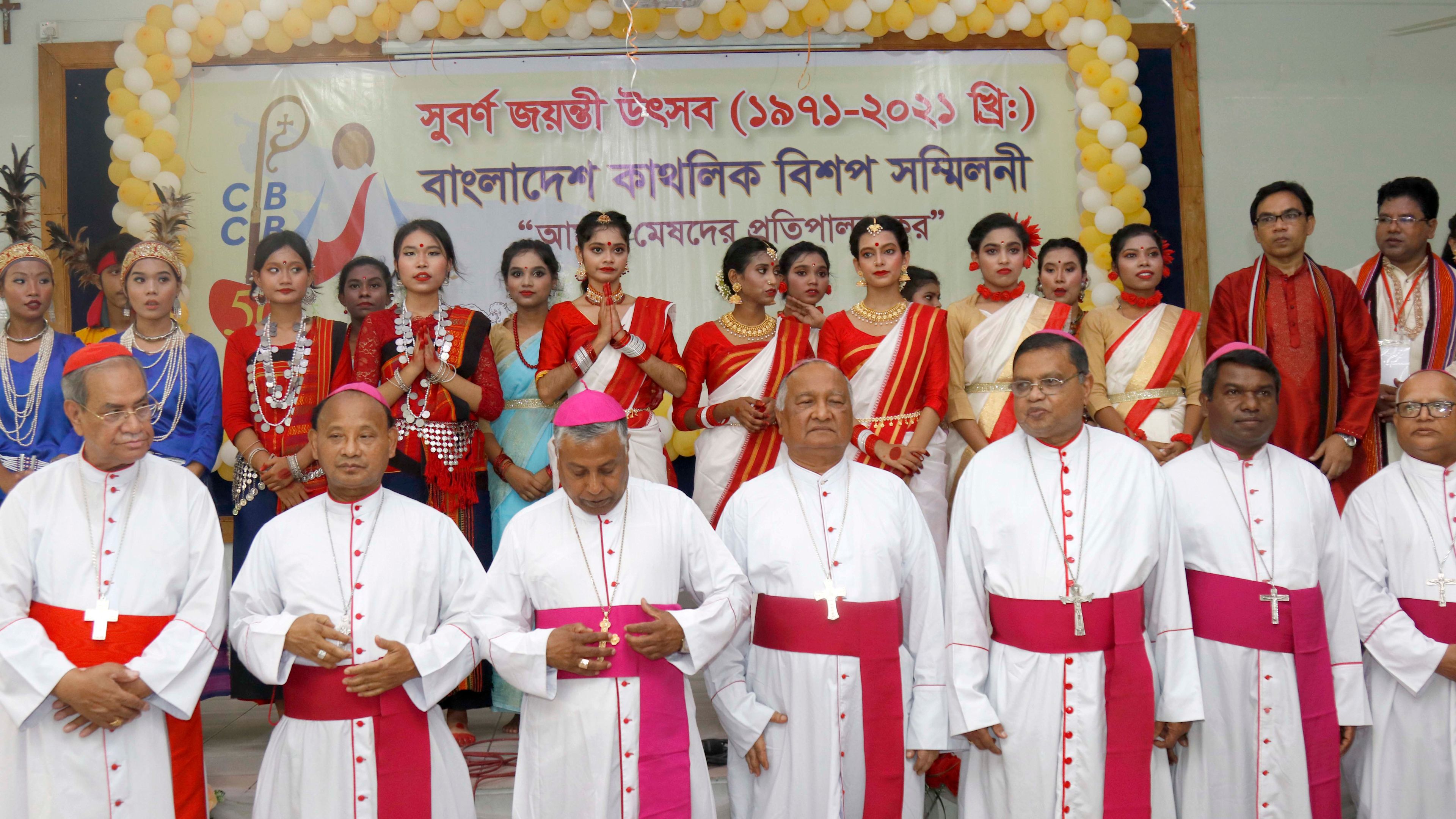
DHAKA, Bangladesh — Bangladesh’s newly elected government has announced a monthly allowance for all religious clergy — the first such initiative in the Muslim-majority nation’s history — but a Catholic bishop says the Church will not accept the money, warning it could invite political pressure.
The decision was reportedly taken at a cabinet meeting led by Prime Minister Tarique Rahman on Feb. 21. Mahdi Amin, an adviser to the prime minister, told reporters that some of the party’s election promises were discussed.
“Basically, in today’s meeting, the honorable prime minister discussed one of our elections promises, which was that we had a promise to provide monthly honorarium and festival allowance to all religious leaders of various mosques, including those of other religions,” Amin said.

Prime Minister Tarique Rahman of Bangladesh takes office after being sworn in on Feb. 17, 2026. | Credit: BNP media cell
However, he did not say how much the honorarium would be. “It will be implemented in some places before Eid,” Amin said, referring to Eid al-Fitr, the Islamic festival expected in the third week of March.
This is the first time in Muslim-majority Bangladesh that the government has announced a monthly allowance for all religious leaders.
The number of Christians in Bangladesh, out of a population of about 170 million, is approximately 600,000. According to the 2019 Bangladesh Catholic Directory, there are 119 parishes and 52 sub-parishes in the country’s eight dioceses. The directory shows there are 233 diocesan priests and 176 missionary priests working in Bangladesh, but not all of them are doing parish work — many are involved in other activities, including education, health, and youth formation.
Bishop warns against accepting state funds
Bishop Sebastian Tudu of Dinajpur, chairman of the Clergy and Religious Commission of the Catholic Bishops’ Conference of Bangladesh, did not comment on the government’s initiative directly but told EWTN News that the Catholic Church will not accept the monthly allowance.
“Our Catholic clergy are not salaried, they dedicate their lives to God, so we do not want to receive any kind of monthly salary from the government,” Tudu said. If the Church were to accept the stipend, Tudu warned, “in the future there may be some kind of pressure from the government or politically or they may try to use us.”
Dhaka vicar general thanks government
Father Albert Rozario, vicar general of the Archdiocese of Dhaka, applauded and thanked the government for the initiative. “We have got a new government; we congratulate the new government. It was an election announcement for us who work in the Church as religious priests. In proof of that, Prime Minister Tarique Rahman has announced this monthly allowance. I personally congratulate the government,” Rozario told EWTN News.
He requested everyone to pray and support the government “so that the government can govern the country beautifully, harmoniously, and fairly and can take the nation forward.”
Expressing his expectations of the new government, Rozario said: “As citizens of this country, we want the government to establish the rule of law, to resolve the problems in the country. At the same time, we want the corruption that existed in the past and still exists to be resolved. The government should rein in the main problem of the people, the rising prices of goods — this is our demand for the current government.”
Political background
The 2024 student-led mass uprising forced the ouster of former Prime Minister Sheikh Hasina, whose Bangladesh Awami League had governed the country for 15 years amid allegations of increasing authoritarianism. Hasina fled to neighboring India, where she remains. An interim government led by Nobel laureate Muhammad Yunus subsequently took power. The interim government held elections on Feb. 12, though the Awami League was barred from participating after its activities were banned under public pressure.
The Bangladesh Nationalist Party won 209 of 297 contested parliamentary seats, while the Islamist party Bangladesh Jamaat-e-Islami and its alliance secured 77 seats, according to official results published by the Bangladesh Election Commission. The National Citizens Party, a youth-led group that emerged from the 2024 uprising, won six seats. Rahman was sworn in as prime minister on Feb. 17.
If you value the news and views Catholic World Report provides, please consider donating to support our efforts. Your contribution will help us continue to make CWR available to all readers worldwide for free, without a subscription. Thank you for your generosity!
Click here for more information on donating to CWR. Click here to sign up for our newsletter.
Leave a Reply
You must be logged in to post a comment.