
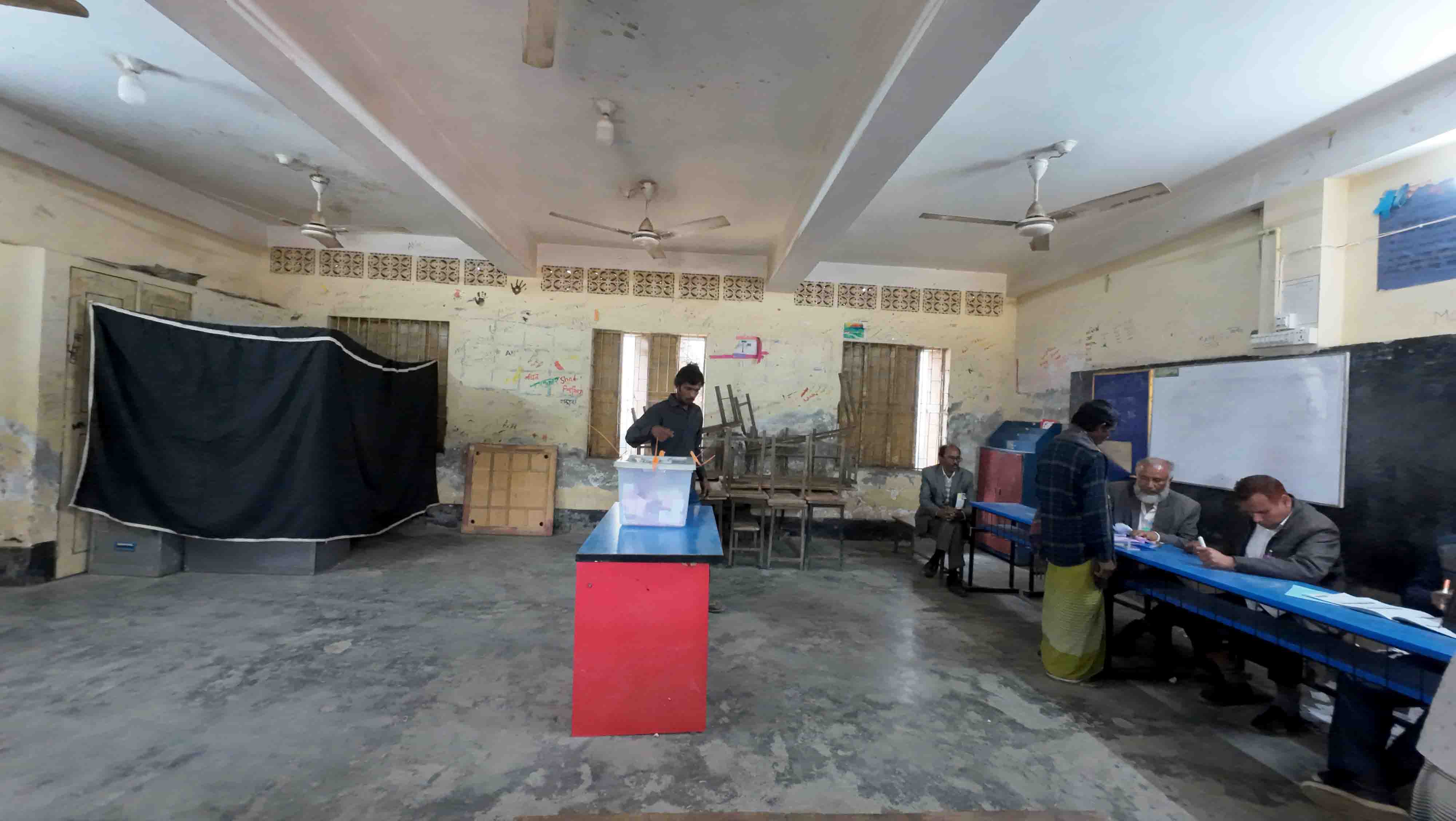
DHAKA, Bangladesh — The Catholic Church in Bangladesh has congratulated the country’s newly elected government after the Bangladesh Nationalist Party (BNP) won a commanding two-thirds majority in the Feb. 12 parliamentary election — the first since a student-led uprising toppled former Prime Minister Sheikh Hasina in 2024.
Bishop Gervas Rozario of Rajshahi, vice president of the Catholic Bishops’ Conference of Bangladesh (CBCB), told EWTN News the election appeared to be a fair contest and urged the incoming government to prioritize human rights.
“We only want the new government to respect and promote human rights of all citizens, including minority people of other faiths and cultures, and promote justice and peace for all,” said Rozario, who also chairs the CBCB’s justice and peace commission.
BNP wins landslide; Islamist party becomes opposition
The BNP and its allies won 212 of 299 contested parliamentary seats, while the Islamist party Bangladesh Jamaat-e-Islami and its alliance secured 77 seats, according to official results published by the Bangladesh Election Commission. The National Citizens Party, a youth-led group that emerged from the 2024 uprising, won six seats.
Jamaat-e-Islami will serve as the main opposition in the Jatiya Sangsad, the national parliament.
Rozario said he hoped the Islamist party would play a constructive role. “We hope Jamaat-e-Islami will be able to play the role of a strong opposition in the house,” he said. “The people of Bangladesh want this party to apologize for their role in 1971.”
During Bangladesh’s war of independence from Pakistan in 1971, Jamaat-e-Islami was accused of collaborating with Pakistani forces. The previous Awami League government tried and executed several of the party’s senior leaders on war crimes charges.
First election since 2024 uprising
The 2024 student-led mass uprising forced the ouster of Hasina, whose Bangladesh Awami League had governed the country for 15 years amid allegations of increasing authoritarianism. Hasina fled to neighboring India, where she remains.
An interim government led by Nobel laureate Muhammad Yunus subsequently took power. The interim government held the election within approximately 18 months, though the Awami League was barred from participating after its activities were banned under public pressure.
BNP chairman Tarique Rahman, who is expected to become prime minister, told a press conference on Feb. 14 that the new government faces significant challenges. Rahman cited the need to repair the economy, restore law and order, and ensure good governance across institutions that he said had been politicized by the previous government.
Constitutional referendum held alongside election
A constitutional referendum on the “July Charter” — a reform blueprint drafted under the interim government — was held simultaneously with the parliamentary election. According to official Election Commission results, approximately 62% of voters approved the charter, which proposes sweeping governance changes including the creation of a bicameral parliament and term limits for the prime minister.
Catholics make up less than half a percent of Bangladesh’s population of approximately 175 million. The country has eight dioceses, including two archdioceses.
Leave a Reply
You must be logged in to post a comment.