
Jan 23, 2026 / 18:34 pm (CNA).
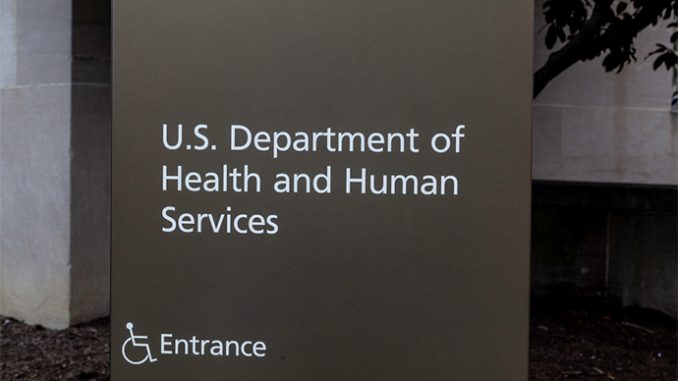
The U.S. Department of Health and Human Services (HHS) announced on Thursday that it will stop funding research that uses fetal tissue of aborted babies.
Dr. Jay Bhattacharya, National Institutes of Health (NIH) director, said in a Jan. 22 statement that the agency has “reexamined its approach related to the use of human fetal tissue in federally funded research.”
“This decision is about advancing science by investing in breakthrough technologies more capable of modeling human health and disease,” Bhattacharya added. “Under President Trump’s leadership, taxpayer-funded research must reflect the best science of today and the values of the American people.”
HHS Secretary Robert F. Kennedy Jr. cited ethical and scientific reasons for the change.
“HHS is ending the use of human fetal tissue from elective abortions in agency-funded research and replacing it with gold-standard science,” Kennedy said in a Jan. 23 statement. “The science supports this shift, the ethics demand it, and we will apply this standard consistently across the department.”
The agency also will look to “potentially replace reliance on human embryonic stem cells,” according to Bhattacharya.
Embryonic stem cell lines are lab-grown cell lines used in research that come from aborted human fetal tissue.
Father Tadeusz Pacholczyk, a neuroscientist and senior ethicist at the National Catholic Bioethics Center, called the move “a very welcome development.”
“Biomedical research should not be built on the backs of directly-aborted human fetuses or embryos, and taking their bodily tissues for research necessarily involves a failure to obtain valid informed consent, a key ethical principle guiding all modern bioresearch,” Pacholczyk told EWTN News.
Pacholczyk welcomed the NIH “taking steps to rein in past abuses involving aborted fetal tissue and NIH funding.”
“Several previous U.S. administrations dropped the ethical ball when it came to allowing human fetal tissues from elective abortions to be used in NIH-funded scientific investigations,” he said. “In effect, they set up a situation where fetal-tissue research faced very few practical barriers or limitations.”
Funding control is “a critical mechanism to avoid unethical research practices,” Pacholczyk noted.
“The granting of funding, especially federal funding, is one of the highest forms of approbation and blessing a researcher can obtain in terms of his or her particular line of work,” he said. “Disbursement of funding needs to be directly linked to our vision of good, ethical science.”
“The rest of the world’s scientific community looks to the U.S., and to NIH-funded research in particular, as a kind of model and example when it comes to real excellence in science,” Pacholczyk continued. “Such excellence connotes much more than merely developing scientific breakthroughs while ignoring the means used to make those discoveries; it necessarily implies conscientious attention to ethics.”
If you value the news and views Catholic World Report provides, please consider donating to support our efforts. Your contribution will help us continue to make CWR available to all readers worldwide for free, without a subscription. Thank you for your generosity!
Click here for more information on donating to CWR. Click here to sign up for our newsletter.
Leave a Reply
You must be logged in to post a comment.