
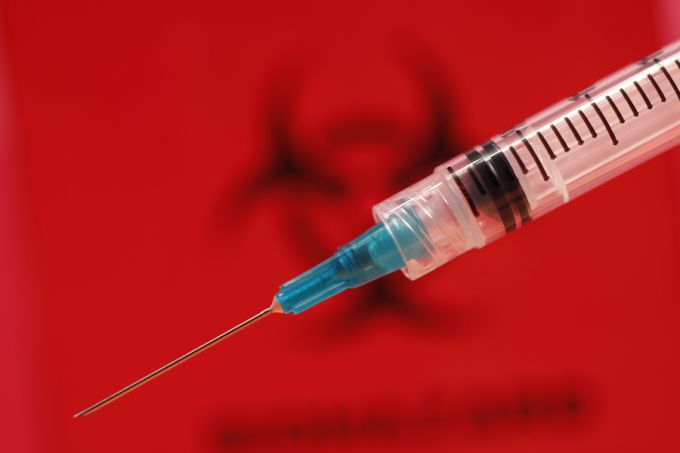
Credit: CDC/Debora Cartagena
Jan 12, 2026 / 06:00 am (CNA).
Catholic medical professionals and ethicists had mixed reactions to the Centers for Disease Control and Prevention’s (CDC) announcement last week that it has revised the recommended childhood and adolescent vaccine schedule.
In a press release on Jan. 5, the CDC announced a revised recommended childhood immunization schedule, which reduces the number of universally recommended vaccines from 18 to 11. It retains routine recommendations for all children against measles, mumps, rubella, polio, pertussis, tetanus, diphtheria, Haemophilus influenzae type b, pneumococcal disease, human papillomavirus (HPV), and varicella (chickenpox).
Vaccines for rotavirus, influenza, COVID-19, hepatitis A, hepatitis B, meningococcal disease, and RSV now shift to recommendations for high-risk groups or after “shared clinical decision-making” between providers and families.
According to a Department of Health and Human Services (HHS) memo, the CDC “applies shared clinical decision-making recommendations when evidence indicates that individuals may benefit from vaccination based on an analysis of the individual’s characteristics, values, and preferences, the provider’s medical judgment, and the characteristics of the vaccine being considered.”
Insurance companies must continue to cover all vaccines.
The changes come after President Donald Trump directed the heads of the CDC and HHS in December 2025 to “review best practices from peer, developed nations regarding childhood vaccination recommendations and the scientific evidence underlying those practices” and to make changes accordingly.
After reviewing the vaccination practices of 20 peer nations, a scientific assessment found that “the U.S. is a global outlier among developed nations in both the number of diseases addressed in its routine childhood vaccination schedule and the total number of recommended doses but does not have higher vaccination rates than such countries.”
“Science demands continuous evaluation,” Dr. Jay Bhattacharya, director of the National Institutes of Health (NIH), said in the CDC press release. “This decision commits NIH, CDC, and the Food and Drug Administration (FDA) to gold standard science, greater transparency, and ongoing reassessment as new data emerge.”
Dr. Tim Millea, chair of the health care policy committee at the Catholic Medical Association (CMA), welcomed the changes, telling CNA that he thought the CDC approached the revisions “in a very logical way.”
“There has been a huge drop in trust surrounding vaccines since the COVID-19 pandemic,” Millea said. “The suggestions during COVID that the science was ‘settled’ rubbed a lot of us the wrong way.”
“The loudest critics of these new recommendations say this is ideology over science,” he said. “Science is a process, not an end. If we need more evidence, let’s get it,” he said, pointing out Bhattacharya’s call for “gold standard” science and “ongoing reassessment.”
Millea, a retired orthopedic surgeon, said he has confidence that Bhattacharya and Dr. Marty Makary, head of the FDA, are “not going to let ideology get ahead of science.”
The president of the National Catholic Bioethics Center (NCBC), John Di Camillo, told CNA in a statement regarding the updated immunization recommendations: “The people look to public health authorities precisely for this kind of guidance, which is responsive to continually evolving research, ongoing discussions among professionals in the medical field, and ethical principles that promote the common good, respect the dignity of the human person, and limit the interference of financial and ideological conflicts.”
‘Let those closest to the children make the decisions’
Millea acknowledged that critics of the CDC’s revised recommendations say comparing the U.S. vaccine schedule to that of much smaller, more homogeneous nations such as Denmark is like “comparing apples to oranges.”
However, he pointed out that the CDC’s revised schedule is simply a recommendation, and each of the 50 U.S. states is free to do what it deems best. “It’s like 50 laboratories. Let’s see what works the best.”
Invoking the Catholic principle of subsidiarity, Millea said “let those closest to the children who are getting the vaccinations make the decisions.”
“One of the positive aspects of the pandemic is that now we can take a step back and we’re questioning, not because something may be wrong, but maybe because it could be improved upon,” Millea said.
John F. Brehany, executive vice president and director of Institutional Relations at the NCBC, told CNA that “the new schedule appears to have been designed with good intent; that is, … to have gained public trust in the absence of mandates and to have contributed to population health outcomes that meet or exceed those of the U.S.”
“The new schedule does not take a ‘one size fits all’ approach but rather structures recommendations based on the nature of the diseases, vaccines in question, and characteristics of the children or patients who may receive them,” he continued. “This approach appears to be well-founded and to provide a sound foundation for respecting the dignity and rights of every unique human person.”
This will ‘sow more confusion’
Dr. Gwyneth Spaeder, a Catholic pediatrician in North Carolina, did not welcome the changes to the immunization schedule.
While she acknowledged that the damage to trust in institutions was substantial after the COVID-19 pandemic, she thinks the issues surrounding the COVID-19 vaccine’s safety and efficacy “cannot be compared” with the decades of studies demonstrating the safety of common children’s immunizations.
“It is not the same moral calculus,” she said.
She does not believe revising the immunization schedule this way will restore trust in institutions, which she said might take “years or even generations” to rebuild.
This method will “sow more confusion,” Spaeder said. “Instead of trying to rebuild trust in transparent, evidence-based practices, we have created a situation where everyone is told different things … For this child, we think this schedule is the best, for that child, there’s a different one. That’s not how public health works.”
She also said that comparing the homogeneous, relatively tiny population of 6 million in Denmark to that of the diverse population of 340 million in the U.S. is “a false comparison.”
“Their children are at less risk from falling through the cracks and contracting these diseases we try to vaccinate against,” she said, noting the protective public health effects of Denmark’s universal health care and generous parental leave policies.
“The children who will be most harmed in the U.S. are the underserved,” Spaeder said. “That’s being lost in this conversation. We can have a lot of high-level political arguments, but I am most concerned about my patients from single-parent homes who attend day care from young ages, or who are born to mothers who don’t have adequate prenatal care.”
“They will lose out the most from not being protected from these diseases.”
Leave a Reply
You must be logged in to post a comment.