
Rome Newsroom, Dec 28, 2025 / 06:00 am
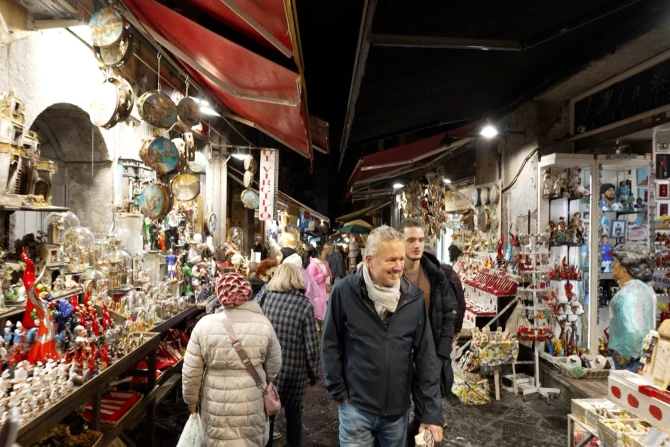
On a small street in the center of Naples, Italy, artisans like Giovanni Giudice work to preserve the custom of handcrafted Neapolitan Nativity scenes, a tradition dating back more than 300 years.
“The story of the Neapolitan Nativity scene begins with the Bourbon domination, the Kingdom of the Two Sicilies, and between them … a competition of who made the most beautiful and unique Nativity scene,” Giudice, a third-generation artisan, told Valentina Di Donato of EWTN News. “So from there, the whole story began here in Naples.”
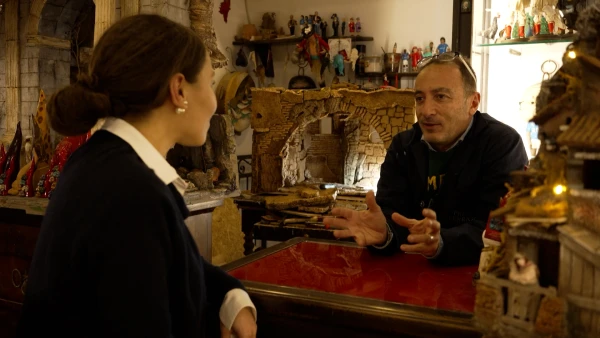
Giudice’s Nativity workshop, Bottega Ferrigno, located in the iconic “Christmas Alley,” part of the southern Italian city’s historic San Gregorio Armeno neighborhood, has been around for more than 120 years.
“Here, just walking these streets you return to being a child,” the craftsman said. “You live the warmth of the birth of Jesus Christ. The Nativity scenes that were made when you were little, we try to transmit this tradition to our children, even if the youth of today are really focused on innovation, and maybe it’s getting a little out of hand.”
“But we have to do everything possible to help them learn these skills too and honor these things,” he said.
Neapolitan Nativity scenes reflect the style and dress of the 1700s in Naples, the century in which they became popularized by the nobles of the era, who would commission well-known artists of the time to create the elaborate scenes for display in their homes.
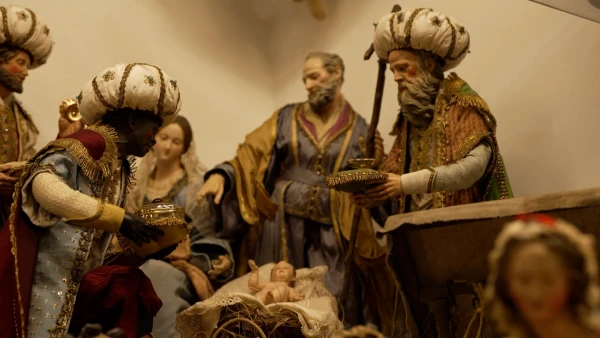
Another unique aspect of a Neapolitan Nativity, Giudice pointed out, is that “it brings everyday life into the Nativity scene.”
Beyond the typical figures of Mary, Joseph, baby Jesus, and shepherds, in a Neapolitan Nativity scene, one can also find statuettes of ordinary people going about their daily lives.
The pieces are made from hand-molded terracotta that is then hand-painted before fabric clothing is attached.
“This is very particular work. It’s born totally out of passion,” Giudice said. He explained that on one side of the scene is the birth of Jesus, the most important part, and then around it are characters such as a fish vendor or a person selling cheese: “Everyday people living everyday life.”
The “Gobbo Scio Scio” is a characteristic figure found in the Neapolitan Nativity — the beggar is considered a good luck charm in Naples.
Another distinctive piece is Pulcinella, a masked character from comedic theater and a universal symbol of Naples. Craftsmen began to include Pulcinella in their Nativity scenes in the 18th century as a sign of joy and lightheartedness.
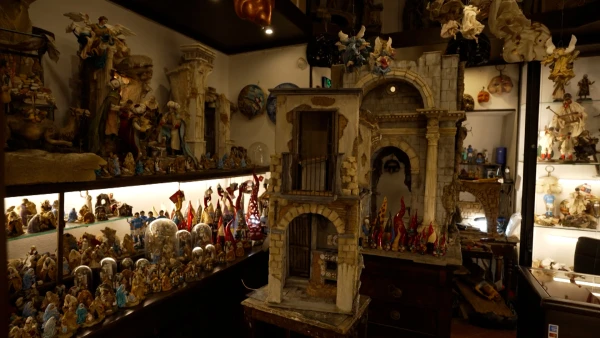
Situated between the “profane” characters and the Holy Family, there is the “purification,” the artisan Giudice said. “It’s represented through a fountain or a waterfall — there must be water, because water purifies from the profane to the sacred.”
“The faces here [in Naples] are particular, grotesque even!” Giudice said. “And sometimes we use them and transform them into our shepherds, turning those faces into our Nativity scene characters. Of course, the older people here give us so much inspiration. Those faces have so much history.”
“Naples is a fantastic city. A city full of inspiration, full of culture. The stones here are hundreds of years old — they speak.”
If you value the news and views Catholic World Report provides, please consider donating to support our efforts. Your contribution will help us continue to make CWR available to all readers worldwide for free, without a subscription. Thank you for your generosity!
Click here for more information on donating to CWR. Click here to sign up for our newsletter.
Leave a Reply
You must be logged in to post a comment.