
More than a decade of evaluations across Africa, Asia, and Latin America found that family-led development is a consistent driver of lasting progress for families experiencing poverty in Unbound’s programs.
Unbound, an international nonprofit founded by lay Catholics and grounded in Catholic social teaching, centers its numerous programs on alleviating poverty by allowing families to identify their own priorities and lead their personal development.
The organization, which is approaching its 45th anniversary in November, helps families remain in charge through direct cash transfers. Since it was established, Unbound has raised $3 billion, $2.5 billion of which has gone directly into families’ bank accounts.
The findings draw from 13 years of evaluations across 16 countries, spanning programs focused on women’s empowerment, education, elder support, leadership development, and community engagement.
The evaluations serve as a way to examine what is working and where the organization can make changes and updates to better serve families.
Just like its programs, the evaluation process is “quite decentralized” with dozens of “local internal evaluators embedded within each program staff around the world,” Melissa Velazquez, vice president of program evaluation and learning at Unbound, told EWTN News.
The evaluations are “to really make sure that weʼre moving in a direction that is evidence based and helping us understand what works best,” Velazquez said. “First and foremost” the evaluations are “for the families and communities so that they can learn and grow, and we can learn and grow.”
They are also to show sponsors the benefits and success of Unbound’s mission and to show “others who might be working in the international development space,” Velazquez said.
“Our very loyal, longtime base of donors and sponsors are very connected to our work emotionally through their faith and through the power of our stories,” Ashley Hufft, president and CEO of Unbound, told EWTN News.
“Then the opportunity is very exciting to be able to turn now to our sponsors and donors and actually show … that impact,” Hufft said.
Data reveals increasing rates of women in leadership
In 2025, Unbound surveyed 2,329 women in Guatemala, Peru, Colombia, Uganda, Kenya, and the Philippines. The research compared Unbound participants to women on the organization’s waiting list and adjusted for differences including age, education, and marital status.
It found that women in Unbound programs reported higher levels of confidence, more access to leadership opportunities, and greater financial inclusion.
The evaluations found that 70% of women participating in Unbound programs in Guatemala had a bank account registered in their names, compared with 24% of women with children on the organizationʼs sponsorship waiting list.
In Nairobi, Kenya, 60% of sponsored women accessed credit in the previous year compared with 34% of women on the waiting list.
Unbound also examined the outcomes of its numerous mothers groups, which are community-based support groups of parents or guardians with sponsored children in Unbound.
Through the organizationʼs Agents of Change program, the women make community-level decisions based on community needs with the help of grant money they receive after getting proposals approved.
“Unbound is so focused on household poverty, the elimination of that, and helping families … direct their own path. But we recognize that there are issues in the community,” Velazquez said. “So there are things that have to be worked on at a community level or a structural level.”
When evaluating the program, “we werenʼt just trying to count how many roads were paved or how many solar lights were installed. We were looking at empowerment outcomes for women,” Velazquez said.
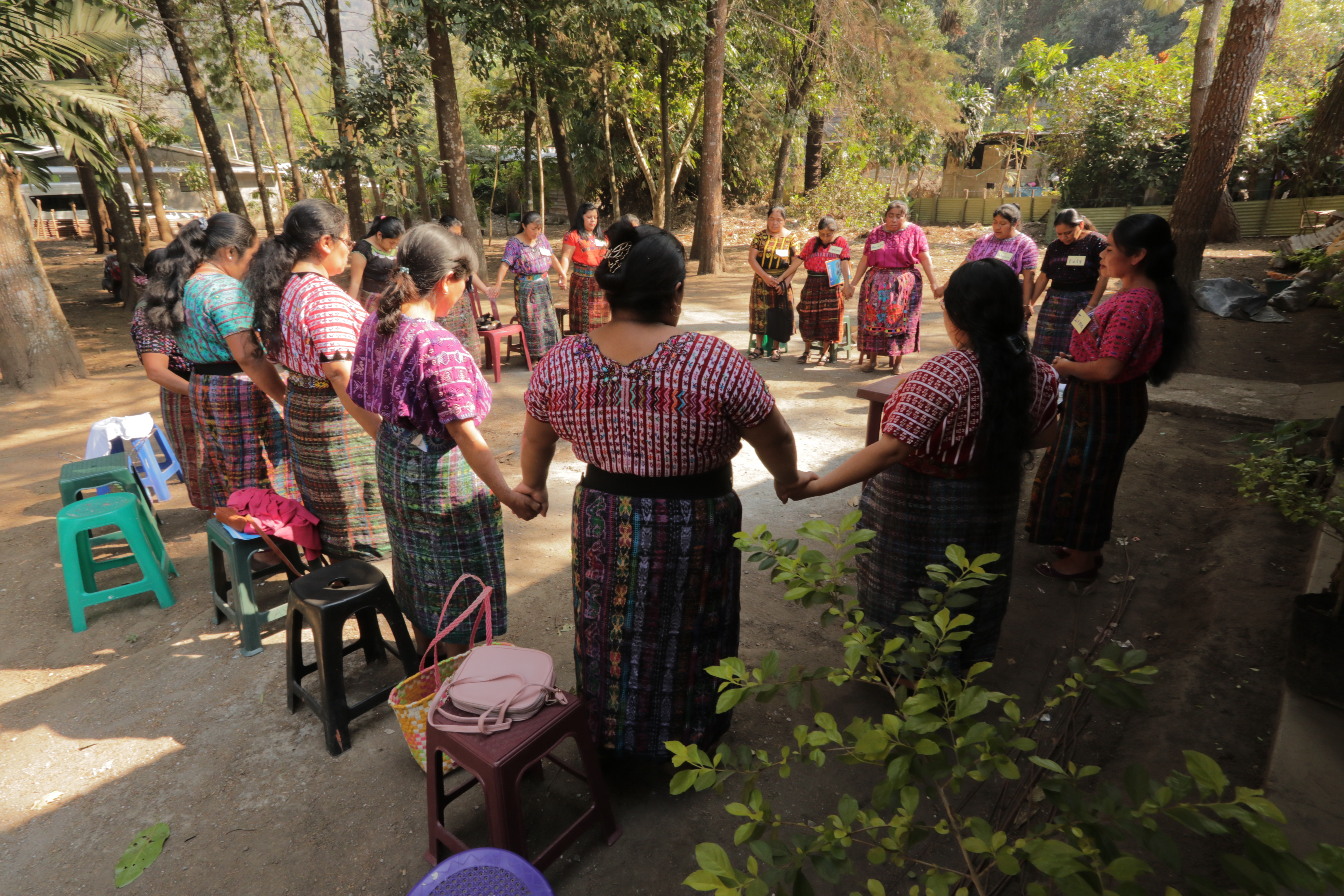
The organization asked: “How many women felt confident to speak to authority? How many of them felt like leaders in the community? How many of them felt they actually had the power to make change?”
In Kampala, Uganda, women participating in the groups were 21 percentage points more likely to hold leadership positions than their nonparticipating counterparts.
A 2025 evaluation found that 74% of the participants feel they are involved in community decisions and make their community a better place to live. Also, 35% reported that they held a leadership position in their community since joining Unbound.
Due to the success, Unbound created an additional program, Agents of Change Kids. It will launch in 2027 to give children opportunities to develop community leadership as well as decision-making and problem-solving skills.
Evaluations reveal success for families, elders
Another evaluation addressed Unbound participants who use Poverty Stoplight, a poverty measurement tool. Families use green indicators to mark “no poverty,” yellow for “poverty,” and red for “extreme poverty” in numerous areas of poverty in their lives and then create pathways to improve each one.
A 2025 analysis found that nearly half of participating families have surpassed the 60% green threshold and over 60% have fewer than 10% red indicators.
Evaluations also showed positive updates within Unbound’s programs for elder support. It revealed that elderly participants reported less loneliness, stronger social connections, improved food security, and greater access to healthcare than nonparticipating elders.
It found 66% of participating elders reported receiving all needed medical care compared with only 40% of those not in Unbound. The outcomes for elders led the organization to increase its elder sponsorship in its 2030 strategic plan.
Next steps for Unbound
Unbound’s 2030 strategic plan, “Hope in Every Step: A Radical Journey to End Poverty,” is a guide of the organizationʼs work helping to eliminate global poverty by expanding the impact of its decentralized approach.
The plan was shaped by program partners across the globe. It highlights what Unbound wants to achieve, overarching goals, and strategic pillars it will use to measure the impact to eliminate poverty, empower women, advance education, build community, and promote well-being of all ages.
Ultimately, Unbound will continue its mission of family-led decision-making.
“I donʼt think that thereʼs anyone better positioned to understand what their family needs and how to prioritize between a lot of competing priorities with little resources and various time constraints and levels of urgency on it,” Hufft said. “No one, at the core, can do it like the family.”