
The Vatican has reaffirmed its support for the Anglican ordinariates, confirming that these communities have a permanent and valued place within the Catholic Church.
On March 24, the Dicastery for the Doctrine of the Faith issued a document titled “Characteristics of the Anglican Heritage as Lived in the Ordinariates Established Under the Apostolic Constitution Anglicanorum Coetibus.”
The document is the fruit of a meeting held March 1–3 in Rome, during which Cardinal Víctor Manuel Fernández, prefect of the dicastery, invited the ordinariate bishops — including Bishop Steven J. Lopes of the Personal Ordinariate of the Chair of Saint Peter, Bishop David Waller of the Personal Ordinariate of Our Lady of Walsingham in England, and Bishop Anthony Randazzo of the Personal Ordinariate of Our Lady of the Southern Cross — to reflect on how they have lived and integrated their Anglican spiritual and liturgical heritage within the Catholic Church.
The document highlights key characteristics of the Anglican patrimony as lived in the ordinariates, including a distinctive “ecclesial ethos” in which both the laity and the clergy participate actively in church governance, and a focus on evangelization through beauty in worship, music, and art.
Direct outreach to the poor is “a defining element of the patrimony,” according to the document, as is a pastoral culture that connects divine worship with daily life in what the document calls an “almost monastic rhythm drawn from the English spiritual tradition” that characterizes ordinariate parish communities.
The bishops said a strong emphasis on the family as the “domestic church,” as “the home is … the first place where the faith is learned and lived” is strongly emphasized.
The document also highlighted Scripture-centered preaching and the importance of spiritual direction and the sacrament of penance.
The bishops noted that, despite the great geographical distances between the three ordinariates, they share “a core shared identity” and offer “a unique reflection of the face of the Church and a distinctive contribution to the living richness of her identity as ‘one, holy, catholic, and apostolic.’”
The Cathedral of Our Lady of Walsingham in Houston serves as the mother church and cathedral of the Personal Ordinariate of the Chair of Saint Peter, which spans the U.S. and Canada. Established by Pope Benedict XVI in 2012, the ordinariate was given its own cathedral when Lopes was ordained and installed on Feb. 2, 2016.
In a message sent to parishioners, Lopes welcomed the document as a significant encouragement, calling it “an exhortation to live this patrimony in all of its richness. We have been given a unique set of tools — the way we worship, the way we structure parish life, the centrality of family life, etc. — which add to the vitality of the Catholic Church. Our ordinariate identity arises from fidelity to this patrimony and this mission. Our diversity does not detract from the underlying communion of the Church… it strengthens it.”
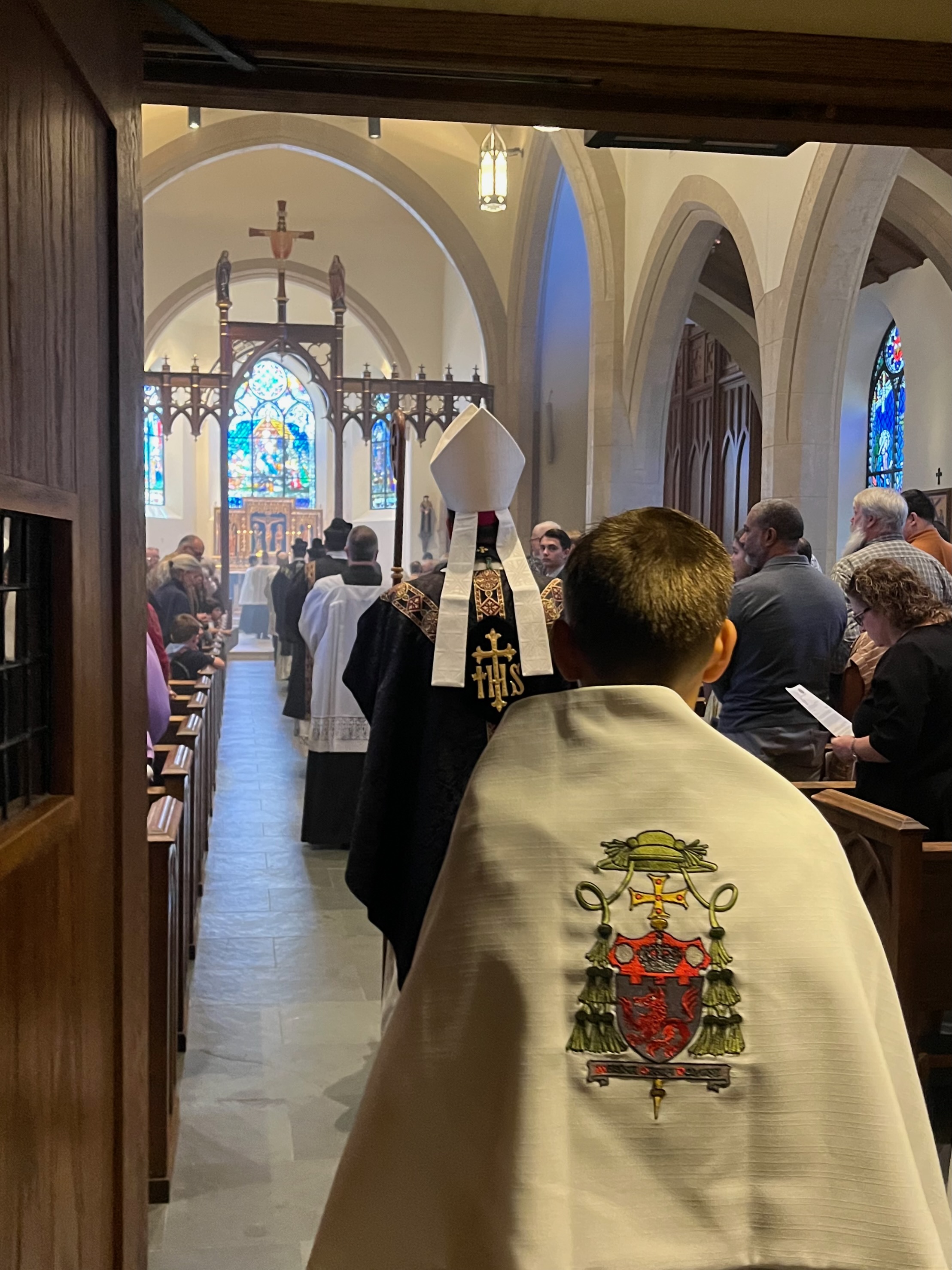
Lopes encouraged parishioners to share the document with family and friends who may wonder why the ordinariate’s experience of Catholic life looks different from the norm.
“Prior to today’s publication of this document, you had to glean descriptions of our patrimony from rather dry legal documents,” he wrote. “Now the Holy See is offering us a much more organic reflection on our identity and mission — and clearly stating that the ordinariate is not just a means to an end but has a long and bright future ahead of it!”
The ordinariates: A brief history
The Anglican ordinariates trace their origins to 1980, when St. John Paul II approved the Pastoral Provision, which allowed married former Episcopal clergy to be ordained as Catholic priests and permitted the formation of Anglican-use communities within existing Roman Catholic dioceses.
This was the first major step in preserving elements of Anglican liturgical and spiritual heritage for those entering full communion with Rome.
In 2009, Pope Benedict XVI took this further by issuing the apostolic constitution Anglicanorum Coetibus, which created the personal ordinariates as permanent structures within the Catholic Church.
Each of the three Anglican ordinariates is a personal (non-territorial) jurisdiction, similar to a diocese but defined by people (those with an Anglican background who have entered full communion with the Catholic Church) rather than by strict geographical boundaries.
“Any Catholic may attend ordinariate liturgies and functions, just as members of the ordinariate can attend liturgies and functions at any Catholic parish,” according to the website for the Personal Ordinariate of the Chair of Saint Peter.
The Personal Ordinariate of Our Lady of the Southern Cross encompasses Australia, New Zealand, Japan, Guam, Philippines, and surrounding areas.
The Ordinariate of Our Lady of Walsingham is located in London and encompasses England, Scotland, and Wales.
Leave a Reply
You must be logged in to post a comment.