
Victoire Ingabire Umuhoza was a wife and mother who had no intention of working in politics, but “it was her heart that was moved for the Rwandan people” that led her to human rights work.
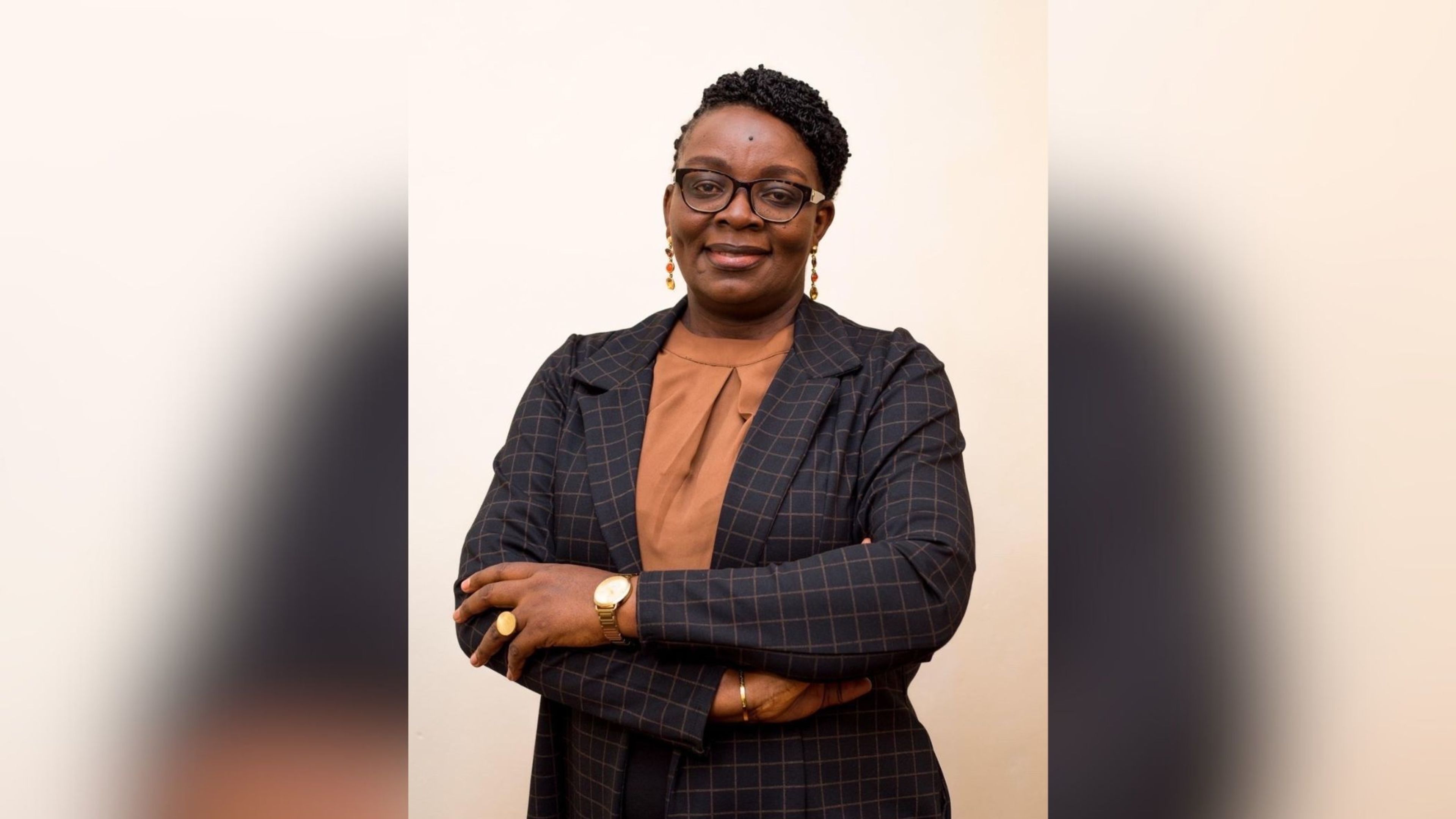
Victoire Ingabire Umuhoza once imagined a life of prayer as a nun; instead, she became one of Rwanda’s most prominent opposition leaders. Her outspoken career has led her back to prison as her second trial begins this week.
Before becoming a critic of the Rwandan government, Umuhoza was “a wife and a mother, with no intent whatsoever to be in politics, but it was her heart that was moved for the Rwandan people and their suffering that caused her to start,” Umuhoza’s daughter Raïssa Ujeneza told EWTN News.
After speaking out against the nation’s “authoritarian regime,” Umuhoza now faces charges for the “creation of a criminal organization to destabilize the country,” Ujeneza said. Her trial is set to begin on March 4.
While in prison, Umuhoza has “let go of everything out in the world and inwardly turned to God. She’s willing to risk even her life to advocate for the lives of those who cannot speak for themselves because of the fear, because of oppression.”
Umuhoza’s case has gained the attention of human rights organizations and activists that acknowledge Umuhoza as a political prisoner amid the nation’s human rights violations.
“Rwanda styles itself as a democracy and a great African success story. In reality, it is a brutal dictatorship that will go to any lengths to stifle dissent,” Katrina Lantos Swett, president of the Lantos Foundation for Human Rights and Justice, told EWTN News.
Path to politics
Born in Rwanda in 1968, Umuhoza spent her teen years believing she would one day become a nun, but ultimately she chose to become a wife and mother.
In 1994, she was studying economics in the Netherlands when the Rwandan genocide began. “By the grace of God, she managed to bring my father, myself, and my brother to the Netherlands to join her,” Ujeneza said.
Over the span of three months, hundreds of thousands of people were killed by Hutu extremists during the genocide against the Tutsi ethnic group.
In the Netherlands, Umuhoza saw “so many people suffering on the news covering the genocide. That just left a sadness in her heart. From that moment, she continued to follow politics in Rwanda,” Ujeneza said.
After the genocide, the Rwandan Patriotic Front, which was established in 1987, began leadership under President Paul Kagame. The party was created to establish national unity but has faced criticism for suppressing dissent.
“They speak of unity, but it is not based on trust. It is based on uniformity,” Ujeneza said. “We all have to think alike and act alike, and then we’re a unified front. That is not how societies are. We have to respect differences and allow differences.”
Umuhoza “thought that through a true democracy, all different groups of the society could be represented in such a way that people would feel honored and respected in the government.”
She wanted “true reconciliation for the people of Rwanda,” so around 1997, Umuhoza “decided to join opposition groups because she noticed that there wasn’t sufficient progress happening in Rwanda,” Ujeneza said.
For more than a decade she led the United Democratic Forces of Rwanda, a coalition of opposition groups. “After many years doing opposition abroad, they decided that it was time to go to Rwanda so they could participate in the politics within the country and in the elections,” she said.
Return to Rwanda
In 2010 Umuhoza returned to her home country. The day she arrived, she “wanted to show her respect to the deceased,” Ujeneza said. She went to the genocide memorial to place flowers and give a speech.
“It was found to be a very controversial speech. She said, ‘Yes, we have to acknowledge that the Tutsis were victims, but there were also Hutus who were victims.” She spoke about victims of violence in the country before, during, and after the genocide.
The speech was “regarded as genocide denial,” which “triggered her arrest,” Ujeneza said.
Umuhoza was sentenced to 15 years for charges related to terrorism, genocide ideology, and threatening state security. She served eight years, five of which were in isolation to “control her” due to the government’s “fear of her influence on people.”
In isolation, “she changed her mind state and considered herself a contemplative nun. Prayer life became her normal; meditation became her normal,” Ujeneza said.
In 2017, the African Court on Human and Peoples’ Rights “acknowledged that her right to freedom of expression and her fair trial rights were violated,” Ujeneza explained. Due to a presidential pardon, Umuhoza was released “upon the condition that she was not allowed to leave the country unless she was granted permission.”
“Although she requested permission to come for my wedding day, my brother’s wedding, and the birth of our children, she was never granted permission to leave,” Ujeneza said. “So she stayed in Rwanda and continued to advocate for human rights.”
Umuhoza started her own political party in 2019, Development and Liberty for All, with the mission of “seeking democracy and establishing the rule of law in Rwanda.” She was ultimately arrested again on June 19, 2025, for being an “accomplice of trying to create a criminal organization to destabilize the country,” Ujeneza said.
The charges are because “members of her political party read a book on how to resist an authoritarian regime peacefully, and they joined an online training about resisting authoritarian regimes. Because they are members of her political party, they hold my mother responsible as a leader for their movements.”
Faith ‘at the center’
Umuhoza’s faith “has been at the center of the way she does politics” and is why “she is able to suffer and endure what she’s exposed to,” Ujeneza said.
In prison, she “is not getting the medical or nutritious necessities that she requires for her health to stay stable. Now she’s not allowed to attend church services,” Ujeneza said. “It’s one thing to be able to pray in your own room and to read the Bible, but it’s another thing to be able to go to holy Mass and receive the Eucharist; as a Catholic, that is so central to her life.”
“Although she fears for her life, she does not allow that fear to determine her actions, because her life is in God’s hand. I once asked her: ‘Imagine the worst-case scenario, you die before you finish your mission. What then?’ And she said: ‘If anything like that would happen to me, it means that God thought that what he meant for me to do has been accomplished. So I will be at peace regardless.’”
Umuhoza’s case is also unfolding as thousands of churches have closed in recent years in Rwanda. It is a way of “asserting control over even the most personal areas of life,” Lantos Swett said.
“Faith is such a personal thing for a government to want to have tight control on,” Ujeneza said. “If every aspect of societal life must reflect the values of the Rwandan government, then citizenship becomes compliance and not participation.”
Support for Umuhoza and her case
Recently, “a public state official of the Rwandan government said that anyone who supports and acknowledges my mother as an opposition leader is denying that she’s actually a terrorist,” Ujeneza said. “In a country where there is no separation of powers, basically the state dictates what all other institutions do, we now fear that a fair trial is not going to be possible.”
Democratic nations “holding Rwanda accountable for how it treats its citizens, especially political opposition members, is very important,” Ujeneza said.
“We have seen great support from the European Parliament, where they have now accepted the resolution demanding the freedom of our mother. They acknowledge that she is a dissident, that she is being treated unfairly, that her rights are being violated,” she said.
Lantos Swett said she has “little hope” that “Umuhoza, or any Rwandan dissident, will ever see justice in the Rwandan court system.” She added: “We need democratic governments to use their influence to lean on Kagame to release her, along with other political prisoners in the country.”
“For years, it has seemed as though the international community was willing to turn a blind eye to Rwanda’s misdeeds, but there are signs that this may be changing, including the recent news that the U.S. Department of the Treasury will sanction the Rwandan military and several of its top leaders,” Lantos Swett said.
If you value the news and views Catholic World Report provides, please consider donating to support our efforts. Your contribution will help us continue to make CWR available to all readers worldwide for free, without a subscription. Thank you for your generosity!
Click here for more information on donating to CWR. Click here to sign up for our newsletter.
Leave a Reply
You must be logged in to post a comment.