
Echoing what seems to be a growing phenomenon, Bishop Niall Coll said young Catholics in Ireland are looking for clarity, coherence, and tradition in their search for truth.
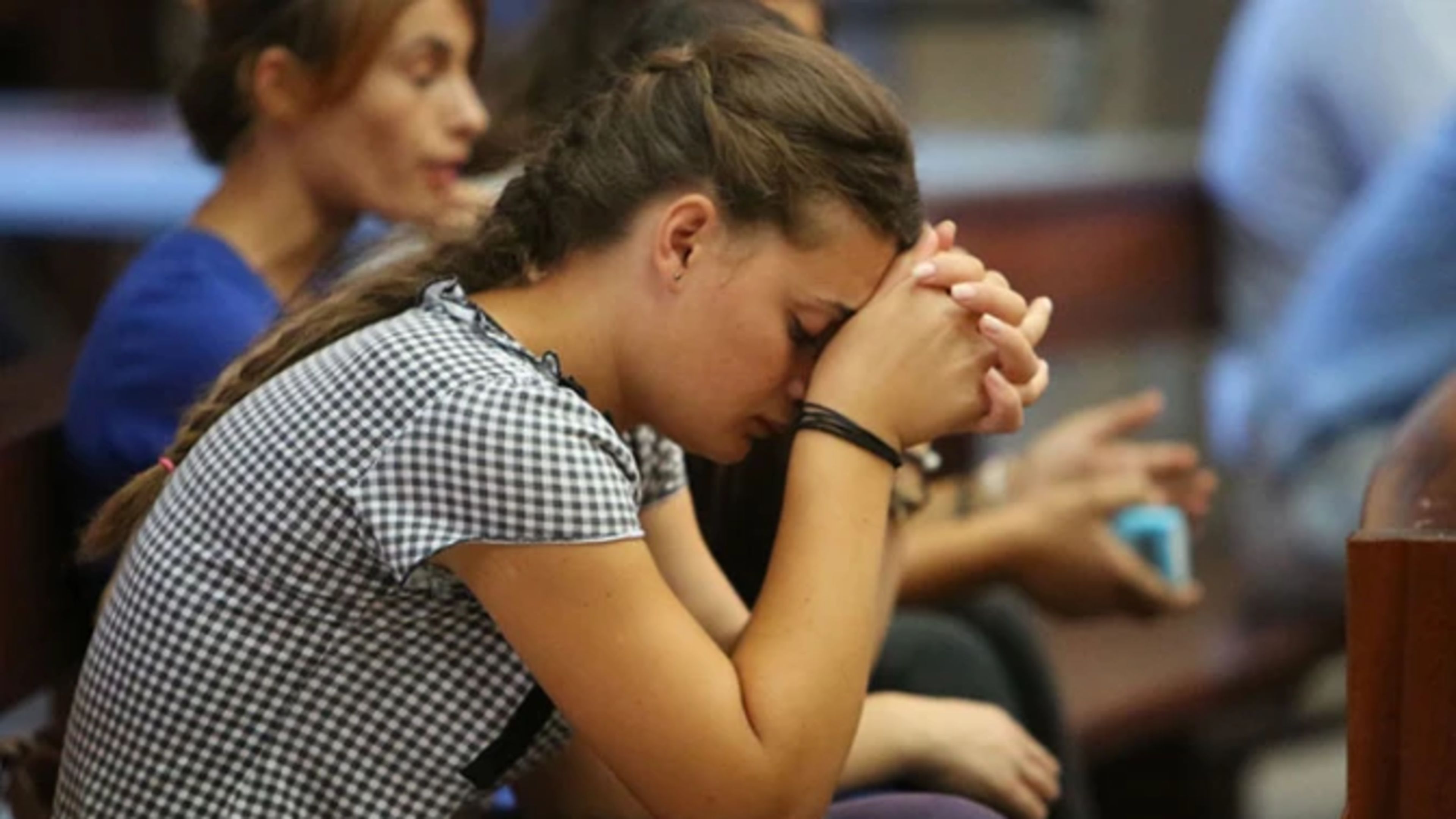
Bishop Niall Coll of Raphoe, Ireland, said that new generations of Catholics are seeking “doctrinal solidity” during a presentation in Dublin this week.
Before a gathering at Holy Spirit Parish in Kimmage Manor, Dublin, the bishop reflected on the search for truth and the yearning for meaning among young people born after 1995.
According to Coll, these new generations are showing a renewed sense of seriousness regarding the faith, as reported by the national newspaper, The Irish Catholic.
The bishop discussed how these young people are growing up in a post-Christian culture, “digitally and morally fragmented,” in which they “have no inherited memory of Catholic Ireland.”
He emphasized that young people are seeking “clarity, coherence, and tradition,” and noted that “they are drawn to doctrinal solidity, sacramental depth, and continuity with the Church’s tradition.”
The bishop suggested that, while synodal discussions often focus on structures and processes, many young people are asking themselves: “What does the Church actually believe?”
“Having grown up amid constant choice, information overload, and moral ambiguity, they are less interested in conversation and more in formation that produces conviction and confidence,” he continued.
He warned that synodality, if not anchored in Scripture and doctrine, “risks endless discussion without direction.”
He described the importance of strong catechesis and the formation of catechists, maintaining that “renewal cannot be sustained without formation” and pointing to “weak” catechesis as a central factor in the Church’s current fragility.
He warned that many young people are being formed online, “often through fragmented and polarized sources,” rather than through structured instruction in parishes or schools.
“A synodal Church requires not only participation but understanding, not only voice but formation. The people of God cannot discern together unless they can articulate what they believe and why,” he pointed out.
For the bishop, this yearning for coherence and tradition could be received “as a gift for the Church, not as a problem to be managed.” Synodality, he emphasized, “must hold together listening and teaching, discernment and authority. The task is not to choose between synodality and tradition but to integrate them.”
He also cautioned that renewal “will be slow and sometimes uneven,” as it “requires sustained theological clarity and spiritual depth.”
“The future of Irish Catholicism will depend on whether the Church can become both synodal and coherent: a Church that listens deeply, teaches clearly, forms intentionally, and bears warm witness in a wounded world,” he stated.
This story was first published by ACI Prensa, the Spanish-language sister service of EWTN News. It has been translated and adapted by EWTN News English.
If you value the news and views Catholic World Report provides, please consider donating to support our efforts. Your contribution will help us continue to make CWR available to all readers worldwide for free, without a subscription. Thank you for your generosity!
Click here for more information on donating to CWR. Click here to sign up for our newsletter.
Leave a Reply
You must be logged in to post a comment.