
Mike Hammer, the top U.S. diplomat in Cuba, said there are high-level exchanges with people within the Cuban regime and expressed hope for a peaceful transition to democracy.
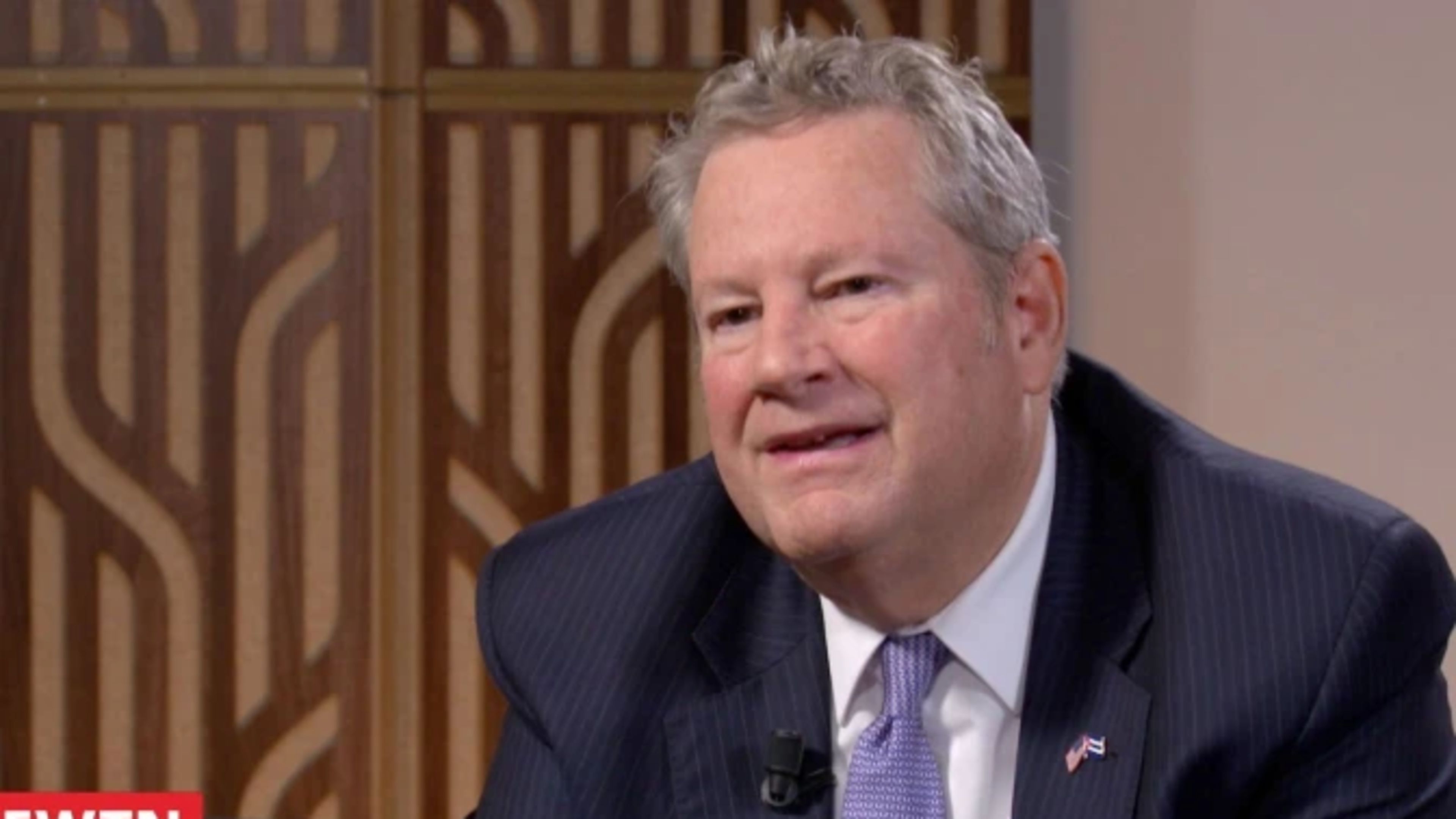
The head of the U.S. diplomatic mission in Havana, Mike Hammer, stated that Cuba is at a decisive moment and that the country will soon achieve “the freedom it hasn’t had in 67 years.”
“If there is freedom, there will be no suffering because there will be the necessary change. How will it happen? Well, that’s what we’re working on,” the diplomat stated in an interview with “EWTN Noticias,” the Spanish-language broadcast edition of EWTN News.
Hammer confirmed that there are currently “high-level exchanges with people within the Cuban regime” as well as “conversations to see what can be done to take the country in a new direction” that would allow for a transition to democracy.
The interview took place shortly after his Feb. 20 meeting with the U.S. ambassador to the Holy See, Brian Burch, and Vatican Secretary for Relations with States Archbishop Paul Richard Gallagher.
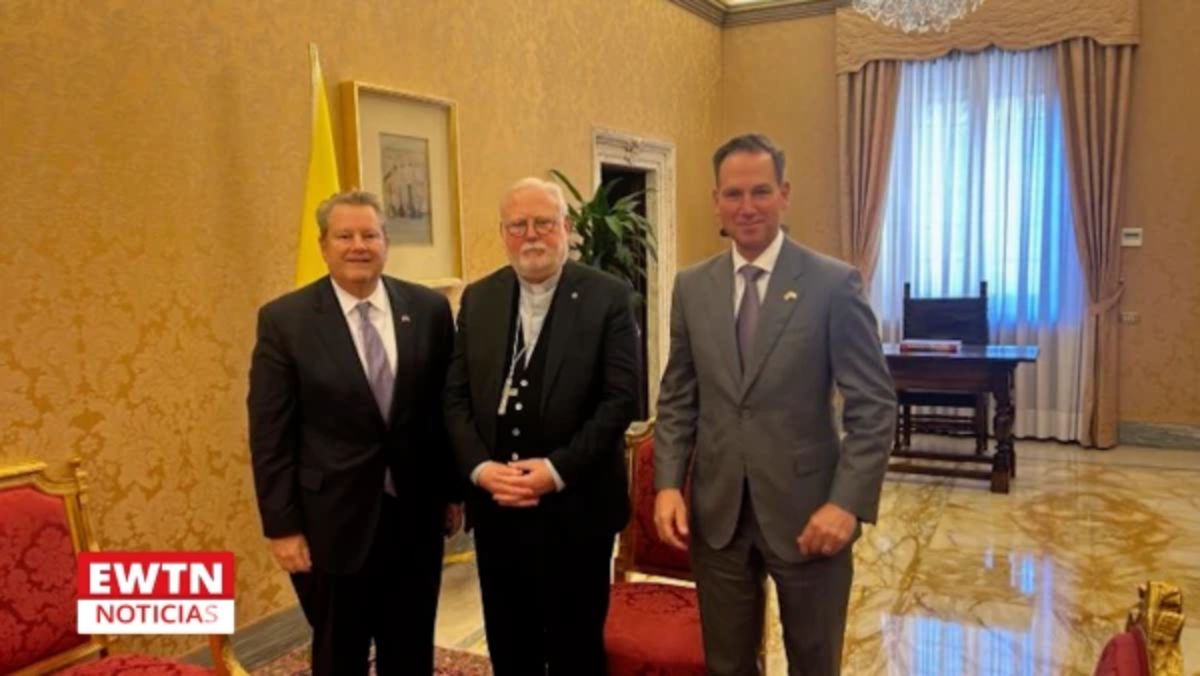
U.S. diplomat to Cuba Mike Hammer (left) meets with Archbishop Paul Richard Gallagher (center), and U.S. Ambassador to the Holy See Brian Burch. | Credit: U.S. Embassy to the Holy See/EWTN Noticias screenshot
According to official statements from the U.S. Embassy to the Holy See, the meeting addressed the political, economic, and social crisis in Cuba and the role the Catholic Church can play acting as a facilitator or mediator.
Church support for a peaceful transition in Cuba
Hammer said he conveyed to the Church in Cuba the need for it to openly denounce the Castro regime’s disrespect for the human rights of the Cuban people.
“It doesn’t do so openly, publicly; it does so through Masses, but the perception is that it is not declaring itself in favor of the dignity and rights of the people,” the diplomat said.
He also addressed the situation of political prisoners: “More than hundreds are imprisoned because they dared to complain about the economic situation, the lack of electricity, the lack of water, and because of those peaceful demonstrations. It’s important that the Vatican, that the Church, give them a voice so they can speak out and say: These political prisoners must be freed.”
The Vatican’s role in the Cuban equation has a historical dimension that Washington is well aware of. The Holy See mediated the diplomatic thaw between Cuba and the United States initiated by President Barack Obama in 2014, and Pope Francis facilitated part of the negotiations.
In fact, although the United States has not had an ambassador in Cuba since 1960, diplomatic relations were reestablished in 2015. However, the U.S. mission is headed by a chargé d’affaires, a position that does not hold the rank of ambassador.
A diplomat out on the streets
During his 15 months in Havana, Hammer has displayed an unusual diplomatic approach. He has traveled the island — to all its provinces — to listen directly to citizens and learn firsthand about their concerns and aspirations.
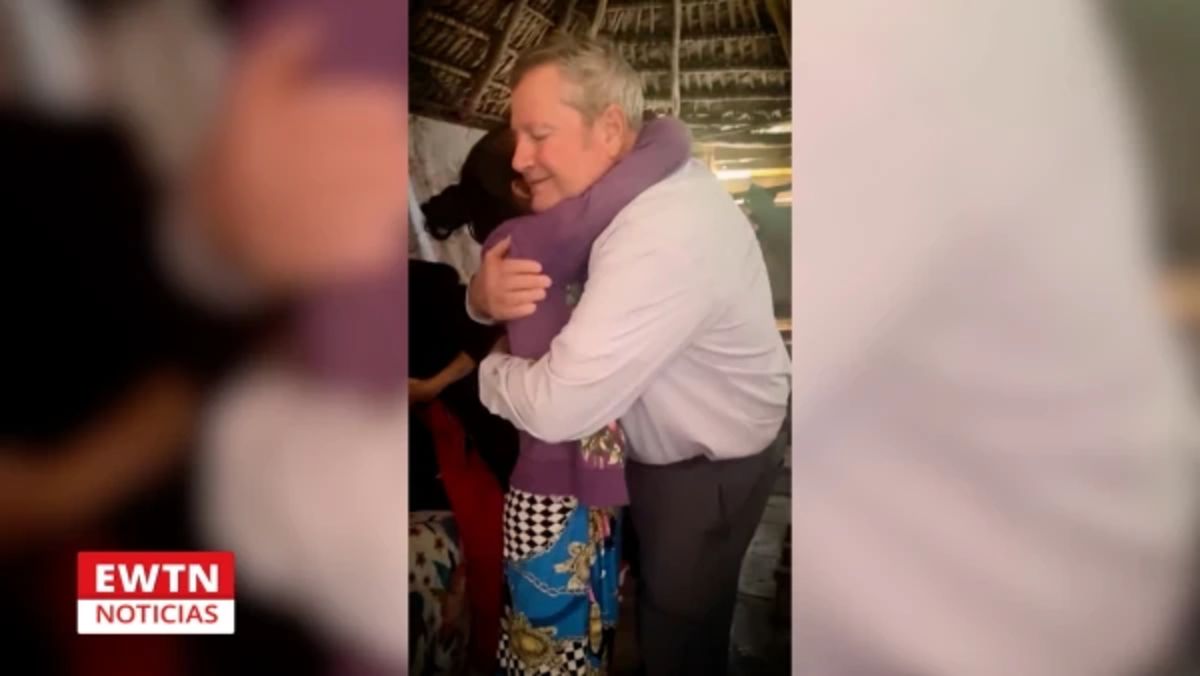
U.S. diplomat to Cuba Mike Hammer has met with civil society, walking through cities and streets and visiting Cubans in their homes. | Credit: Photo courtesy of Mike Hammer/EWTN Noticias screenshot
“Many feel that the revolution has betrayed them, and why? Because their parents, grandparents, fought with Fidel, and what happened? When they reached adulthood, there was no state to protect them, to take care of them, it abandoned them, and at the same time they see how members of the Castro regime go to stroll along the Paseo de la Castellana in Madrid or to be educated in Europe,” he said.
This closeness with the Cuban people has not pleased the Castro regime, which has tried to scare off onlookers of these encounters by organizing staged harassment by groups tied to the regime. However, the diplomat maintains that the message he receives on the street is unequivocal: “The people want change, that’s what they tell me.”
Along the same lines, he questioned the privileges of the ruling elite: “How is it that the luxury cars driven by the elite get in [the country]? Where do they come from? How is it that there are restaurants, paladares [high end restaurants], as they say there, frequented by the upper class? This is a dictatorship where those who are part of it live well and the rest of the people are abandoned.”
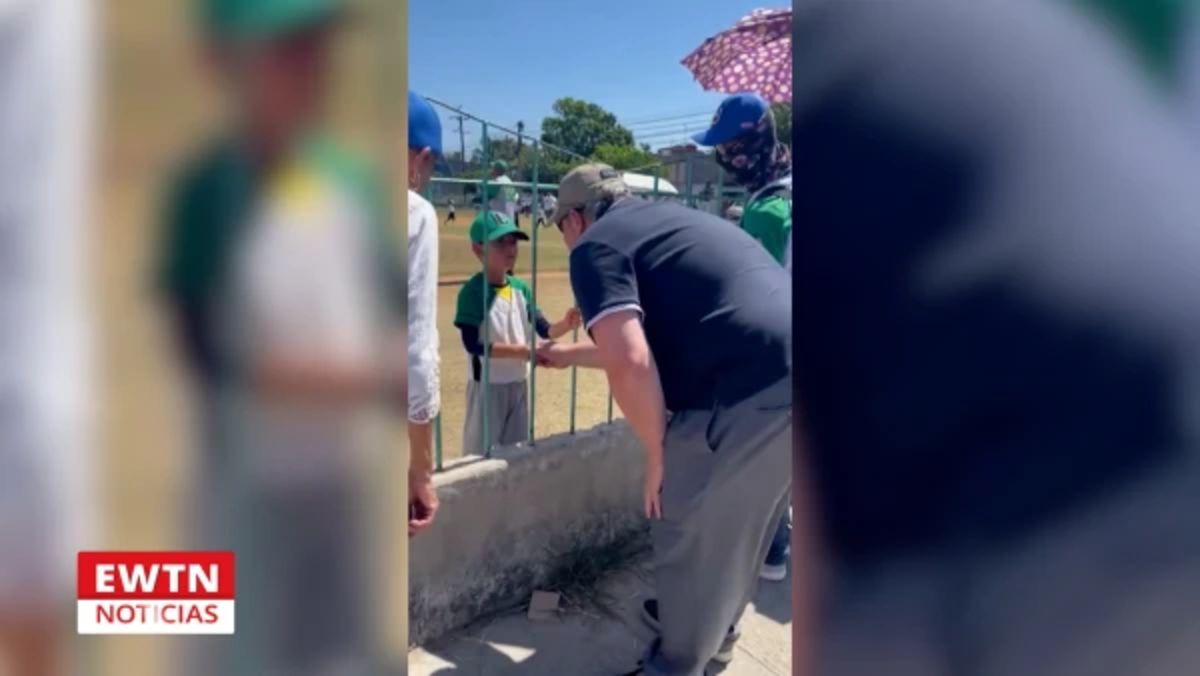
U.S. diplomat to Cuba MIke Hammer has made a point of speaking with Cubans to understand the reality in which they live. | Credit: Photo courtesy of Mike Hammer/EWTN Noticias screenshot
Hammer also denounced a climate of control and restrictions that extends to various aspects of daily life: “They control everything. There is no freedom of the press, of expression, of religion. That has to change. And the world has to see it.”
When asked specifically about the degree of religious freedom on the island, he said: “They are arresting women who want to go to Mass.”
Humanitarian aid channeled through the Church
Since late 2025, the United States has channeled $9 million worth of humanitarian aid through the Catholic Church and Catholic Relief Services without any mediation from the communist regime. Hammer noted that this is an alternative to prevent the misappropriation of funds.
“Experience has taught us throughout history that one cannot rely on the regime to allow assistance to reach those who need it most, and that is why, I regret to say, this is the reality of Cuba today,” he said, after confirming that humanitarian aid from the United States will continue to be distributed through nongovernmental channels to ensure it reaches the most vulnerable sectors.
“Now at least they are allowing the United States to send humanitarian aid, and through the Church — the Church’s role. In fact, the Church has been supporting the Cuban people for decades now, and the role of the Church remains extremely important,” he indicated.
Washington’s objective, he insisted, is a peaceful transition that avoids bloodshed and guarantees the release of those imprisoned for political reasons.
This story was first published by ACI Prensa, the Spanish-language sister service of EWTN News. It has been translated and adapted by EWTN News English.
If you value the news and views Catholic World Report provides, please consider donating to support our efforts. Your contribution will help us continue to make CWR available to all readers worldwide for free, without a subscription. Thank you for your generosity!
Click here for more information on donating to CWR. Click here to sign up for our newsletter.
Leave a Reply
You must be logged in to post a comment.