
Outbreaks of measles at several Catholic sites around the U.S. have reignited debates about vaccines. What does the Church teach?
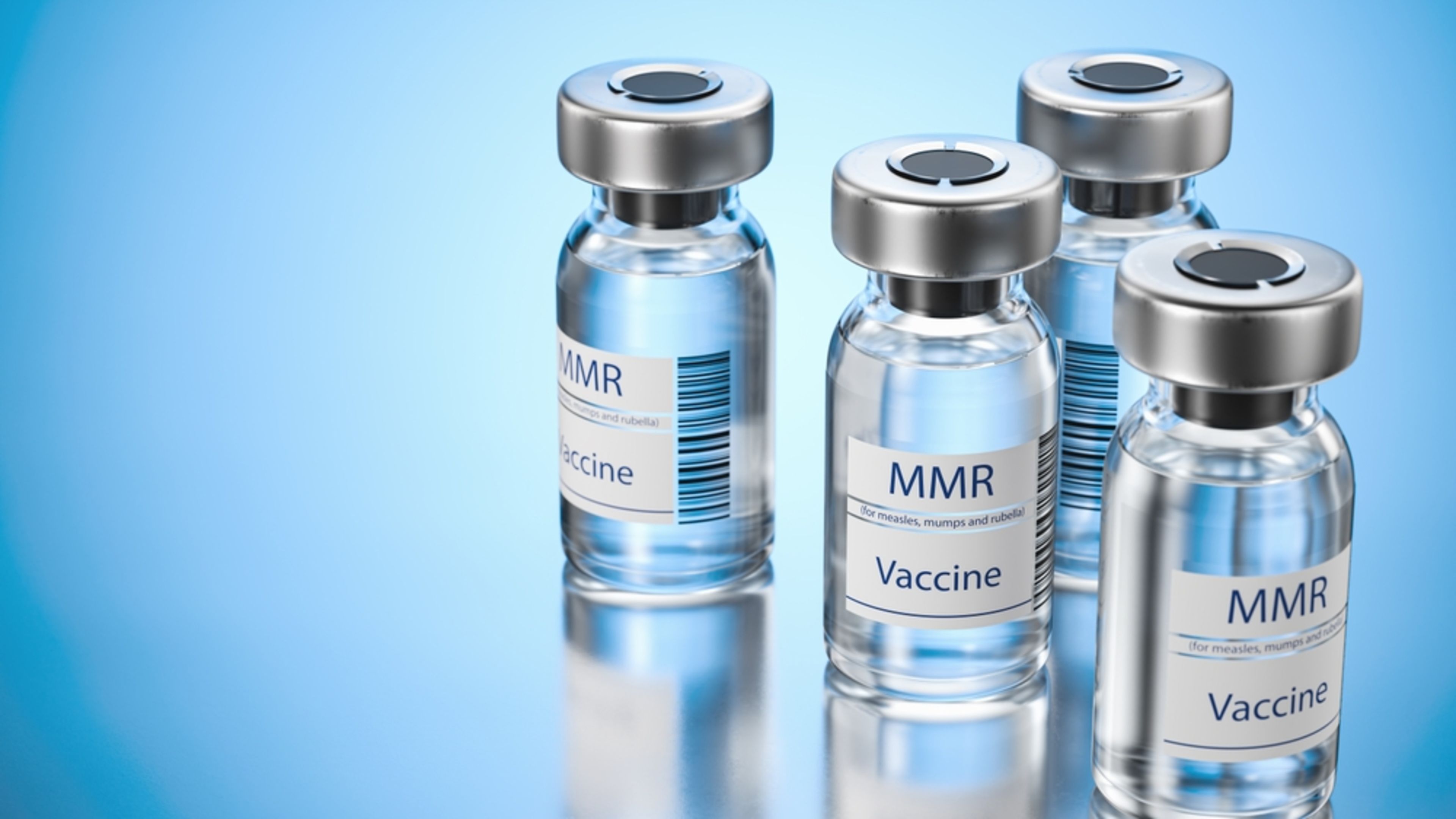
Reports of measles outbreaks at several Catholic sites around the U.S. recently have raised fears of disease exposure and reignited debates about vaccines in the U.S.
The Catholic Ave Maria University near Naples, Florida, reported a measles outbreak on its campus starting in late January. The school quickly moved to isolate and quarantine those who had been exposed to or infected with the disease.
Washington, D.C.’s health department on Feb. 8 also reported “multiple confirmed cases of measles” at numerous Catholic-related locations in the District, including the Basilica of the National Shrine of the Immaculate Conception, the National March for Life, and The Catholic University of America.
Health officials amid the outbreaks have been urging the public to ensure they are up to date on their vaccinations, particularly for measles, which is obtained via the measles, mumps, and rubella (MMR) vaccine in the United States.
Church recommends vaccination, recognizes autonomy
Public health experts have raised alarms about the rise of partially or fully unvaccinated individuals throughout the U.S. in recent years.
Other health advocates and commentators have voiced concerns over vaccines and the U.S. vaccine schedule, arguing that infants and young babies are subject to an undue number of shots in the earliest months of their lives and recent vaccine schedules should be examined and abbreviated in closer alignment with other countries’ recommendations.
Some Catholic and pro-life advocates have also criticized vaccines on the grounds that some of them are developed using cell lines derived from unborn humans who were aborted decades ago.
Deacon Tim Flanigan, a medical doctor and professor of infectious diseases at Brown Medical School, described vaccines as “the most effective way to prevent many severe viral illnesses,” particularly among children.
He described current measles numbers in the U.S. as a “terrible … epidemic,” including more than 2,000 cases in 2025. He noted that up to 5% of children with measles face hospitalization, and “complications, including seizures, brain infection, and pneumonia, can occur.”
For pro-life objectors who wish to avoid vaccines produced using fetal cells, Flanigan noted that the Church “encourages the use of vaccines whenever possible that are not derived from cell lines from an aborted fetus.”
“When it is not available, and the only available vaccine has been cultured from cell lines that were originally derived in the distant past from an aborted fetus, then the Church does not advise avoiding the use of that effective vaccine,” he said.
Catholics still obliged to call for ethical vaccine production
Joseph Capizzi, a professor of moral theology and ethics at The Catholic University of America, said the relationship of vaccines to abortion “has concerned the Church from the moment of vaccine development.”
“The Church has cautioned against using vaccines that illicitly rely (or relied) on cells derived from the destruction of human beings and the mistreatment of the human body,” he said.
Yet “the Church has also said that in certain circumstances, a concern for public health as a part of the common good might lead one to make use of an ethically problematic vaccine where no alternative was present, so long as one also advocated for the production of ethical alternatives.”
This balancing act, Capizzi said, underscores “how important the obligation to serve the common good is in Catholic teaching.”
Both Capizzi and Flanigan acknowledged that the Church ultimately leaves such discernment up to the individual. The Church “upholds the right of an individual in conscience to object to compulsory vaccination,” Capizzi said.
But “if my objection is a mere ‘concern,’ and given the needs of public health, the Church continues to exhort Catholics that they have obligations to receive the ‘basic care’ of their communities, including reasonable vaccination,” he said.
Flanigan said the Church “recognizes the importance of autonomy and that the final decision to accept a vaccine or any medical intervention rests with the judgment of that individual.”
But, he noted, the teachings of the Catholic Church “ask that we all strongly consider advice of medical experts both for our own health, the health of our families, and the health of the community.”
Approaching vaccines with a ‘virtuous’ mindset
John Brehany, the executive vice president at the National Catholic Bioethics Center (NCBC), told EWTN News that the magisterium “has never condemned the theory or practice of immunization” and “often has promoted both over the last 200 years.”
“Magisterial teachings on ethical issues surrounding immunization have focused on vaccine products manufactured using abortion-derived cell lines,” he said.
The Church “has condemned the practice of taking and using these human cells,” he said, but it has also taught “that vaccines produced with them may be utilized under certain conditions.”
Brehany said the issue is a “very complex topic.” He noted that Church leaders “at times have encouraged or required those subject to their authority to accept vaccination,” and the Church itself “does teach that citizens should obey just laws, and some laws require immunizations.” Yet there appears to be “no formal magisterial teaching and no specific statement in the catechism about vaccines,” he said.
The bioethics center, he said, “holds that it is important to transcend extreme positions and contentious terminology” such as “anti-vaxxer” and “vaccine zealot.” The NCBC, he said, “strives to remain faithful to the teachings of the Church, drawing upon the deepest resources of the Catholic moral tradition to address the most complex, contemporary issues in health care and biomedical research — including immunization.”
Brehany said Catholics could consider taking a “virtuous” approach to the question of vaccines, which he described as including a “careful assessment of the available information about all of the benefits and risks (or side effects)” of any one vaccine, along with ensuring that one’s sources are “true and trustworthy.”
A patient might then make “a decision that best promotes health, first and foremost of oneself or one’s dependents and then of the community.”
When it comes to whether a Catholic can refuse a vaccine, Brehany said there is not a simple answer to the question.
“There are many practical considerations — details about the individual circumstances of the recipient (age, health status, etc.); about the nature of the disease(s) from which one is seeking protection (some highly contagious, like measles; others not contagious, such as tetanus); the nature of the shots, some of which contain antigens for five different diseases at one time, etc.,” he said.
“There are different sources of obligation as well, including laws or rules which demand acceptance of various vaccines. Some of these relate to educational settings; others to employment settings; still others to travel.”
He added: “All of these things are important to consider, whether in terms of the health and ethical goals one is pursuing or because of the opportunities that one may be denied if a vaccine is declined.”
“Still, in the end, a vaccine is a medical intervention which can impact one’s body for decades. Decisions about medical interventions should be made with free and informed consent. When consent is withheld or a treatment declined for sound reasons, that decision should be respected.”
Brehany stressed that “virtue also requires finding an optimal, balanced approach between extremes — not being swayed by emotions like fear; not, because of laziness, accepting a superficial answer; not taking an ‘all or nothing’ approach,” he said. “The virtue of prudence can help people to make good decisions about concrete options.”
He also pointed out that the focus should not be solely on the patient or parents when it comes to vaccines, and that “other persons and organizations have significant ethical obligations.”
“For example, health care professionals have the ethical and legal duty to obtain informed consent from patients and parents,” he said. “Governments and pharmaceutical companies have ethical and legal obligations to ensure that vaccine products truly are safe and effective, are improved whenever possible, and that adverse events are properly investigated.”
“And schools and state public health agencies have ethical obligations to ensure that their policies on unvaccinated students are well founded and applied with justice.”
“Of course, fulfilling these ethical responsibilities can be very challenging,” he said. “But it is essential to respecting the good of persons and promoting the common good.”
If you value the news and views Catholic World Report provides, please consider donating to support our efforts. Your contribution will help us continue to make CWR available to all readers worldwide for free, without a subscription. Thank you for your generosity!
Click here for more information on donating to CWR. Click here to sign up for our newsletter.
Leave a Reply
You must be logged in to post a comment.