
The main opposition party in the Slovak Parliament, Progressive Slovakia, has questioned aspects of the Basic Agreement with the Holy See signed on Nov. 24, 2000.
The critique came shortly after the visit of Archbishop Paul Gallagher, secretary for relations with states of the Holy See, to the Central European country to mark the 25th anniversary of the accord.
According to the progressives, the state should not have a special contract with one church. They argue that the contract is costly financially and in terms of obligations — for instance, the teaching of religion in public schools is state-funded, but its contents are determined by the Catholic Church.
Other churches should be offered a similar option, progressive member of the Parliament Ondrej Prostredník proposed. Yet it would not be a solution, as “there are many different groups of believers” currently “excluded from this right to have, for example, such activities in public schools,” continued the politician, who served as dean of the Evangelical Faculty of Theology (Lutheran) of Comenius University in Bratislava.
In response, the Slovak Bishops’ Conference underscored that the accord “is not about privileges,” as it ensures a legal framework and “clear rules for cooperation between the state and the Church.”
In this way, the Catholic Church can “freely fulfill its mission in service to the common good of not only believers, but all citizens” in areas such as “education, social solidarity, health care, culture, protection of human dignity,” the Slovak episcopate explained.
“A democratic state should not ignore the spiritual and religious dimension in society,” the Catholic bishops stressed, adding that “stable and correct relations between institutions contribute to social cohesion and a culture of trust.”
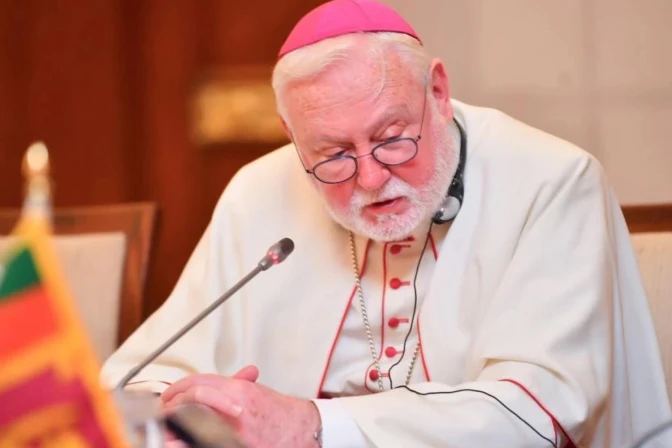
During his visit to Slovakia last weekend, Gallagher described Holy See–Slovakia relations as “very positive,” also thanks to the agreement. He recalled that “some provisions still require further implementation and interpretation.”
Mainly conscientious objection has not been applied, said Archbishop Cyril Vasiľ, eparch of the Greek Catholic Eparchy of Košice. The prelate warned about a “tendency in some countries to weaken this principle” when they propose “new claims as rights,” which “creates moral and sometimes even labor-law pressure” on medical staff “to participate in procedures that are contrary to their moral convictions or professional ethics.”
The 2000 Basic Agreement regulates various aspects of the Catholic Church’s life and legal status in the Slovak Republic.
Leave a Reply
You must be logged in to post a comment.