
Addressing the Ukraine war and Europe’s crises demands spiritual renewal, not just diplomacy, Cardinal Hollerich told EWTN News as Pope Leo XIV called for peace grounded in shared moral foundations.
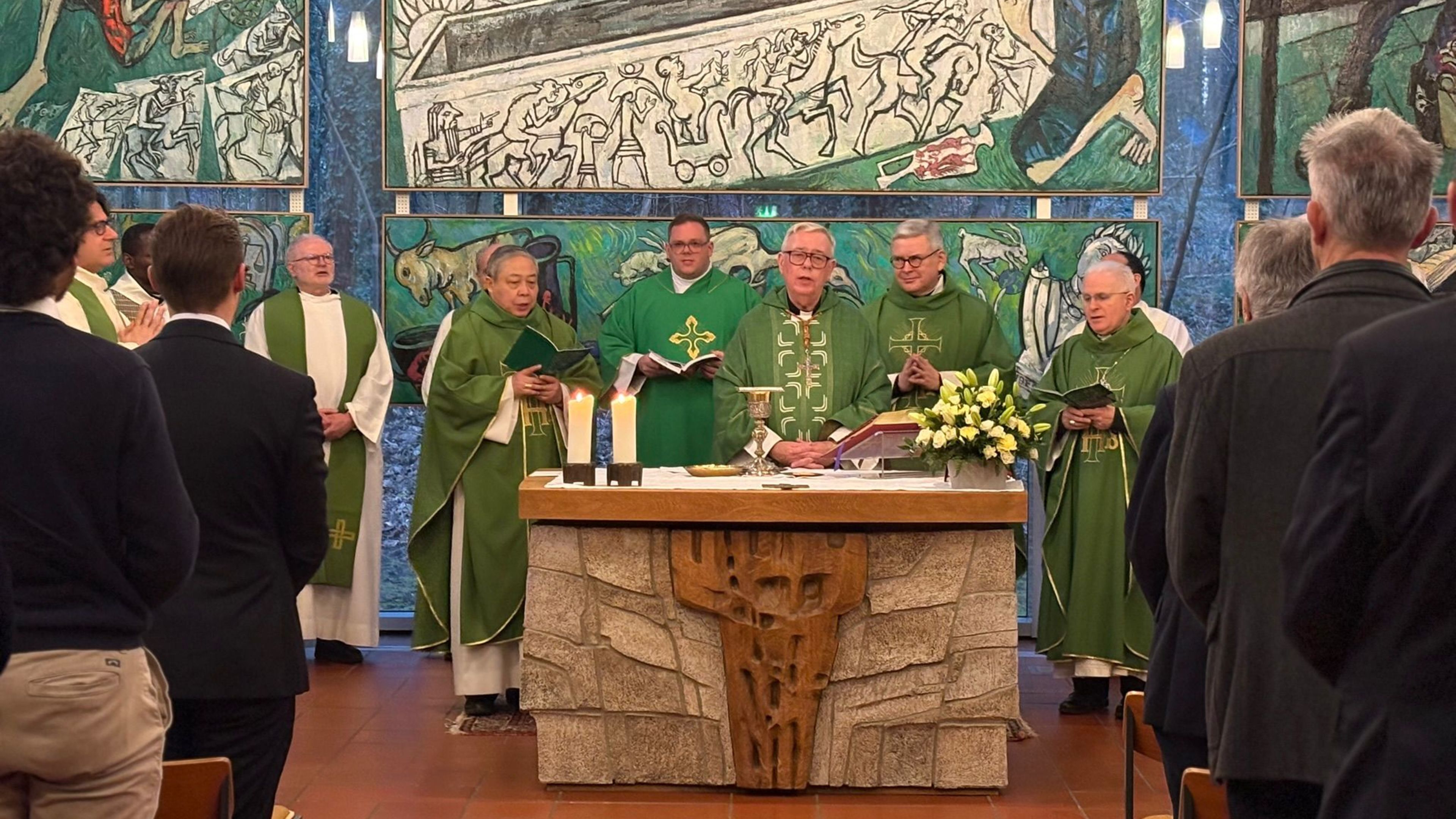
Addressing the war in Ukraine and Europe’s deepening political crises requires more than diplomacy, Cardinal Jean-Claude Hollerich told EWTN News — it demands personal conversion to peace.
“Peace is not just given automatically,” the archbishop of Luxembourg said on the sidelines of a Jan. 23 conference examining how Catholic social teaching can address the war in Ukraine and Europe’s deepening crises. “We know that there is war in Ukraine, and we know about other potential conflicts. We really have to commit ourselves to peace.”
The cardinal stressed that peace-building must begin with personal change. “Peace is not only something we work for in the world,” Hollerich said. “Each of us must undergo a conversion to peace. We must become men and women of peace where we live, otherwise our efforts will not bear fruit.”
His comments came as Church leaders, European officials, and policymakers gathered in Luxembourg to discuss how Catholic principles of human dignity, solidarity, and the common good can inform Europe’s response to war, humanitarian emergencies, and political fragmentation.
Ukraine war brings urgency to peace discussion
The ongoing war in Ukraine emerged as a central concern throughout the conference, with speakers emphasizing that moral clarity must accompany humanitarian aid and diplomatic efforts.

In an exclusive interview with EWTN News, Halyna Yanchenko, a member of the Ukrainian Parliament and secretary of the National Investment Council of Ukraine, described the devastating toll of sustained Russian attacks on civilian infrastructure. Families have been left without electricity, heating, or water for extended periods, she said, with children, the elderly, and people with disabilities suffering disproportionately.
Yanchenko issued a stark warning against peace negotiations that ignore Russian aggression or prioritize territorial compromise over human dignity. Peace cannot come “at any cost,” she said, insisting that the protection of civilian lives must remain central to any settlement.
She called on European institutions and Catholic organizations to maintain their unity and humanitarian support, which she said continues to save lives.
Pope, European leaders call for shared moral foundations
Pope Leo XIV sent a message to conference participants, underlining that peace requires shared moral foundations. “No community, let alone a continent, can live in peace and thrive without commonly held truths that inform its norms and values,” the Holy Father wrote.
The pope added that Catholic social teaching “has much to offer as it goes beyond borders and provides a platform for collective interests and a way of living, thus making peaceful coexistence possible.”

Roberta Metsola, the Maltese politician who has served as president of the European Parliament since 2022, delivered a keynote video address stressing that Catholic principles of human dignity and solidarity continue to shape European policymaking.
Archbishop Mariano Crociata, president of the Commission of the Bishops’ Conferences of the European Union, warned in his keynote that Europe’s lack of unity leaves it vulnerable to great powers.
“In the current phase of profound disruption, it is essential to move beyond expressions of hope or the reiteration of principles alone,” he said. “Strengthening unity, promoting solidarity, and placing the dignity of the human person at the center of European action are not only ethical imperatives but also essential conditions for peace and stability in Europe and beyond.”
Archbishop Bernardito Auza, apostolic nuncio to the European Union, reflected on Europe’s postwar history, noting that the continent’s integration was built on reconciliation rather than retaliation. He cautioned that “technocratic solutions, detached from ethical foundations, risk losing their force to truly build and sustain peace.”
The conference, titled “Peacebuilding in Europe: What Role for Catholic Social Thought and Universal Values?”, was co-organized by the Commission of the Bishops’ Conferences of the European Union, the Centesimus Annus Pro Pontifice Foundation, and the Luxembourg School of Religion and Society.
Hollerich’s emphasis on personal conversion echoed Pope Leo XIV’s repeated calls for spiritual renewal as the foundation of peace. The cardinal told EWTN News that without such transformation, even the best-intentioned political efforts will ultimately fail.
If you value the news and views Catholic World Report provides, please consider donating to support our efforts. Your contribution will help us continue to make CWR available to all readers worldwide for free, without a subscription. Thank you for your generosity!
Click here for more information on donating to CWR. Click here to sign up for our newsletter.
Leave a Reply
You must be logged in to post a comment.