
Every person, from king to commoner, lives by a moral code. Catholic moral theology is grounded in the Ten Commandments and the principles of Natural Law.
The law of the jungle, by contrast, rests on power and emotion. Modern times, however, have seen the rise of a managerial moral system—one that reframes moral questions as technical problems to be solved through spreadsheets, projections, and computer models.
The Catholic Church clusters its moral precepts—Natural Law, God’s positive law, and Church discipline—around the Ten Commandments. Catholic moral theology is reasonable and governs human acts. The deliberate violation of a moral precept, with freedom and full consent, renders a person guilty. Although most sins are venial and weaken the soul, some sins are mortal and rob it of sanctifying grace. God grants His grace and the sacraments to restore that grace and return us to the path of salvation.
The law of the jungle, by contrast, invokes self-interest, vice, powerful emotions, and personal or tribal power to obtain necessities, real or perceived. Literature and cinema depict this moral code vividly, including its modern expressions in organized crime. The Old Testament also offers several examples.
When objectives are achieved and emotions cool, violence often subsides. King Herod comes to mind.
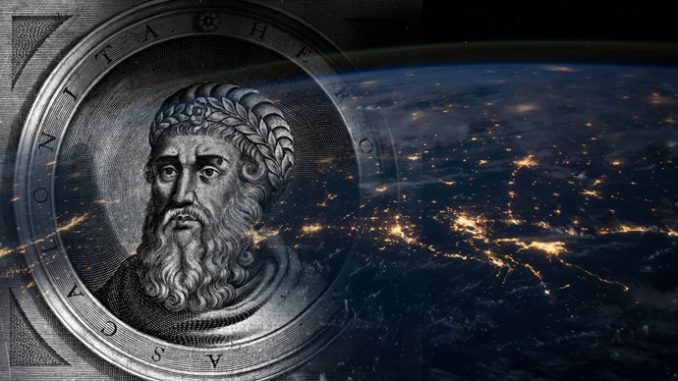
Herod the Great (c. 73–4 BC) ruled Judea from 37 BC until shortly after the birth of Jesus. A brilliant and ruthless ruler, he expanded the Second Temple and built Masada and Caesarea. His reign also imposed crushing taxes, repression, paranoia, and the execution of rivals—including his own wife and sons.
Caesarea Sebastos was among his crowning achievements. Built where no natural harbor existed, Herod’s engineers poured massive concrete breakwaters into the sea, transforming an exposed coastline into a Mediterranean hub of commerce. It was an astonishing feat—proof that technical brilliance and moral blindness often coexist.
According to the Gospel of Matthew, an aging Herod learned from visiting Magi that a child had been born who was called “king of the Jews.” When the Magi failed to return, Herod ordered the killing of all male children two years old and under in Bethlehem and its vicinity to eliminate a perceived rival. Josephus later described Herod’s final years as marked by madness, terror, and a ghastly illness that consumed him from within.
In some ways, Herod stands as a bridge between the law of the jungle and a distinctly modern moral system.
In March 1970, the Catholic journal Triumph published an article titled “The Herodians.” The editors identified a new morality that neither invokes the Ten Commandments nor operates through raw passion. It is the morality of technocrats.
The editors warned—even then—that the “abortion mongers [were] losing patience.” For years, the campaign to legalize abortion had crept through state legislatures, but progress was “abysmally slow” and dangerously vulnerable to local resistance—especially from Catholic “anti-Herodians” and their bishops.
Triumph cited Roger O. Egeberg, President Nixon’s chief health officer, speaking in a February 1970 interview.
Notice the tone. No rage. No panic. No bloodlust. Just management—treating human beings as populations to be regulated in response to external pressures:
Increasingly, yes. I’ve been rather conservative about [abortion]. But increasingly, I feel we’ve got to face abortion as the backup of many methods of contraception which aren’t perfect. … I do think that facing a continually growing population is the most horrible thing we can face.”
Abortion was presented not as a horror but as a tool—a corrective for systems deemed inefficient. It was a bureaucratic problem to be solved.
Since then—and especially after Roe v. Wade—abortion as a management instrument has claimed more than 70 million American lives. The feared Population Bomb never arrived. Instead, nations now confront a different calculation: collapsing birthrates, empty schools, and aging populations wondering who will pay the bills.
Triumph closed with a line that still unsettles:
Herod’s crime had a certain humanity about it—a passion, a rage, a frantic defense of his throne. He had nothing, really, against babies.
The point is not to rehabilitate Herod, but to draw a contrast. Herod killed in fear. We kill with spreadsheets. Herod raged. We reassure with statistics and forecasts. His crime was sudden, personal, and shocking. Ours is procedural, sanitized, and politely defended as progress—killing at a distance, using video-game technology.
Herod may not be the monster we imagine—not because his crime was small, but because we have perfected something far worse: killing methodically, without passion, without hatred, without shame, and without humanity. Paradoxically, the passions of hate and shame may be the very brakes that restrain crimes against humanity. Overheated emotions eventually burn out. Cold calculations, by contrast, are codified, institutionalized, and perpetuated.
Yet no one can escape the Catholic moral order, because we are inescapably God’s handiwork. The same God who establishes the laws of the universe also establishes the moral laws that govern human behavior. In Jesus Christ, God and man are reconciled, and God’s law is revealed in word and deed.
Whoever dies in sanctifying grace wins eternity, and no human tribunal can judge the unseen realities of a soul. Even tyrants such as Herod—whose deeds rightly horrify us—may somehow have entered the Promised Land. This is not a defense of Herod’s crimes, but an examination of the moral reasoning by which we now excuse our own. Perhaps Herod was already learning to think like us.
Have you seen satellite images of the Earth at night—cities blazing with light amid vast darkness? Suppose God granted us lenses that could detect sanctifying grace rather than electricity. What would the great cities reveal? What of the quiet countryside, the hidden reaches of the jungle? And what truths would stare back at us if we turned those lenses inward, into the mirror of our own souls?
If you value the news and views Catholic World Report provides, please consider donating to support our efforts. Your contribution will help us continue to make CWR available to all readers worldwide for free, without a subscription. Thank you for your generosity!
Click here for more information on donating to CWR. Click here to sign up for our newsletter.
Leave a Reply
You must be logged in to post a comment.